

Student
Professional
- Messages
- 1,870
- Reaction score
- 1,895
- Points
- 113
Proxy Rotation Algorithms Mastery: The Ultimate 2026 Deep Dive – Types, AI-Powered Strategies, Provider Secrets, Code Examples, Best Practices, Self-Hosted Options & Optimization Tactics
Proxy rotation algorithms are the hidden intelligence powering every modern rotating proxy service. In 2026, they have evolved far beyond basic cycling: AI-driven systems now analyze real-time IP health, target-site behavior, success rates, latency, blacklist status, and even anti-bot patterns to deliver success rates of 99.99%+ on the toughest sites (Amazon, Google, Instagram, TikTok).This exhaustive guide (updated for May 2026) transforms you into an expert with crystal-clear explanations, analogies, technical deep dives, 2026 provider insights, expanded comparison tables, Python/Scrapy/Puppeteer code examples, advanced hybrid strategies, self-hosted options, troubleshooting checklists, real-world case studies, cost-optimization tactics, and future trends. Whether you’re a beginner building your first scraper or an enterprise engineer scaling millions of requests daily, you’ll find actionable, maximum-value content here.
1. How Proxy Rotation Algorithms Work (2026 Technical Deep Dive)
Every backconnect gateway (your single endpoint like gate.provider.com ort) acts as a smart load balancer for IPs. The algorithm’s job:
- Receive trigger (per-request, timed, failure-based, or session end).
- Filter pool (by your geo, ASN, carrier rules).
- Score & select the best IP using the chosen algorithm.
- Route request through the selected residential/datacenter/mobile IP.
- Log metrics (success, latency, errors) to improve future decisions.
- Rotate automatically — no manual work needed.
2026 Reality: Premium providers embed machine learning that predicts blocks before they happen and dynamically adjusts rotation aggressiveness. Basic services still use simple random/round-robin; enterprise ones (Bright Data, Oxylabs) use AI that adapts per target website.

Types of Proxies Explained: The Ultimate Guide
2. Core Proxy Rotation Algorithms Explained (With 2026 Updates)
Here are the main algorithms, updated with real-world 2026 mechanics, analogies, and visuals.Random Selection (Default for Most Services)
- Picks uniformly at random from the filtered pool.
- Analogy: Shuffling a deck of cards and drawing one each time.
- 2026 Pros: Zero predictable patterns, excellent for anonymity.
- Cons: No performance optimization.
- Best for: High-volume, stateless scraping.
- Providers: Default in Bright Data, Oxylabs, Decodo, SOAX.
Round-Robin (Sequential Cycling)
- Cycles through an ordered list of IPs.
- Analogy: Passing a baton in a relay — everyone gets equal turns.
- Pros: Perfectly even distribution.
- Cons: Detectable patterns if pool is small; ignores slow/blocked IPs.
- Variants: Shuffled round-robin (randomize order first).
- Best for: Uniform datacenter pools.
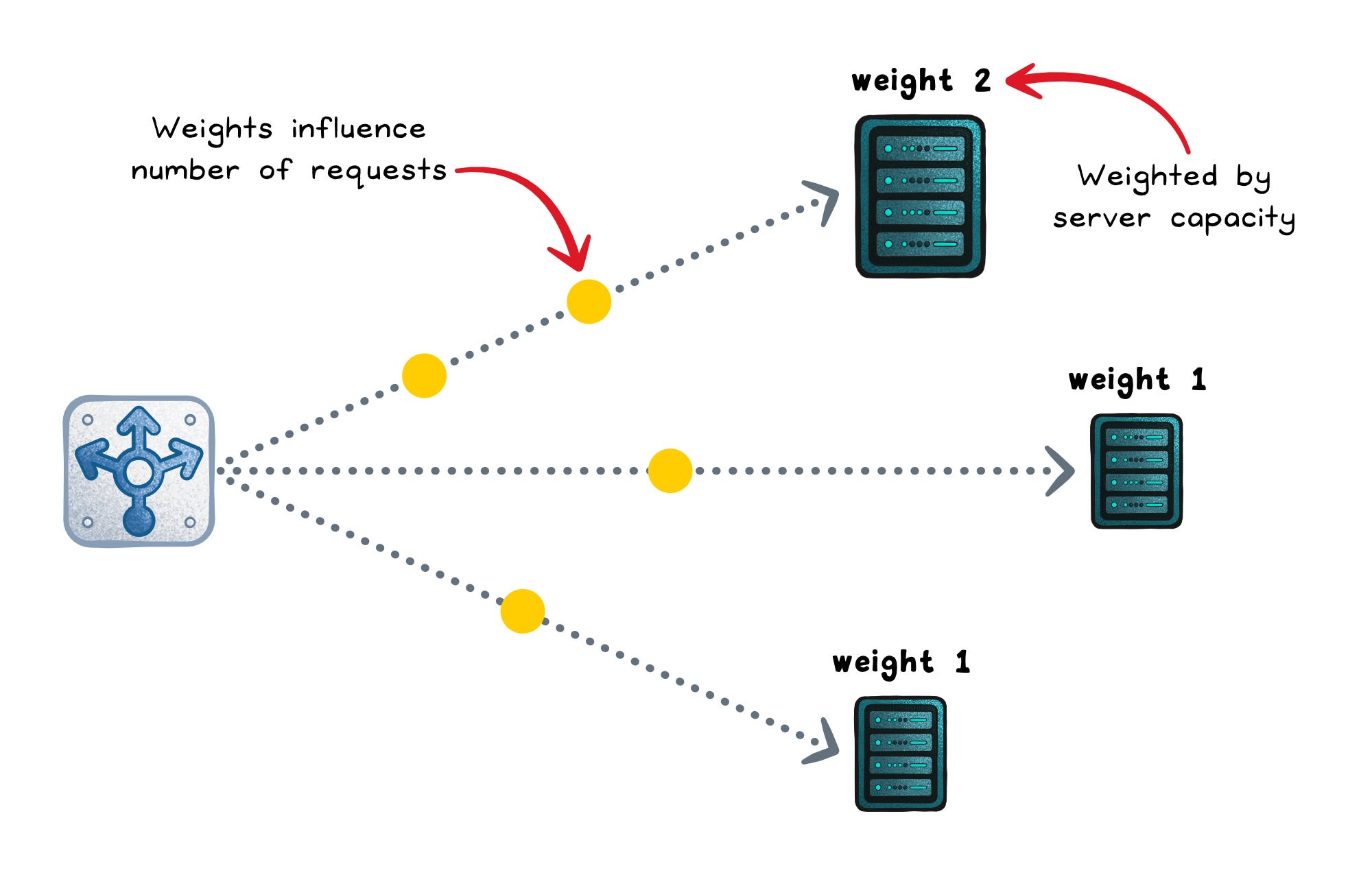
Weighted Round-Robin / Weighted Selection
- Assigns weights based on speed, success rate, or provider scoring.
- Analogy: Giving stronger players more court time in basketball.
- 2026 Update: Weights now update in real-time via ML feedback loops.
- Best for: Mixed residential pools with varying quality.
Load Balancing Algorithms Clearly Explained (In Under 8 Minutes)
Least Connections / Least Recently Used (LRU)
- Chooses IP with fewest active connections or longest idle time.
- Pros: Prevents overload, great for concurrency.
- Best for: High-thread scraping sessions.
Least Response Time / Performance-Based
- Factors in current latency and error rates.
- 2026 Evolution: Integrated into AI systems for predictive scoring.
AI-Powered Smart / Adaptive Algorithms (2026 Gold Standard)
- Machine learning scores every IP on:
- Target-specific success rate
- Real-time IP health & blacklist status
- Behavioral similarity to human traffic
- Geo/ASN relevance
- Dynamically adjusts rotation speed and prefers high-scoring IPs.
- Analogy: A coach rotating players based on live game performance.
- Providers Leading:
- Bright Data: AI analyzes target behavior and IP health in real-time.
- Oxylabs: Next-Gen ML rotation with 99.95%+ success.
- Crawlbase, NodeMaven: Proprietary quality-check algorithms before issuing IPs.
- Pros: Highest success rates; adapts to evolving anti-bot defenses.
- Cons: Premium pricing.

Types of Load Balancing Algorithms (Animated + Code Examples)
3. Algorithm Comparison Table (2026 Edition)
| Algorithm | Distribution | Pattern Risk | Performance Awareness | Real-Time Adaptation | Complexity | Success Rate (Protected Sites) | Best Use Case |
|---|---|---|---|---|---|---|---|
| Random | Excellent | Very Low | None | Low | Low | 90–95% | High-volume anonymity |
| Round-Robin | Perfect | High | None | Low | Low | 85–92% | Uniform datacenter pools |
| Weighted Round-Robin | Excellent | Medium | High | Medium | Medium | 94–97% | Mixed residential pools |
| Least Connections/LRU | Good | Low | Medium | Medium | Medium | 93–96% | High-concurrency sessions |
| Least Response Time | Good | Low | Very High | High | High | 95–98% | Latency-sensitive tasks |
| AI/Smart Adaptive | Optimal | Very Low | Very High | Very High (ML) | High | 99.99%+ | Amazon, Google, social media |
4. Implementation Examples (Python, Scrapy, Puppeteer)
Basic Random (Self-Managed List)
Python:
import requests
import random

proxy_list = ["http://user:pass@ip1:port", ...]

def get_proxy():
    return {"http": random.choice(proxy_list), "https": random.choice(proxy_list)}

response = requests.get("https://example.com", proxies=get_proxy())
Round-Robin
Python:
index = 0
def get_next_proxy():
    global index
    proxy = proxy_list[index % len(proxy_list)]
    index += 1
    return {"http": proxy, "https": proxy}
Weighted (Simple)
Python:
import random
weighted_proxies = [("fast-ip", 5), ("slow-ip", 1)]
def get_weighted():
    choices, weights = zip(*weighted_proxies)
    return random.choices(choices, weights=weights, k=1)[0]
Scrapy Integration (with rotating-proxies middleware)
Use scrapy-rotating-proxies or provider SDKs for automatic AI rotation.
Puppeteer (Node.js) Example
JavaScript:
const puppeteer = require('puppeteer');
const proxy = 'http://user:pass@gateway.provider.com:port';
const browser = await puppeteer.launch({ args: [`--proxy-server=${proxy}`] });
For production, use provider SDKs (Bright Data Proxy Manager) that handle smart algorithms natively.
5. Provider Secrets & 2026 Insights
- Bright Data: AI rotation + Web Unlocker (CAPTCHA + fingerprint bypass).
- Oxylabs: Next-Gen ML with unlimited sessions and ASN filtering.
- Decodo / Smartproxy: Configurable per-request + sticky up to 24h.
- NodeMaven / Crawlbase: Proprietary pre-verification algorithms for IP quality.
- IPRoyal / SOAX: Flexible timed + sticky with ethical sourcing.
Most now offer dashboard sliders for algorithm + trigger combo.
6. Advanced Strategies & Hybrid Approaches
- Hybrid Rotation: Per-request for discovery + sticky for checkout.
- Failure-Driven: Rotate on 4xx/5xx or CAPTCHA.
- Multi-Layer: Combine IP rotation with user-agent, TLS fingerprint, and header rotation.
- Geo + Algorithm: Random within city-level targeting.
Decision Flowchart (Text Version):
- Need session persistence? → Sticky + AI.
- High volume + anonymity? → Per-request random or AI.
- Latency critical? → Weighted + least response time.
7. Self-Hosted Rotation Options (2026)
For full control (and lower long-term cost):- Use open-source tools like Proxy Rotator or custom Nginx/Haproxy setups.
- Combine with your own residential IP pool via P2P SDKs.
- Docker + Kubernetes for scaling (as in advanced self-hosting guides).
8. Best Practices, Troubleshooting & Cost Optimization
Best Practices:- Start with provider AI/smart mode.
- Test rotation settings on small scale.
- Monitor success rate per algorithm.
- Combine with fingerprint spoofing.
Common Pitfalls & Fixes:
- Pattern detection → Switch to random/AI.
- High costs → Use sticky sessions + caching.
- Blocks → Enable failure-based rotation.
Cost Optimization: Calculate GB usage; choose non-expiring traffic plans; use datacenter for easy sites.
9. Real-World Case Studies (2026)
- E-commerce price monitoring: AI rotation + city targeting = 99.9% uptime.
- Social media automation: Sticky + weighted = zero account bans.
10. Future Trends & Quick Glossary (2026+)
- Predictive AI that pre-rotates before blocks.
- Full integration with agentic browsers.
Glossary:
- Backconnect: Single gateway.
- Sticky Session: Persistent IP.
- Smart Rotation: ML-driven selection.
Proxy rotation algorithms are what separate amateur setups (quick bans) from enterprise-grade systems (near-perfect uptime). Start with a provider’s smart mode trial, test rigorously, and layer advanced tactics as you scale. Need exact code for your tool (Scrapy, Selenium, etc.), provider comparison spreadsheet, or a custom hybrid setup? Just ask — I’ll deliver tailored configs instantly! Bookmark this guide; the field moves fast in 2026.
