

Carding Forum
Professional
- Messages
- 2,788
- Reaction score
- 1,363
- Points
- 113
Bribe officials very often show imagination in matters of storing illegally received money.
Where do officials keep bribes?
Despite the active fight against corruption in Ukraine declared by the authorities, the volume of bribery in the country continues to grow. Yesterday, June 7, while receiving a bribe in the amount of $ 5 million, an employee of the Deposit Guarantee Fund was detained.
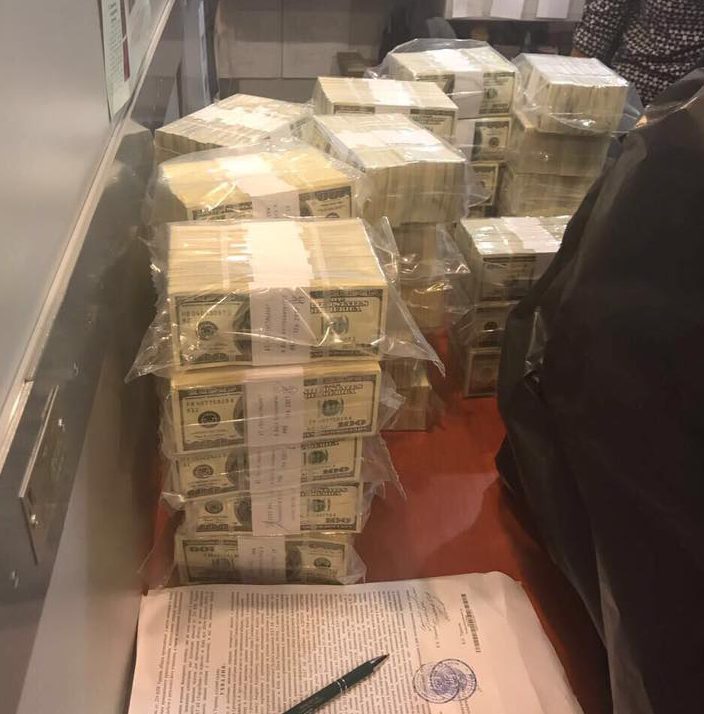
The official was detained on a bribe of $ 5 million
However, some officials manage not only not to get caught while receiving unlawful benefits. But also keep it for a while. Thus, Judge Chaus, detained in August last year, kept a bribe in a bank buried in a vegetable garden. By the way, foreign officials are also "distinguished by their intelligence and ingenuity." In 2016, a colonel of the Ministry of Internal Affairs of Russia was detained in the Russian Federation, who kept the received bribes in a bag right in the apartment.
The PaySpace Magazine editors have compiled a list of hiding places that officials most often use to store their (and not quite) money.

Judge Chaus kept the money in a bank buried in the vegetable garden. Photo: BBC Ukraine

Some bribe-takers keep their money in the refrigerator or freezer. Photo: Depo Transcarpathia
Some people, if they keep their money in the refrigerator, it is more likely in the freezer among frozen pieces of meat or something similar. Well, for example, there are five frozen chickens in one pile. One of them is a fake one, a bundle of money. If thieves get in, they are unlikely to look at the contents of the freezer. But if you are an official, and law enforcement agencies have come to you, they will certainly examine your refrigerator.

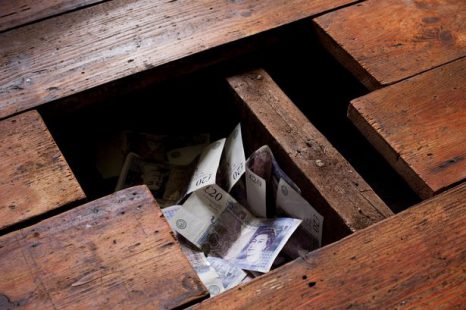
There are cases when bribes were stored in cracks in the floor.
There are cases when a small amount of illegal income was stored in a pack of cigarettes, between foil and cardboard, in socks and in pockets, and if in the office, then in a trash bin.

To hide the traces of the crime, officials even buy a neighboring apartment.
Many people also keep their money the old fashioned way - in books. Just imagine how much time it will take to place, say, $ 50 thousand in your home library!
According to all the same hunters for bribe-takers, most dishonest officials hide money in a banal way: in toilet cisterns, linen closets, on the mezzanine. Some decide, not wanting to say goodbye to the received bribe to the last, to eat the money.

TOTAL
One of the disadvantages of cash is that at one point someone can steal it. Therefore, keep your money securely and electronically. If, of course, you have them.
Where do officials keep bribes?
Despite the active fight against corruption in Ukraine declared by the authorities, the volume of bribery in the country continues to grow. Yesterday, June 7, while receiving a bribe in the amount of $ 5 million, an employee of the Deposit Guarantee Fund was detained.
The official was detained on a bribe of $ 5 million
However, some officials manage not only not to get caught while receiving unlawful benefits. But also keep it for a while. Thus, Judge Chaus, detained in August last year, kept a bribe in a bank buried in a vegetable garden. By the way, foreign officials are also "distinguished by their intelligence and ingenuity." In 2016, a colonel of the Ministry of Internal Affairs of Russia was detained in the Russian Federation, who kept the received bribes in a bag right in the apartment.
The PaySpace Magazine editors have compiled a list of hiding places that officials most often use to store their (and not quite) money.
"Field of Dreams"
In early August 2016, on a bribe of 150 thousand dollars, they detained the judge of the Dniprovsky district court of the city of Kiev, Nikolai Chaus, who was already mentioned above. The minister of Themis kept money in a bank - not in a financial institution, but in an ordinary glass one. So to speak, conservation for the winter. The judge personally buried two jars with the contents in the yard.
Judge Chaus kept the money in a bank buried in the vegetable garden. Photo: BBC Ukraine
Cold money
Law enforcement officials with experience in conducting searches in the apartment of bribe-takers talk about refrigerators as one of the most popular hiding places. For example, in the 90s of the last century, when a search was carried out in the apartment of one of the officials of the South-Western Railway (Yugo-Zapadnaya Railway - ed.), A bundle of money was found in his refrigerator. It was hidden behind food, so it did not attract attention. The package contained 120 thousand dollars, a huge amount at the time.
Some bribe-takers keep their money in the refrigerator or freezer. Photo: Depo Transcarpathia
Some people, if they keep their money in the refrigerator, it is more likely in the freezer among frozen pieces of meat or something similar. Well, for example, there are five frozen chickens in one pile. One of them is a fake one, a bundle of money. If thieves get in, they are unlikely to look at the contents of the freezer. But if you are an official, and law enforcement agencies have come to you, they will certainly examine your refrigerator.
Under the carpet and in socks
Another case reported by representatives of the anti-bribery and corruption department. They searched the office of the official, who had been brought in marked 20 thousand hryvnias a few minutes earlier. The lady, continuing to sit at her workplace, was in no hurry to hand over the cache, where she had just sent several packs of money. After a long search, the money was found under the table, and even under the carpet. As soon as the official received the bribe, she immediately shoved the bundles into the cracks in the floor and covered the secret place with a carpet.
There are cases when bribes were stored in cracks in the floor.
There are cases when a small amount of illegal income was stored in a pack of cigarettes, between foil and cardboard, in socks and in pockets, and if in the office, then in a trash bin.
The neighbor is to blame
Large sums of money, of course, cannot be hidden in boxes. Therefore, some bribe-takers even go to the expense. They buy a neighboring apartment and make a hole in the wall between the rooms. Then they force the "safe" with cabinets with a movable back wall. It turns out that the official put the money on the shelf in his apartment, but they end up in the next apartment. There, by a strange coincidence, no one lives.
To hide the traces of the crime, officials even buy a neighboring apartment.
Many people also keep their money the old fashioned way - in books. Just imagine how much time it will take to place, say, $ 50 thousand in your home library!
According to all the same hunters for bribe-takers, most dishonest officials hide money in a banal way: in toilet cisterns, linen closets, on the mezzanine. Some decide, not wanting to say goodbye to the received bribe to the last, to eat the money.
Where you shouldn't hide money
If we talk about saving honestly earned money, then experts advise, of course, to deposit values in a safe deposit box or place them on a deposit in a bank ( we wrote earlier about how a deposit works). But, given the growing distrust of citizens in the banking system, it is advisable at least not to keep money in:- teapots and sets;
- trash bin;
- jars of cereals;
- gas stoves and behind them;
- a cistern or under a bathtub;
- pockets of clothes;
- books;
- under carpets;
- in bed linen, pillows;
- among the shoes.
Where to keep the money?
In a safe deposit box or bank account. If you need money to be always nearby and warm your soul, use one of these places:- in the socket. It is unlikely that thieves will have the desire to risk their lives and check such a cache. But you can use the hole in the wall, which usually ends up under the power outlet, as a safe. You just need to turn off the electricity in the apartment, remove the plastic attachment and hide the money. It would also be nice to wrap a rubber glove around the bundle just in case.
- in suspended ceilings: we won't even comment - everything is clear here;
- in a cactus: in this case, it is necessary to use a plant of a large size, and also not to be an ardent protector of nature. To turn this thorny plant into a hiding place, you need to cut its core at the bottom, hide the money inside and dig the cactus back into the pot. Thieves often check the ground in flowerpots, but they are unlikely to mess with the cactus itself;
- in the cornice : for this, the cornice must be hollow, not solid. Then you just need to remove the knob and voila! The mini-safe is ready.
- in the door: the door should not be iron and not too thin. You can make a small hole with a drill at the top of the door.
TOTAL
One of the disadvantages of cash is that at one point someone can steal it. Therefore, keep your money securely and electronically. If, of course, you have them.


