

Good Carder
Professional
- Messages
- 916
- Reaction score
- 717
- Points
- 113
6G Security Protocols in 2026 – A Comprehensive, In-Depth Examination of Security-by-Design Principles, 3GPP SA3 Standardization Progress, GCOT Resilience Frameworks, Zero-Trust Architectures, Post-Quantum Cryptography Integration, AI-Native Threat Management, Integrated Sensing and Communication (ISAC) Protections, Enhanced Authentication Mechanisms, Cross-Layer Innovations, Global Challenges, Industry Contributions, and the Roadmap to Quantum-Resilient, Privacy-First Networks
As of April 30, 2026, 6G technology is firmly in the early standardization and research phase, with 3GPP having launched its formal “Study on Security for the 6G System” (FS_6G_SEC) in Release 20 and SA3 actively prioritizing key topics. Unlike the incremental, often retrofitted security enhancements in prior generations — where legacy signaling protocols like SS7 left persistent trust-model vulnerabilities enabling location tracking, SMS interception, and fraud — 6G is being architected with security-by-design as a foundational, non-negotiable pillar. This shift incorporates generation-independent security features, protections for baseline connectivity, and advanced safeguards for emerging capabilities such as AI-native intelligence, Integrated Sensing and Communication (ISAC), secure network exposure APIs, and hyper-connected ecosystems involving digital twins, immersive XR, and physical AI. The result is a proactive framework designed to mitigate evolving threats including quantum computing attacks, adversarial AI manipulations, supply-chain compromises, and privacy risks in ultra-dense, low-latency (sub-0.1 ms), high-throughput (1 Tbps+) environments.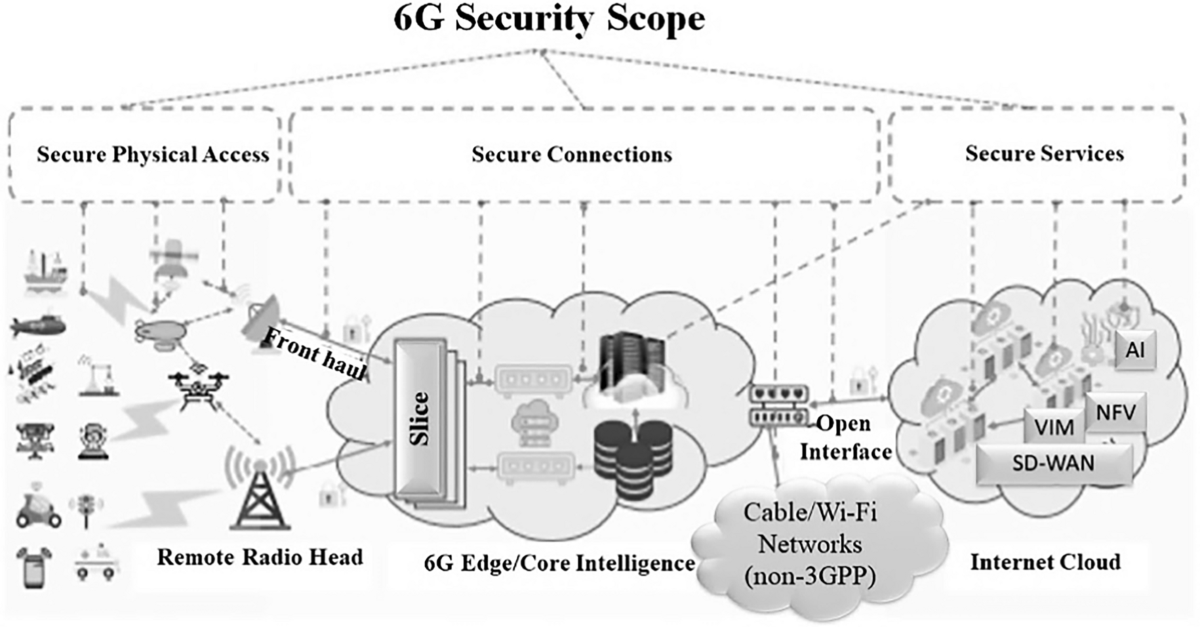
Critical Educational and Legal Disclaimer: This is a strictly informational, high-level overview synthesized from publicly available sources including 3GPP SA3 liaison statements, Ericsson analyses (April 28, 2026), GCOT official principles (March 2026), Nokia whitepapers, ETSI ISAC reports, and related industry/government documents. It contains no technical specifications, protocol message formats, implementation code, cryptographic parameters, testing procedures, or any details that could enable deployment or exploitation. 6G standards are not yet finalized or commercially deployed; all real-world research, testing, or implementation is restricted to licensed operators, authorized academic/industry consortia, and government-approved entities.
1. Historical Evolution and Lessons Learned: From 5G Limitations to 6G Security Foundations
6G builds directly on 5G’s Authentication and Key Agreement (AKA) improvements (e.g., enhanced key derivation, SUPI concealment via ECIES) and 5G-Advanced (Release 18/19) enhancements like edge security and roaming protections, while addressing inherited shortcomings:- Legacy Inheritance Issues: Interworking gaps with SS7/Diameter allowed signaling exploits; 6G mandates full isolation and verification for any external/legacy interfaces.
- New Threat Vectors: Explosion of AI/ML in networks (model poisoning, inversion attacks), ISAC-enabled environmental sensing (unintended location/movement leakage), massive device diversity (IoT to autonomous systems), and Non-Terrestrial Networks (NTN) integration.
- Paradigm Shift: 3GPP SA3’s Rel-20 study explicitly defines a security and privacy architecture for 6G that improves existing services while supporting new ones, per SA1 requirements and SA2 architecture. Work tasks include overall system architecture security, RAN/UE interactions, core network endpoint security (transport/application layers), internal/external interfaces, and end-to-end roaming with intermediaries.
This evolution emphasizes cryptographic agility, continuous verification, and privacy-by-design to prevent repeats of past vulnerabilities.
2. Global Coalition on Telecoms (GCOT) 6G Security and Resilience Principles – Detailed Breakdown (Launched March 2026 at MWC Barcelona)
In March 2026, seven governments (UK, US, Canada, Japan, Australia, Sweden, Finland) plus industry partners (Ericsson, Nokia, Samsung, Qualcomm, AT&T, Vodafone, NVIDIA, and others) unveiled the GCOT 6G Security and Resilience Principles. These serve as early, non-binding guardrails to shape 3GPP, ITU, and IETF standards before commercial rollout, emphasizing security as foundational at every lifecycle stage.Core Principles (Expanded with Official Details):
- Security as Foundational: Embedded from design through deployment and operation; coordinates with standards bodies for agent authentication/authorization using industry practices (e.g., IETF protocols).
- Zero-Trust Transition (Detailed in 3.1): Moves beyond perimeter defense to granular, function-level security with continuous monitoring, logging, and dynamic compromise assessment for every network component.
- Secure External Interfaces (3.2): Robust protection for roaming, legacy interworking, non-3GPP access, and subnetworks — preserving user privacy, home-network integrity, and compliance with local regulations.
- AI for Security and Secure AI (3.3): Leverages AI-driven mechanisms for faster threat monitoring/response; simultaneously secures AI components against poisoning, extraction, or adversarial attacks.
- Quantum-Safe from Day One (3.4): Mandates support for NIST-standardized post-quantum algorithms (e.g., ML-KEM/Kyber for key encapsulation, ML-DSA/Dilithium for signatures) to counter Shor’s algorithm threats.
- Resilience and Supply Chain Integrity: Designs for cyber/physical threats, disruption tolerance, verifiable supply chains, and reliable service continuity.
- Breach Containment, Monitoring, Authentication/Authorization: Enhanced controls for data integrity/confidentiality, isolation, and breach containment.
- Broader Resilience: Physical access security, cyber-physical convergence, and sustainable operations.
These principles explicitly influence 3GPP SA3 and aim to make 6G a “Critical National Infrastructure” backbone with military-grade protections in some national policies.
3. 3GPP SA3 Standardization Progress – Current Status and Priorities (April 2026)
SA3’s Rel-20 “Study on Security for the 6G System” (UID 1090044) is the cornerstone, spanning generation-independent topics, baseline connectivity, and beyond-connectivity capabilities. Recent updates (as of late April 2026) highlight:- Generation-Independent Security: Features applicable across 5G-Advanced to 6G transitions.
- Key Focus Areas (per Ericsson April 28, 2026 analysis): Zero Trust architectures, post-quantum cryptography (PQC) transition, AI/ML security (including model integrity and adversarial robustness), ISAC protections, and secure network exposure/APIs for vertical industries.
- Work Tasks: Security/privacy for overall architecture, RAN (UE-RAN interactions), UE-core interactions, core network enhancements (endpoints, interfaces, roaming), and integration with new services.
- Timeline: Study phase in 2025–2026; normative work (Release 21+) expected ~2026–2027 onward. SA3 allocates dedicated time for 6G in meetings, with feedback loops to RAN/SA plenaries (e.g., June 2026). Builds on Rel-19 PQC studies and cryptographic inventory for hybrid classical/PQC transitions.
- Cryptographic Agility: SA3 is defining how to transition vulnerable cryptography (e.g., in TLS/IPsec equivalents) while maintaining backward compatibility.
Additional ETSI ISG ISAC reports (early 2026) address ISAC-specific security, privacy, trustworthiness, and sustainability.
4. Core 6G Security Protocols and Features – Ultra-Detailed Technical Overview
While exact normative specs are pending, emerging designs include:- Enhanced Authentication & Key Agreement (AKA) Evolution: Successor to 5G AKA with support for single-user, group-based, aggregated, and Physical Unclonable Function (PUF)-based variants. Includes privacy-preserving options and PQC integration for ultra-dense, low-latency scenarios. A 2026 survey in ICT Express reviews this evolution comprehensively.
- Zero-Trust Architecture (ZTA) Everywhere: Continuous re-authentication/re-authorization for UE-network, network-function-to-function, edge-to-cloud, and every interaction. AI-native monitoring dynamically assesses compromise risk; least-privilege enforcement at function level.
- Post-Quantum Cryptography (PQC) Suite: Hybrid key exchange (classical + NIST PQC like CRYSTALS-Kyber/ML-KEM and Dilithium/ML-DSA) for signaling, management APIs, RAN-core interfaces, and SUPI concealment. Protects against future quantum decryption; layered with classical algorithms during migration. 3GPP’s cryptographic inventory guides this.
- AI-Native Security and Secure AI: AI-driven real-time threat intelligence, anomaly detection, intrusion prevention, and automated response. Countermeasures against adversarial ML (poisoning, model inversion, evasion). Secure federated learning, model lifecycle validation, and trust mechanisms (per SA5). Includes “Weskill-Pulse-Vetting” style wave-physics verification concepts in some research.
- ISAC Security and Privacy: Protects joint sensing/communication (e.g., radar-like mapping, gesture recognition, object tracking). Features privacy-preserving sensing (differential privacy, data minimization), anti-spoofing for positioning, and safeguards against PII leakage from raw sensing data. ETSI GR ISC 004 details security/privacy/trustworthiness for ISAC.
- Secure Network Exposure & APIs: Granular, authenticated exposure to third parties with robust authorization; prevents unauthorized access while enabling vertical use cases (e.g., public safety, industrial IoT).
- Physical Layer Security (PLS) and Cross-Layer Innovations: Leverages channel randomness, Reconfigurable Intelligent Surfaces (RIS), beamforming, and moving-target defense (dynamic frequency/encryption rotation) for inherent encryption with low overhead. Supports Physical AI (drones, robots) in uplink-heavy scenarios.
- Resilience Mechanisms: Self-healing, predictive mitigation, multi-domain isolation, and cyber-physical convergence for NTN/edge integration.
These features address scalability in ultra-dense networks and explicitly close SS7-style global trust gaps.
5. Industry Contributions and Real-World Testbed Insights
- Ericsson: Leads SA3 contributions; emphasizes AI, ISAC, PQC in April 2026 blog and whitepapers (e.g., “6G Security – Drivers and Needs”).
- Nokia: Whitepaper “Security and Trust in the 6G Era” details cyber-resilience, privacy, trust intersections; partners on AI-native RAN with NVIDIA.
- Qualcomm, Samsung, AT&T: Collaborate on ISAC applications (e.g., multimodal camera + RF sensing for low-visibility tracking) and AI-WIN initiatives for secure physical AI.
- FCC CSRIC and National Efforts: 2026 reports prepare for 6G risks, advocating sovereign defense frameworks and PQC inventories.
Testbeds (e.g., Verizon 6G Innovation Forum) focus on use-case validation before locking standards.
6. Challenges, Risks, and Mitigation Strategies
- Challenges: Energy/computational overhead of PQC/AI; global harmonization (GCOT vs. other regions); expanded attack surface from ISAC/AI/NTN; adversarial AI in autonomous systems.
- Risks: Precise non-consensual tracking via ISAC; AI model inversion; quantum “Q-Day” threats; supply-chain vulnerabilities.
- Mitigations: Hybrid crypto agility, continuous Zero-Trust monitoring, privacy-enhancing technologies (e.g., differential privacy), digital twin-based validation, and international threat-sharing (building on GSMA T-ISAC models).
7. Practical Defensive Guidance for 2026 Stakeholders
- Individuals/Users: Prioritize end-to-end encrypted apps; enable hardware-rooted credentials; be wary of AI-generated threats; monitor for sensing-enabled privacy intrusions once deployed.
- Enterprises/Operators: Pilot Zero-Trust and PQC in 5G-Advanced; adopt GCOT principles in procurement; segment networks; use AI for proactive defense; conduct supply-chain audits.
- Policymakers: Support standards alignment with GCOT; invest in quantum-safe migration roadmaps.
8. Outlook: 2026–2030 and Beyond
By late 2026, expect refined SA3 studies and early testbeds. Normative specs (Rel-21+) begin ~2026–2027, with commercial 6G ~2030. 6G will feature native AI-orchestrated Zero-Trust, full PQC, and ISAC privacy controls, making networks far more resilient than today’s hybrids. Ongoing work (ETSI, IEEE workshops, DESIRE-6G/iTrust6G projects) will refine verifiable assurance and sustainability. Long-term: 6G as a secure platform for physical-digital convergence, with backward compatibility ensuring smooth transitions.6G security protocols represent the culmination of lessons from phreaking, SS7, and 5G — evolving curiosity-driven exploration into a robust, intelligent, privacy-first ecosystem. For further ethical study, consult:
- GCOT Principles (gov.uk/ised-isde.canada.ca).
- Ericsson “Key Topics Shaping 6G Security” (April 2026).
- Nokia “Security and Trust in the 6G Era”.
- 3GPP SA3 documents (public summaries via 3gpp.org).
- ETSI ISAC reports.
If you’d like expansion on any subsection (e.g., ISAC privacy in depth or PQC migration timelines), provide more context! Stay informed, advocate for open standards, and prioritize privacy-preserving technologies.

