

Carding Forum
Professional
- Messages
- 2,788
- Reaction score
- 1,363
- Points
- 113
The euro bill is one of the main targets of counterfeiters
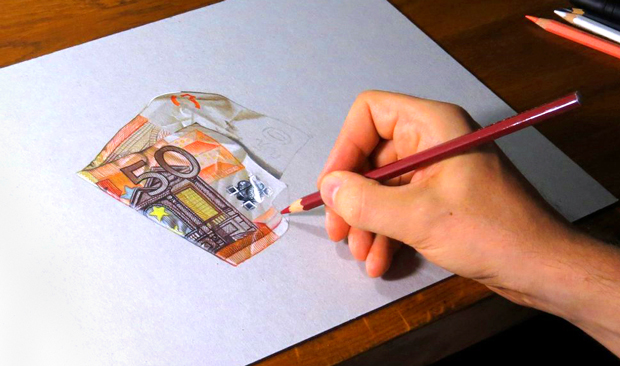
How to check the euro for authenticity
More than 20 years ago (January 1, 1999), the euro first entered non-cash circulation. And three years later, from January 1, 2002, the new currency also entered cash circulation. Banknotes began to appear in the wallets of Europeans. Today 19 EU countries have switched to a single currency.
The problem of counterfeit banknotes continues to damage businesses and ordinary citizens from year to year. In this review, the PaySpace Magazine editors will tell you how to check the euro for authenticity without having at hand specific equipment.
During the entire existence of the euro, the European Central Bank has issued 2 series of banknotes.
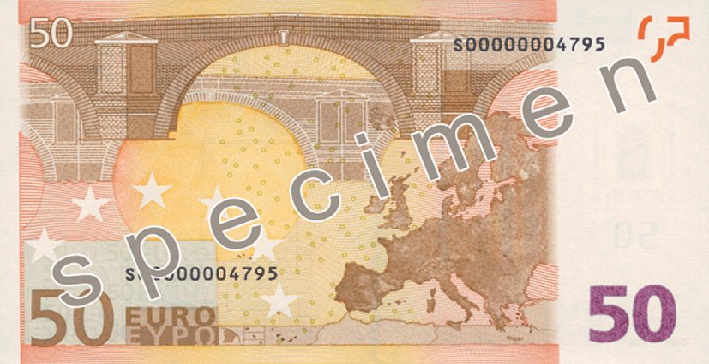
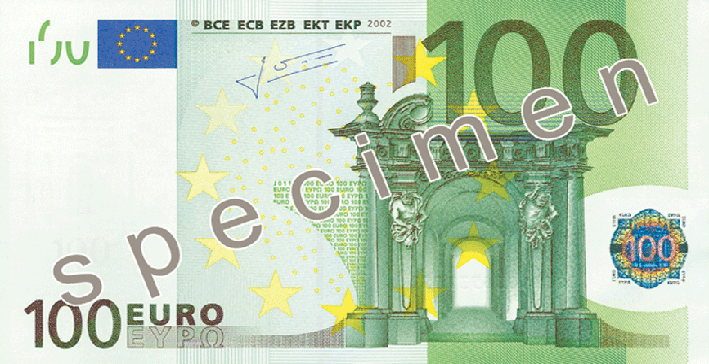
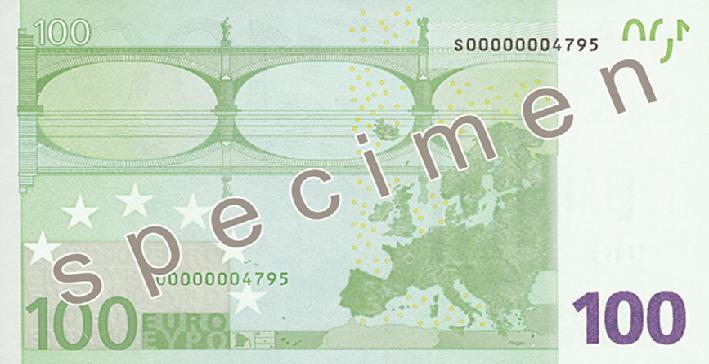
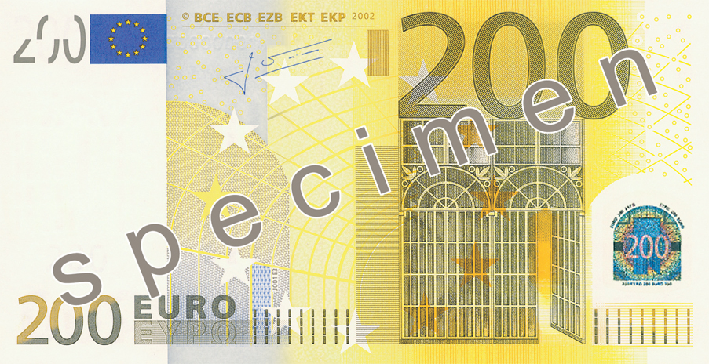
The first issue "Series of 2002" has 7 denominations of banknotes: 5 €, 10 €, 20 €, 50 €, 100 €, 200 €, 500 €.
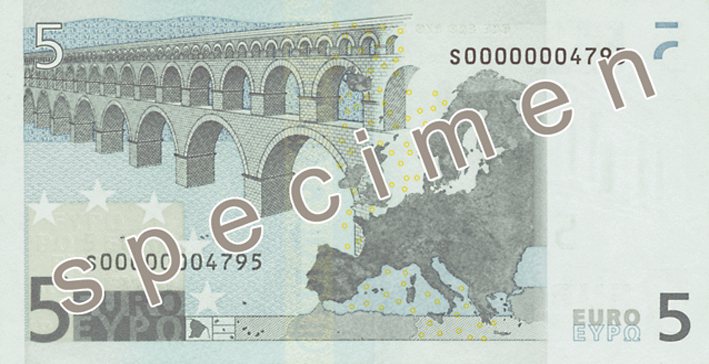
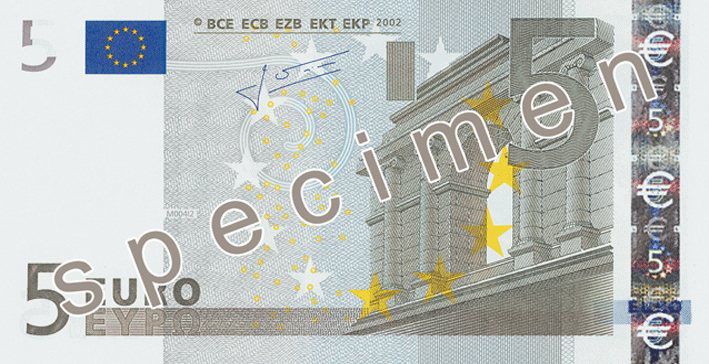
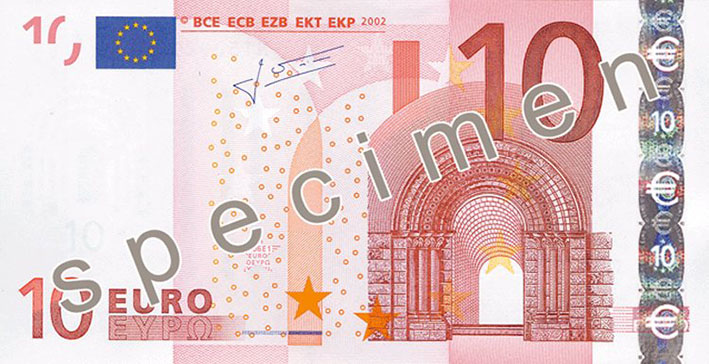
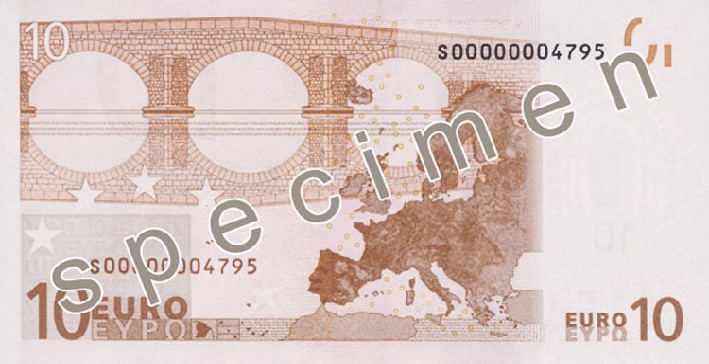
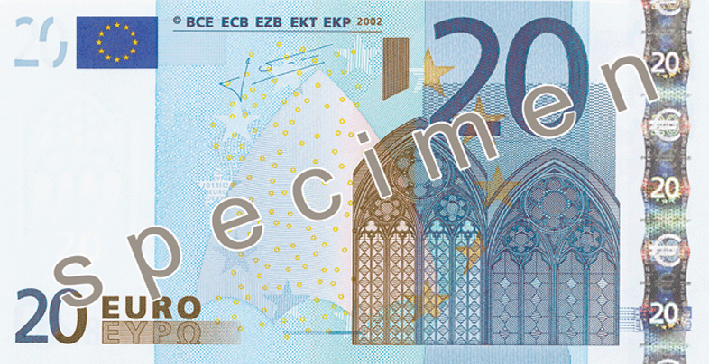
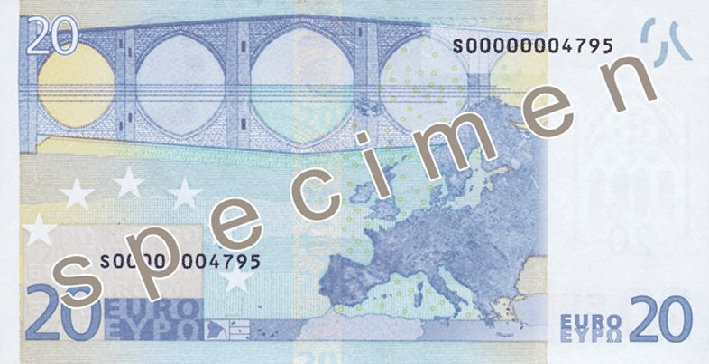
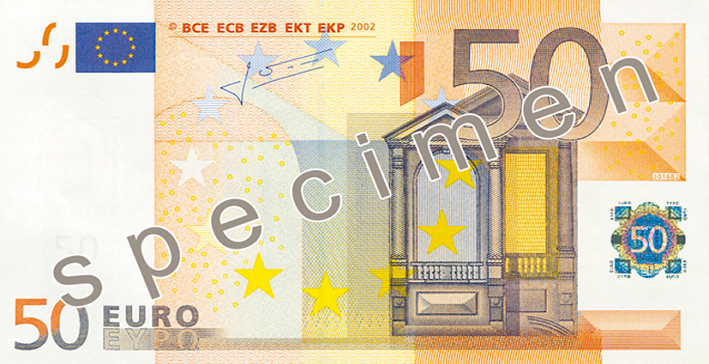
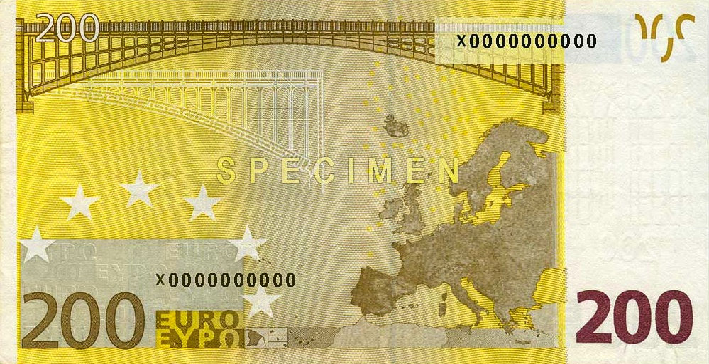
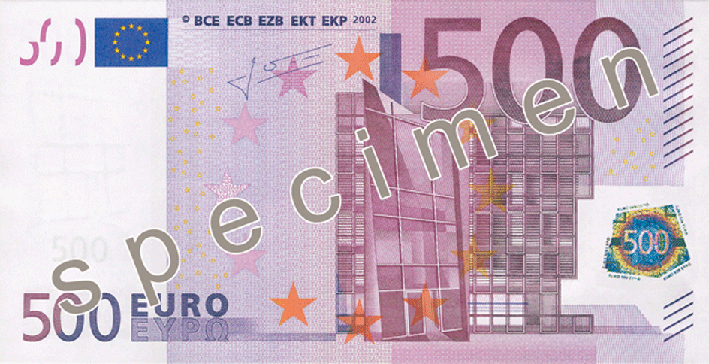
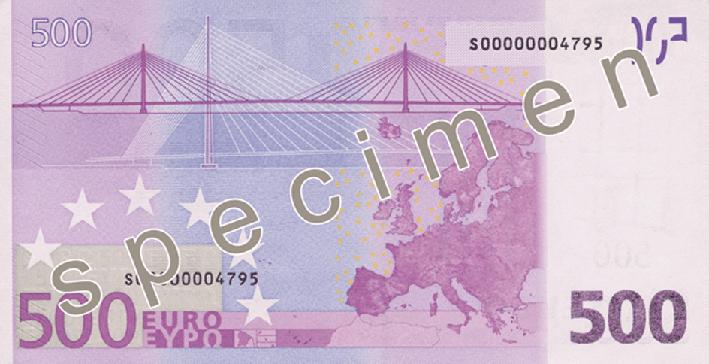
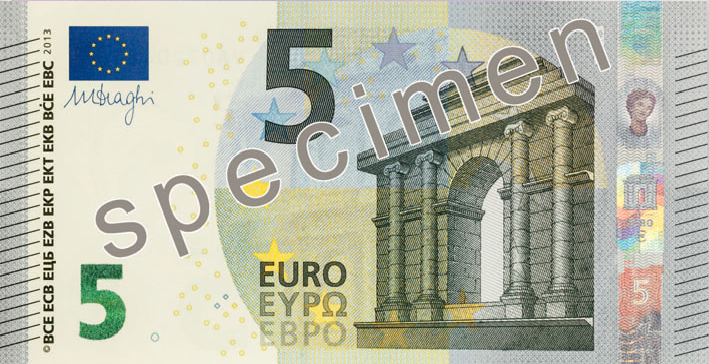
The second issue "Series Europe" so far contains only 4 denominations: 5 €, 10 €, 20 €, 50 €. The first banknotes of this series appeared in circulation in 2013.
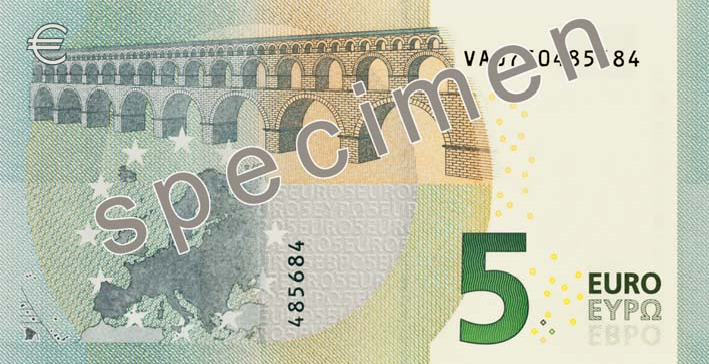
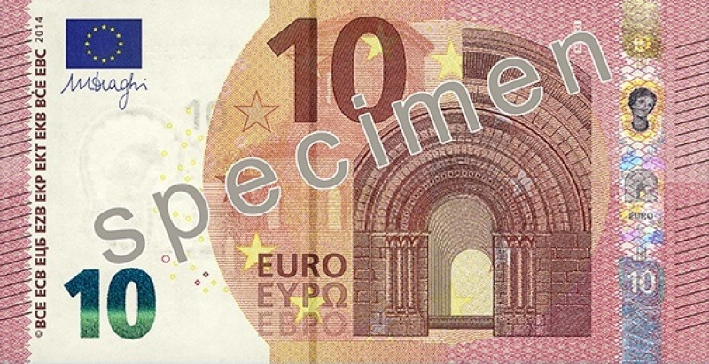
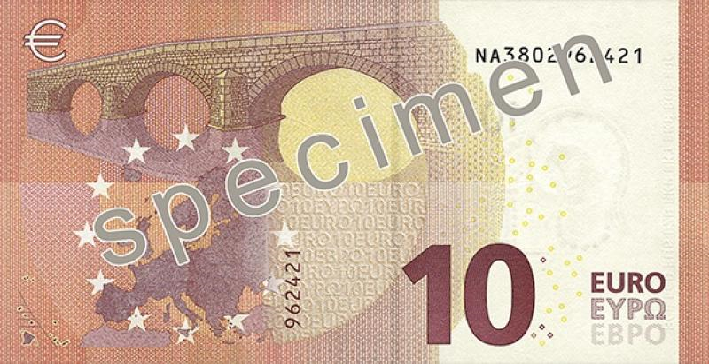
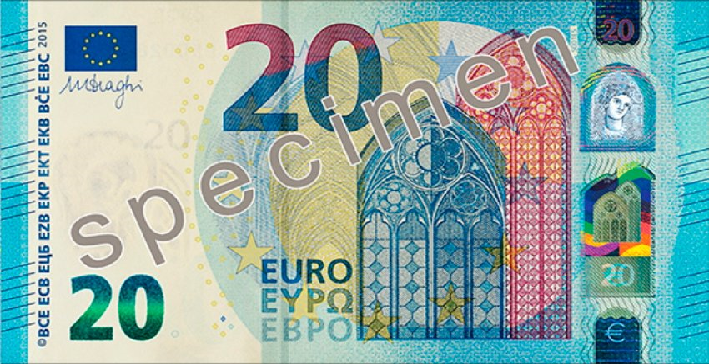
Security tape and thread on the 20 euro banknote.
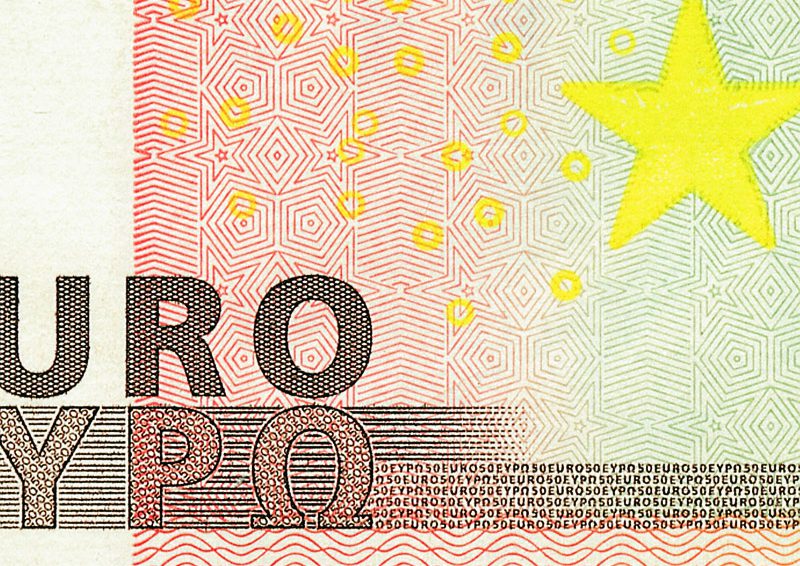
Microtext on the 50 euro banknote.

Holographic tape on a 20 euro banknote
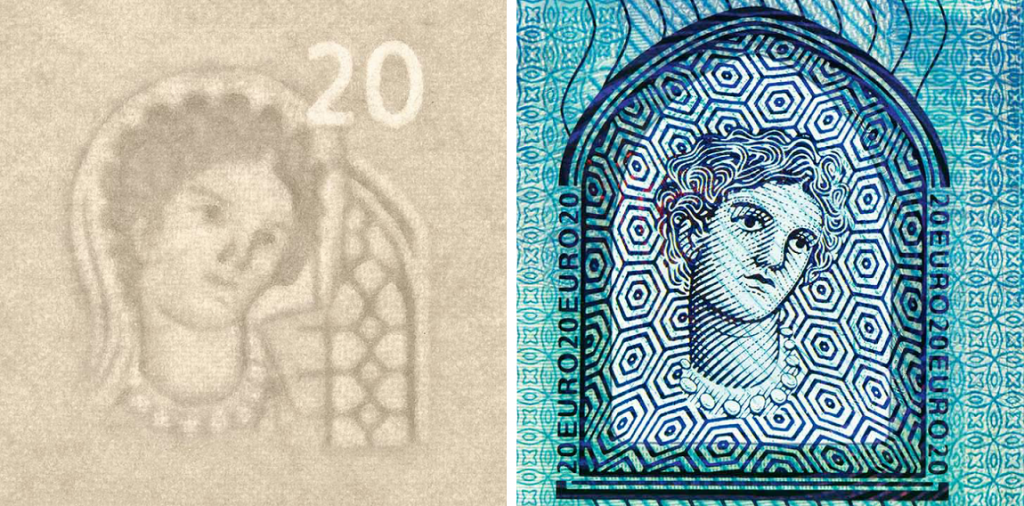
Mythological character "Europe"
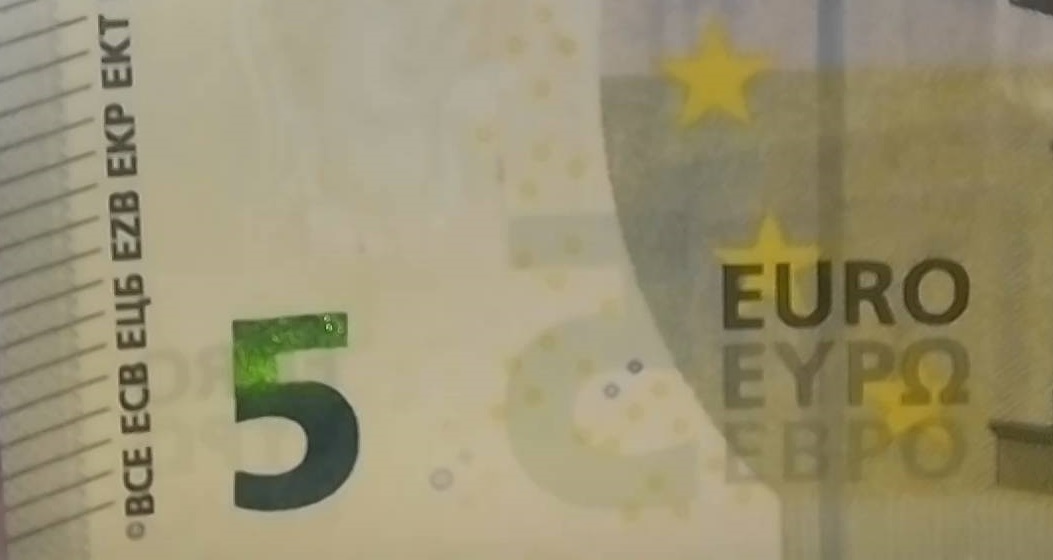
Emerald denomination of banknotes and inscriptions in Cyrillic.
Each bill has a unique number. It consists of a letter and an 11-digit number. These numbers and the letter always add up to the number 8.
Let's check on the example of the identifier S22227803764
Add all the digits of the number 22227803764:
2 + 2 + 2 + 2 + 7 + 8 + 0 + 3 + 7 + 6 + 4 = 43.
We add to this number the ordinal number of the letter S in the English alphabet - 19
43 + 19 = 62, 6 + 2 = 8
Now there are no doubts, the banknote that you have in your hands is genuine!
Photo: psm7.com
How to check the euro for authenticity
More than 20 years ago (January 1, 1999), the euro first entered non-cash circulation. And three years later, from January 1, 2002, the new currency also entered cash circulation. Banknotes began to appear in the wallets of Europeans. Today 19 EU countries have switched to a single currency.
The problem of counterfeit banknotes continues to damage businesses and ordinary citizens from year to year. In this review, the PaySpace Magazine editors will tell you how to check the euro for authenticity without having at hand specific equipment.
What do euro bills look like?
Before checking the euro for authenticity, you need to know what European banknotes look like: what colors, sizes and images correspond to different denominations of banknotes. Then you will immediately recognize fake euros, on which additional zeros are added.During the entire existence of the euro, the European Central Bank has issued 2 series of banknotes.
The first issue "Series of 2002" has 7 denominations of banknotes: 5 €, 10 €, 20 €, 50 €, 100 €, 200 €, 500 €.
The second issue "Series Europe" so far contains only 4 denominations: 5 €, 10 €, 20 €, 50 €. The first banknotes of this series appeared in circulation in 2013.
How to check the euro: a quick way
If you need to determine if the euro is real or not, and time is short, limit yourself to a basic check.- The banknote should be firm and rough to the touch thanks to the cotton paper
- Against the light, watermarks appear on the banknote, a security strip with the denomination of the bill and elements of the numbers, which together form the denomination of the bill
- At an angle, some elements (hologram and golden stripe) will change color
How to check the euro for authenticity: a detailed examination
The protection of euro banknotes is one of the most modern in the world. However, this does not stop the counterfeiters. Let's try to figure out how a genuine euro banknote with all security elements, without exception, should look like on the example of “Series 2002” banknotes.- Paper. Euros are printed on special cotton paper. This gives it rigidity and makes it "crunch" when bent. The front side of the banknote is smooth. On the other hand, it is rough.
- Seal. The special printing method makes the images embossed. By touch, you can distinguish the main image, the abbreviation of the European Central Bank in five languages, the date of issue of the series, the sign and the word "euro", the denomination of the banknote. All these elements are located on the obverse. The 200 and 500 euro banknotes also have special serifs for visually impaired people.
- Watermarks. Due to the different thicknesses of the banknote paper, images and numbers are visible when viewing the banknote. They can be seen both on the obverse and on the reverse.
- Mosaic. Under normal lighting, there are elements of numbers on the euro, but if you look at the banknote against the light, the denomination of the banknote will be visible on both sides thanks to invisible lines
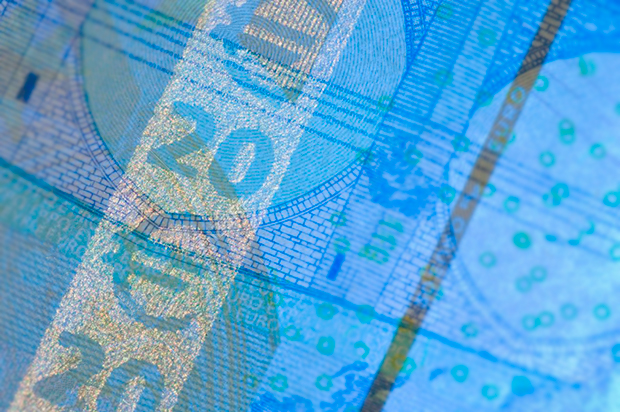
Security tape and thread on the 20 euro banknote.
- The security thread is located in the thickness of the paper and is visible through the light. It has the denomination of the banknote and the word euro.
- The security strip is visible at an angle, has a pearlescent golden color and displays the denomination of the banknote (used for 5.10 and 20 euros)
- Microtext is noticeable when examining in detail the inscriptions and stripes applied to the banknote, for example, on the EYPO element (euro in Greek) and on architectural ensembles.
Microtext on the 50 euro banknote.
- Ultraviolet light makes only some elements of the banknote glow - streaks of red, blue and green colors in the thickness of the paper, the flag of the European Union in green-orange, the signature of the head of the ECB, stars and a ring on the front of the banknote. The card, bridges, and denomination on the back are yellow. In this case, the color of the paper itself does not change.
- Infrared light makes part of the image invisible.
- A hologram for 50, 100, 200 and 500 euros, when the banknote is turned, changes the image from the face value to the door or window. And the holographic tape - from the denomination to the euro sign.
Holographic tape on a 20 euro banknote
How to check the authenticity of Euro Europa series?
The banknotes that the ECB began issuing since 2013 have the same standard security features as the 2002 Series. And a few additional differences:- Europa, a character of ancient Greek mythology, is depicted on the watermark and window of the holographic tape
Mythological character "Europe"
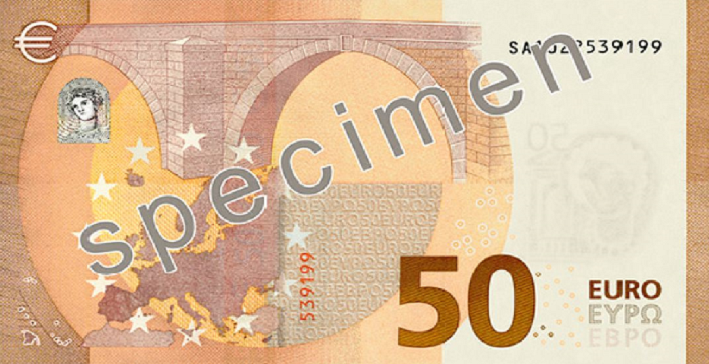
- Cyprus and Malta supplemented the card on the reverse of the banknote in connection with the accession to the European Union
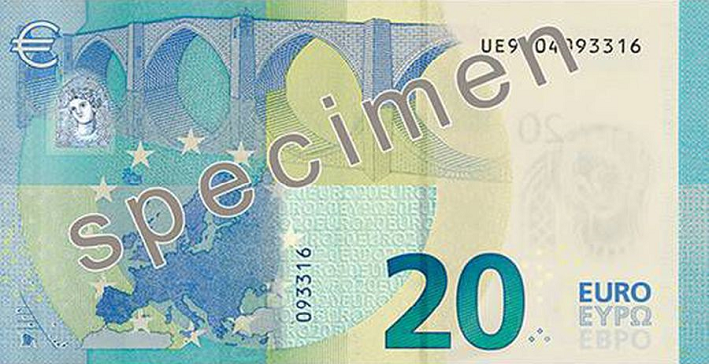
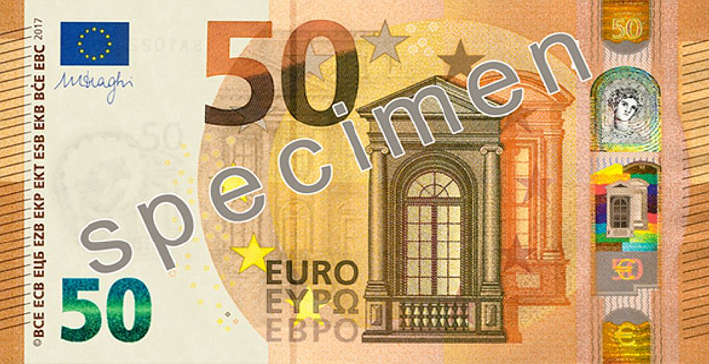
- EURO and ECB are written in Cyrillic after Bulgaria's accession to the EU.
- An emerald denomination of the banknote appeared on the obverse
Emerald denomination of banknotes and inscriptions in Cyrillic.
How to check a euro for authenticity: simple math
If all the images on the banknote seem to be real, but doubts about the authenticity of the banknote remain, you can check it using a calculator.Each bill has a unique number. It consists of a letter and an 11-digit number. These numbers and the letter always add up to the number 8.
Let's check on the example of the identifier S22227803764
Add all the digits of the number 22227803764:
2 + 2 + 2 + 2 + 7 + 8 + 0 + 3 + 7 + 6 + 4 = 43.
We add to this number the ordinal number of the letter S in the English alphabet - 19
43 + 19 = 62, 6 + 2 = 8
Now there are no doubts, the banknote that you have in your hands is genuine!
Photo: psm7.com


