

Brother
Professional
- Messages
- 2,590
- Reaction score
- 544
- Points
- 113
It happens that things happen to us that we want to forget. Unfortunately, we are not able to manage our memory - to erase memories with an effort of will, treating them like files on disk drives. But what if memory is still subject to targeted modification? While science fiction has explored the threats embedded in such power, science seems to have almost gotten close to giving science fiction writers an opportunity to test their hypotheses in reality.
Our memories define our personality in many ways. This is especially true of episodic memory - the one that stores memories of past years and preserves all the vicissitudes of your biography. She emphatically reminds us of who we are and who we were before. But here's the problem - we don't always want to be who we are. Almost everyone has moments in their biography that would be nice to forget. Some adventures can even lead to the development of PTSD, which often plagues combat veterans and accident victims. Maybe they can be erased?
If you think that a diary or notebook is a good metaphor for memory, then I hasten to upset you. Research shows that our memory is not in the least like written text or video. Rather, it is a soft, dynamic structure of associations and feelings, which is also rewritten with each playback. Hard? Well, what do you want! Not only is the brain itself the most difficult object to study - no joke, a system of almost 100 billion neurons with several trillion of nerve connections that controls the body and creates the inner world of consciousness. So evolution did not seem to be enough - it also stuck there a real time machine, which allows us to mentally return to the past and live it again.
In principle, if at the molecular and cellular level we already have a little idea of the memory device, then it is much more difficult to clearly say what it is on the scale of the whole brain. It is also difficult to give its universal definition, which would be suitable for the brain as a whole, and each neuron individually. We can't even really say where exactly the memory “sits”: in a person , almost all structures of the cerebral hemispheres are involved in recall. So the targeted and complete removal of a particular memory seems hardly possible, even in the long run.
Moreover, it is impossible to imagine approaches that would allow us to be in the place of the heroes of Eternal Sunshine of the Spotless Mind by removing the memories of a specific person - too complex a complex of associations and emotions will include this package of memories ...
But to become like the hero of the series "Homecoming", who, upon returning from Iraq, was stuffed with drugs in order to erase the traumatic memories of the war and thus restore combat effectiveness, apparently, it will soon become quite possible. The study, the course of which is very reminiscent of the prequel to the five-hour story of a psychologist's troubled conscience, played by Julia Roberts, is told in a recent publication in the scientific journal Science Advances .
It is already clear that the most important, if not the key, role in the formation and reproduction of episodic memory is played by the hippocampus. The classical view of this part of the brain assumes that, among other things, it is a temporary storage of memory - a kind of information transfer hub needed both for the formation of a memory and for its reproduction. Damage to the hippocampus very often leads to impaired episodic memory. Especially revealing is the example of Kent Cochrane, the famous patient of KC., who lost both hippocampus at once and lost the ability to both remember the events of his life and remember the facts of his biography. It is curious that other types of memory, for example, semantic, which includes knowledge about facts and the structure of the world, remained practically intact in Kent.
Well, cutting out the hippocampus of a victim of a post-traumatic disorder is a very bad idea, but maybe you can somehow influence it pharmacologically to prevent the memory from fixing, and ideally destroy it altogether? It turns out that today mankind knows several approaches to solving this problem.
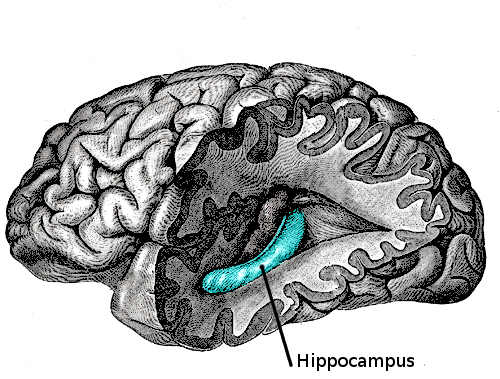
Everyone knows that exciting, including truly terrible events, are very well remembered. The main culprit for this is the amygdala, this part of the brain adjacent to the hippocampus. In a stressful situation, which is important for survival, her adrenergic receptors are activated by norepinephrine, and she forces the hippocampus to record everything in great detail, with all emotional shades and associations.
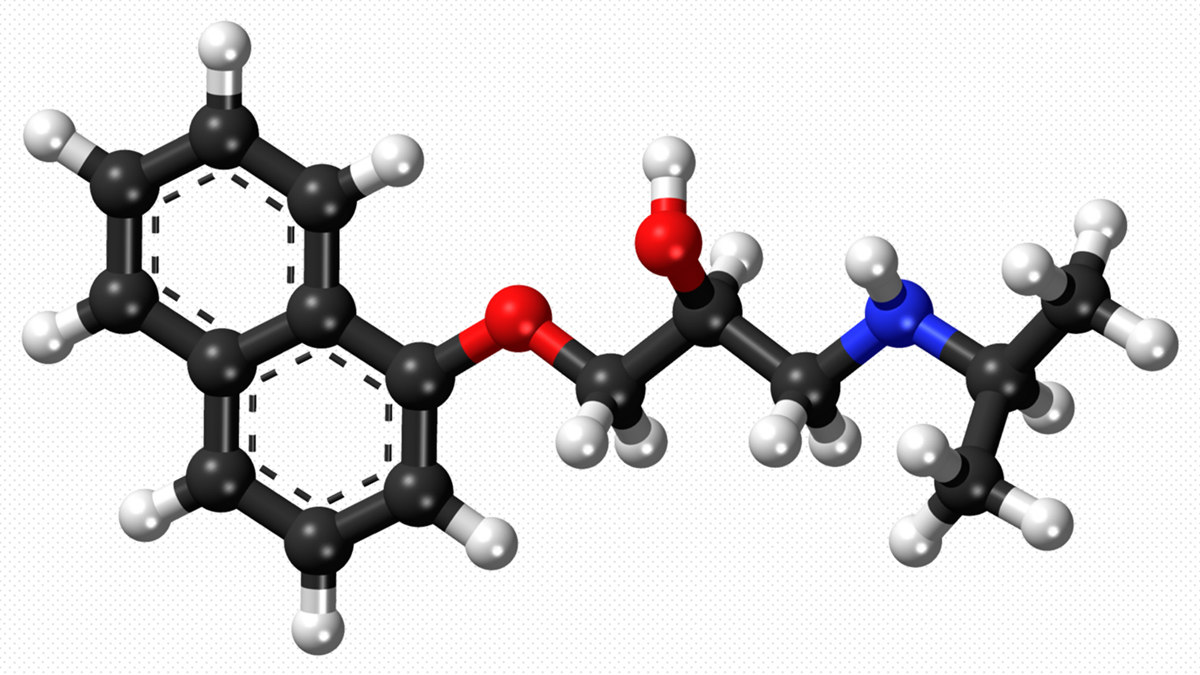
Therefore, β-adrenergic receptor blockers, the very ones that cause the amygdala to respond to stress, have been proposed as a safe way to reduce the acuity of traumatic memories. It only remained to select from this wide group of drugs such that it would pass through the blood-brain barrier into the brain. As a result, the researchers stopped their choice on propranololwidely known as a pressure reducing agent. Since the idea is to use the drug to prevent the formation of long-term, painful, emotionally intense memories of the trauma, it is recommended to start taking it no later than six hours after the traumatic experience. At the same time, it must be admitted that over 15-20 years of using propranolol for the prevention of post-traumatic disorder, a significant amount of information has accumulated on the effectiveness of such therapy. And it raises well, oh-oh-very big doubts.
Another interesting, although still only potential, opportunity, scientists have discerned, having studied the mechanism of formation of long-term memory. Long-term preservation of information in the brain requires the formation of new neural connections or at least a qualitative change in the conductivity of existing ones. These processes require protein synthesis and take considerable time - not even seconds, but minutes. Perhaps those who, like the author of this article, have had the dubious pleasure of having a concussion will also be familiar with the feeling of losing any memories of the last minutes before the injury. This local amnesia is connected precisely with the fact that at first the memory lives only in the form of a specific pattern of neuronal activity, which disintegrates relatively easily under the influence of a sufficiently strong blow to the back of the head. Only minutes later, the memory of the event that happened begins to "freeze" in the structure of connections between neurons. The formation of these bonds requires protein synthesis, so temporarily blocking it can easily prevent a memory from taking hold.
Studies on animal models of post-traumatic disorder show that if, after stress, a rat received an injection of a protein synthesis blocker, anisomycin, then it did not develop pronounced stress behavior later.
But even more exciting possibilities open up for us the peculiarities of recalling memories. Have you ever thought that the more often you turn to history from your own past, the more incredible details it becomes? This is partly due to the fact that recalling information from our memory is an active process, more like reconstruction than reading. The imagination is actively involved in it, and along the way the brain often forms completely new associative connections, changing the memory. In the scientific tradition, this "read-rewrite" process is aptly called reconsolidation. The biochemical mechanism of this process has much in common with the primary consolidation - consolidation - of memories and, apparently, significantly destabilizes original memory. Therefore, at the moment of re-experiencing the past, we, apparently, can inject the same protein synthesis blocker - anisomycin - into the brain of the recalling person, and thus save the patient from the already fully developed post-traumatic disorder (although such procedures have so far been carried out only on rats), or even though would ease his condition. But again, this method looks poorly applicable in humans: protein synthesis blockers are quite strong toxins. However, studies show that the already familiar beta-blocker propranolol, injected at this moment, can reduce the emotional acuity of the memory (as well as some psychological techniques, which we will not dwell on in more detail).
And now new, promising data on this, in general, not too researched, topic brought a completely fresh publication in the journal Science Advances . In it, the researchers used the already familiar technique of destabilizing memories, using for this another pharmacological drug - the anesthetic propofol . In general, the scientist came up with the idea to use it when they were observing patients undergoing electroconvulsive therapy - yes, the very same treatment with electroshock from the immortal One Flew Over the Cuckoo's Nest. Nowadays, although this treatment has ceased to be as popular as in the old days, it is still sometimes used, for example, as in our case, to treat unipolar depression.

Having conducted a simple psychological experiment, during which depressed patients were shown a slideshow with an emotionally catching story before the electric shock, the researchers found that patients who went through the repeated “recall” of the story before the next session remembered it much worse than those who did not remember it before the electric shock. ... But what does anesthetics have to do with it, you ask?
And despite the fact that in our humane time, electroconvulsive therapy is carried out under general anesthesia, without the medieval heartbreaking scenes that a reader familiar with the history of psychiatry could imagine . Scientists wondered: maybe such a noticeable effect was caused not by the electric shock, but by the anesthetic etomidate, which was not noticed by anyone ? And we decided to take a closer look at general anesthetics - substances that bind to the gamma-aminobutyric acid receptor and enhance the effect of its activation.
In this way, scientists came to their latest study, in which they studied the effect of another similar anesthetic, propofol, on destabilizing memory . Here they also showed maximum humanity and concern for patients. Knowing that anesthesia with propofol sometimes leads to the death of patients, they decided not to risk it and experiment with those to whom propofol was intended as needed. And no, they weren't Missouri death row inmates. These were patients undergoing an unpleasant (and hopefully unfamiliar) endoscopic examination.
The experiment protocol was largely the same as the previous work. Initial training with an emotional history, a one week pause, and then a few questions about a week's history - right in the endoscopy room before anesthesia is administered. One day after the procedure - another measurement of the quality of memory. It was he who showed that patients who had to recall a story right before anesthesia remembered it much worse than those who thought about something of their own before receiving propofol.
Thus, it was confirmed that anesthesia, and not the electroshock itself, is at least partially responsible for the "erasure" of destabilized memory during electroshock.
No, while it is obvious that loading information into memory or completely deleting given memories will remain the professional field of Hollywood scriptwriters, but not doctors. However, as we can see, we have already learned to selectively reduce the emotional acuteness and detail of memories with the help of a relatively harmless anesthetic. And that's just what it takes to successfully treat PTSD! So let the implantation of the memory about the vacation on Mars wait - here the medical removal of memories is on the way.
Self-control is very important, and we can say that technology is increasing our "self-control" more and more. Modern medicine gives us a decent chance of living for eight decades, and a cosmetologist with a plastic surgeon will help us to realize our wildest fantasies. As headlines in recent years increasingly tell us, redesigning your own genome is also a matter of several decades. But, as they say, the most serious problems are always hidden in the head. Perhaps, after some time we will learn to solve this problem as well, and if the creation and loading of design memories does not seem very possible yet, then deleting "already unnecessary" memories may become quite feasible for science. Does it make you scared or interesting?
Our memories define our personality in many ways. This is especially true of episodic memory - the one that stores memories of past years and preserves all the vicissitudes of your biography. She emphatically reminds us of who we are and who we were before. But here's the problem - we don't always want to be who we are. Almost everyone has moments in their biography that would be nice to forget. Some adventures can even lead to the development of PTSD, which often plagues combat veterans and accident victims. Maybe they can be erased?
If you think that a diary or notebook is a good metaphor for memory, then I hasten to upset you. Research shows that our memory is not in the least like written text or video. Rather, it is a soft, dynamic structure of associations and feelings, which is also rewritten with each playback. Hard? Well, what do you want! Not only is the brain itself the most difficult object to study - no joke, a system of almost 100 billion neurons with several trillion of nerve connections that controls the body and creates the inner world of consciousness. So evolution did not seem to be enough - it also stuck there a real time machine, which allows us to mentally return to the past and live it again.
In principle, if at the molecular and cellular level we already have a little idea of the memory device, then it is much more difficult to clearly say what it is on the scale of the whole brain. It is also difficult to give its universal definition, which would be suitable for the brain as a whole, and each neuron individually. We can't even really say where exactly the memory “sits”: in a person , almost all structures of the cerebral hemispheres are involved in recall. So the targeted and complete removal of a particular memory seems hardly possible, even in the long run.
Moreover, it is impossible to imagine approaches that would allow us to be in the place of the heroes of Eternal Sunshine of the Spotless Mind by removing the memories of a specific person - too complex a complex of associations and emotions will include this package of memories ...
But to become like the hero of the series "Homecoming", who, upon returning from Iraq, was stuffed with drugs in order to erase the traumatic memories of the war and thus restore combat effectiveness, apparently, it will soon become quite possible. The study, the course of which is very reminiscent of the prequel to the five-hour story of a psychologist's troubled conscience, played by Julia Roberts, is told in a recent publication in the scientific journal Science Advances .
It is already clear that the most important, if not the key, role in the formation and reproduction of episodic memory is played by the hippocampus. The classical view of this part of the brain assumes that, among other things, it is a temporary storage of memory - a kind of information transfer hub needed both for the formation of a memory and for its reproduction. Damage to the hippocampus very often leads to impaired episodic memory. Especially revealing is the example of Kent Cochrane, the famous patient of KC., who lost both hippocampus at once and lost the ability to both remember the events of his life and remember the facts of his biography. It is curious that other types of memory, for example, semantic, which includes knowledge about facts and the structure of the world, remained practically intact in Kent.
Well, cutting out the hippocampus of a victim of a post-traumatic disorder is a very bad idea, but maybe you can somehow influence it pharmacologically to prevent the memory from fixing, and ideally destroy it altogether? It turns out that today mankind knows several approaches to solving this problem.
Everyone knows that exciting, including truly terrible events, are very well remembered. The main culprit for this is the amygdala, this part of the brain adjacent to the hippocampus. In a stressful situation, which is important for survival, her adrenergic receptors are activated by norepinephrine, and she forces the hippocampus to record everything in great detail, with all emotional shades and associations.
Therefore, β-adrenergic receptor blockers, the very ones that cause the amygdala to respond to stress, have been proposed as a safe way to reduce the acuity of traumatic memories. It only remained to select from this wide group of drugs such that it would pass through the blood-brain barrier into the brain. As a result, the researchers stopped their choice on propranololwidely known as a pressure reducing agent. Since the idea is to use the drug to prevent the formation of long-term, painful, emotionally intense memories of the trauma, it is recommended to start taking it no later than six hours after the traumatic experience. At the same time, it must be admitted that over 15-20 years of using propranolol for the prevention of post-traumatic disorder, a significant amount of information has accumulated on the effectiveness of such therapy. And it raises well, oh-oh-very big doubts.
Another interesting, although still only potential, opportunity, scientists have discerned, having studied the mechanism of formation of long-term memory. Long-term preservation of information in the brain requires the formation of new neural connections or at least a qualitative change in the conductivity of existing ones. These processes require protein synthesis and take considerable time - not even seconds, but minutes. Perhaps those who, like the author of this article, have had the dubious pleasure of having a concussion will also be familiar with the feeling of losing any memories of the last minutes before the injury. This local amnesia is connected precisely with the fact that at first the memory lives only in the form of a specific pattern of neuronal activity, which disintegrates relatively easily under the influence of a sufficiently strong blow to the back of the head. Only minutes later, the memory of the event that happened begins to "freeze" in the structure of connections between neurons. The formation of these bonds requires protein synthesis, so temporarily blocking it can easily prevent a memory from taking hold.
Studies on animal models of post-traumatic disorder show that if, after stress, a rat received an injection of a protein synthesis blocker, anisomycin, then it did not develop pronounced stress behavior later.
True, anisomycin alone does not know how to overcome the blood-brain barrier (the demarcation line between the blood and the brain), therefore it has to be delivered to the hippocampus directly, injecting a substance into this area of the brain, and there can be no talk of any tablets with anisomycin.
Other, safer substances have a similar, albeit less pronounced effect on the consolidation of memories: valproic acid, clonazepam, and some cannabinoids.But even more exciting possibilities open up for us the peculiarities of recalling memories. Have you ever thought that the more often you turn to history from your own past, the more incredible details it becomes? This is partly due to the fact that recalling information from our memory is an active process, more like reconstruction than reading. The imagination is actively involved in it, and along the way the brain often forms completely new associative connections, changing the memory. In the scientific tradition, this "read-rewrite" process is aptly called reconsolidation. The biochemical mechanism of this process has much in common with the primary consolidation - consolidation - of memories and, apparently, significantly destabilizes original memory. Therefore, at the moment of re-experiencing the past, we, apparently, can inject the same protein synthesis blocker - anisomycin - into the brain of the recalling person, and thus save the patient from the already fully developed post-traumatic disorder (although such procedures have so far been carried out only on rats), or even though would ease his condition. But again, this method looks poorly applicable in humans: protein synthesis blockers are quite strong toxins. However, studies show that the already familiar beta-blocker propranolol, injected at this moment, can reduce the emotional acuity of the memory (as well as some psychological techniques, which we will not dwell on in more detail).
And now new, promising data on this, in general, not too researched, topic brought a completely fresh publication in the journal Science Advances . In it, the researchers used the already familiar technique of destabilizing memories, using for this another pharmacological drug - the anesthetic propofol . In general, the scientist came up with the idea to use it when they were observing patients undergoing electroconvulsive therapy - yes, the very same treatment with electroshock from the immortal One Flew Over the Cuckoo's Nest. Nowadays, although this treatment has ceased to be as popular as in the old days, it is still sometimes used, for example, as in our case, to treat unipolar depression.
Having conducted a simple psychological experiment, during which depressed patients were shown a slideshow with an emotionally catching story before the electric shock, the researchers found that patients who went through the repeated “recall” of the story before the next session remembered it much worse than those who did not remember it before the electric shock. ... But what does anesthetics have to do with it, you ask?
And despite the fact that in our humane time, electroconvulsive therapy is carried out under general anesthesia, without the medieval heartbreaking scenes that a reader familiar with the history of psychiatry could imagine . Scientists wondered: maybe such a noticeable effect was caused not by the electric shock, but by the anesthetic etomidate, which was not noticed by anyone ? And we decided to take a closer look at general anesthetics - substances that bind to the gamma-aminobutyric acid receptor and enhance the effect of its activation.
In this way, scientists came to their latest study, in which they studied the effect of another similar anesthetic, propofol, on destabilizing memory . Here they also showed maximum humanity and concern for patients. Knowing that anesthesia with propofol sometimes leads to the death of patients, they decided not to risk it and experiment with those to whom propofol was intended as needed. And no, they weren't Missouri death row inmates. These were patients undergoing an unpleasant (and hopefully unfamiliar) endoscopic examination.
The experiment protocol was largely the same as the previous work. Initial training with an emotional history, a one week pause, and then a few questions about a week's history - right in the endoscopy room before anesthesia is administered. One day after the procedure - another measurement of the quality of memory. It was he who showed that patients who had to recall a story right before anesthesia remembered it much worse than those who thought about something of their own before receiving propofol.
Thus, it was confirmed that anesthesia, and not the electroshock itself, is at least partially responsible for the "erasure" of destabilized memory during electroshock.
Even more interesting was the fact that the effect of propofol concerned only the emotionally saturated parts of the story, but practically did not affect the neutral ones.
True, it is still not entirely clear how a substance that enhances the activity of the gamma-aminobutyric acid receptor affects the rewriting of memories, all the more selectively, although these data are consistent with the results previously obtained in animals . But the main thing is different - it seems that we have become one step closer to the technique of directed removal of emotionally tinged memories and one day we will be able, for example, to extract them from the memory of those who have experienced traumatic experiences ...No, while it is obvious that loading information into memory or completely deleting given memories will remain the professional field of Hollywood scriptwriters, but not doctors. However, as we can see, we have already learned to selectively reduce the emotional acuteness and detail of memories with the help of a relatively harmless anesthetic. And that's just what it takes to successfully treat PTSD! So let the implantation of the memory about the vacation on Mars wait - here the medical removal of memories is on the way.
Self-control is very important, and we can say that technology is increasing our "self-control" more and more. Modern medicine gives us a decent chance of living for eight decades, and a cosmetologist with a plastic surgeon will help us to realize our wildest fantasies. As headlines in recent years increasingly tell us, redesigning your own genome is also a matter of several decades. But, as they say, the most serious problems are always hidden in the head. Perhaps, after some time we will learn to solve this problem as well, and if the creation and loading of design memories does not seem very possible yet, then deleting "already unnecessary" memories may become quite feasible for science. Does it make you scared or interesting?

