

Tomcat
Professional
- Messages
- 2,695
- Reaction score
- 1,072
- Points
- 113
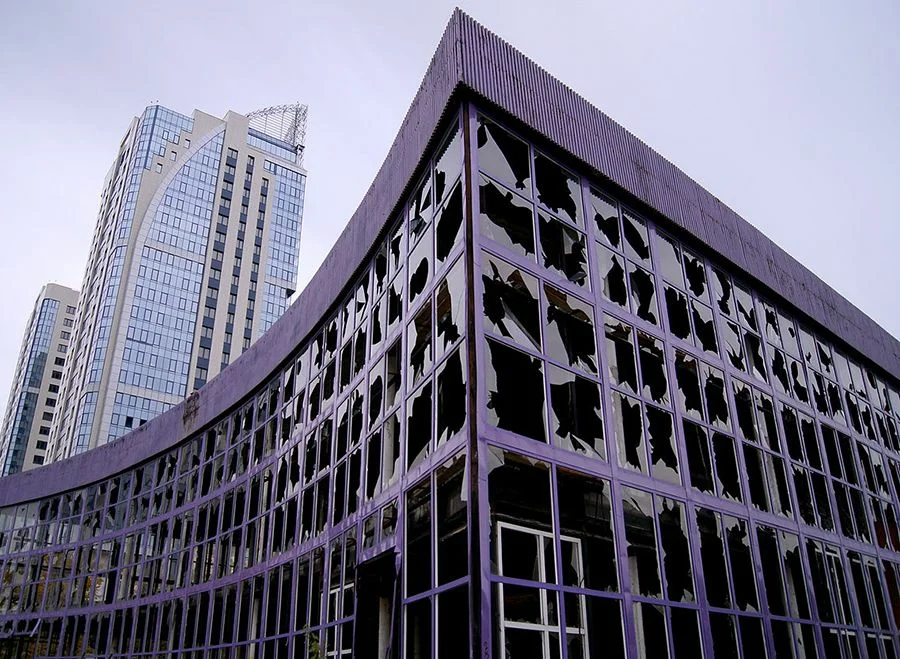
Instead of fighting social inequality and the corruption of power structures, which often seem like an unattainable goal, the proponents of the broken window theory advise “to start with yourself” - for example, paint the entrance. Critics argue that this theory - or rather a hypothesis - is ineffective and does more harm than good.
In 1982, the American magazine The Atlantic Monthly published an article by political scientist James Wilson and criminologist George Kelling entitled "Broken Windows" (James Q. Wilson, George L. Kelling. Broken Windows). The authors argued that general disorder and serious crimes were inextricably linked.
"Social psychologists and the police agree that if a broken window in a house remains unrepaired, then soon the rest of the windows will also be broken," - this is the central thesis of the text. A broken window is a signal that everyone is indifferent, and further vandalism, or even more serious crimes, will remain without consequences.
In particular, the authors refer to an experiment conducted in 1969 by Stanford psychologist Philip Zimbardo. He left two identical cars without license plates in the Bronx and Palo Alto - that is, in the "black" poor area and in the "white" wealthy. In the Bronx, they started robbing the car within ten minutes and completely gutted the car within 24 hours. In Palo Alto, the car lasted a week, until Zimbardo himself hit it with a sledgehammer. After that, within a few hours, the car was completely destroyed. In this case, the vandals were mostly respectable white townspeople.
A long-term experiment, already at the municipal level, was carried out in the mid-1970s when the state of New Jersey introduced police foot patrols. The goal was close contact of law enforcement officers with the townspeople. For five years of this practice, the crime rates have not decreased in any way, on the contrary.
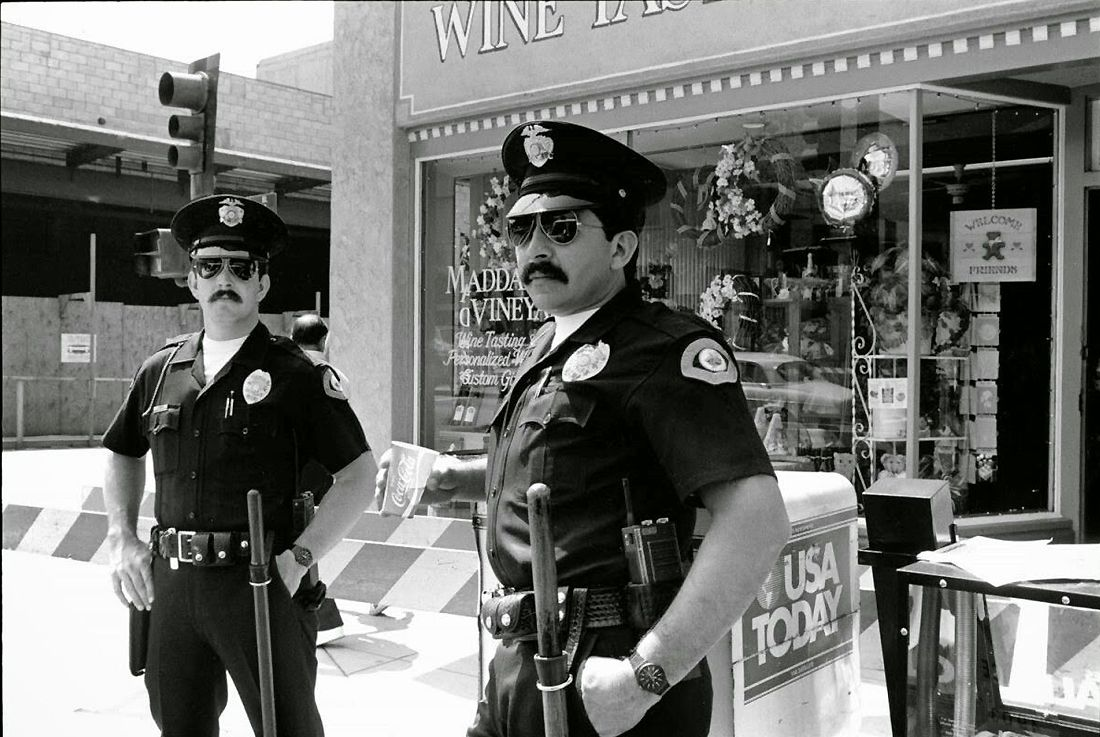
This did not bother the authors of the broken windows theory, who noted that residents still had the impression that the level of security had improved. Wilson and Kelling assure that this is not an illusion, because the police really managed to curb minor violations of order.
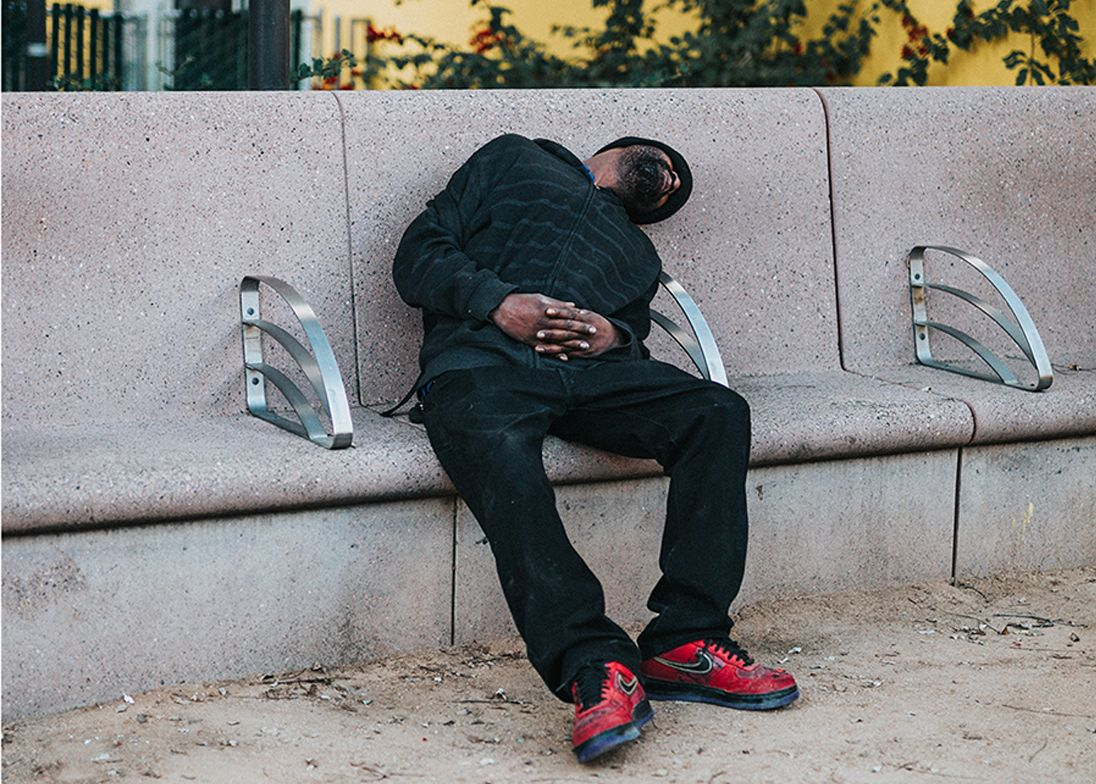
The role of the patrol officers was to work out, together with "law-abiding local citizens", certain rules directed primarily against "outsiders". So, in one of the districts of the city of Newark, teenagers were forbidden to make noise, drunkards - to lie down on benches and drink alcohol in public places, vagrants - to cling to passers-by with conversations or requests (those immediately led to detention), etc. Among the rules were the following: if a quarrel broke out between an employee of a local store and a client, the client was automatically wrong, especially if he was a stranger, a stranger from another area.
The patrolled areas were dominated by blacks, while the patrols were white. In the field of view of the police, first of all, came "dubious, problematic or unpredictable people: beggars, drunkards, drug addicts, teenagers, prostitutes, vagabonds and the mentally ill."
“You have to be not very intellectually careful to jump from real broken windows to homeless people on the streets. After all, a beggar on the street and a physically broken window glass often have very different reasons, which must also be addressed in different ways, ”comment on the article by Roman Leksikov and Daniil Cherny from the Center for Sociology of Law and Criminology.
However, the idea quickly gained popularity. Broken Windows is one of the most cited articles in the history of criminology; it is sometimes called the "Law Enforcement Bible," writes Erik Klinenberg in his book "Palaces for the People."
Illusion of order
Most associated with the use of the theory of broken glass is Rudolph Giuliani, who was elected mayor of New York in 1993. He expanded the city's police force by 3,660 people and introduced a zero-tolerance policy for offenses such as graffiti, public drinking, street coping, and the like. The city government even revived the old cabaret law, which forbids dancing in unintended places.According to a 2001 study, violent crime rates did drop significantly over the course of a decade - by 54%, which was seen as a victory for the broken window theory.
To one degree or another, the theory was implemented by Chicago, Los Angeles and a number of other cities in the United States, but criticism did not slow down either. The first book to disprove the broken window theory was Bernard Harcourt 's Illusion of Order, published in 2001. The author points out that over the 30 years of the existence of this theory, it has never been empirically confirmed, on the contrary, the available research contradicts it. The theory also relies on arbitrarily defined categories of "order" and "disorder", "law-abiding citizens" and "violators."
First of all, the drop in crime in New York occurred simultaneously with the corresponding process in the entire United States. In another study, Harcourt notes that the drop in crime rates in New York coincided with the end of the crack drug epidemic. Christina Sterbenz adds that this trend has been fueled by declining unemployment (during the 1990s, its rate fell by 40%).
Criminologist Ralph Taylor is sure that socio-economic is a significant factor that affects the crime rate. Returning to the experiment with two cars - in the Bronx initially there was a low level of welfare, and in wealthy Palo Alto, a researcher must intervene in the experiment to provoke vandalism.
The theory of broken windows has also failed to pass the test of a massive social experiment. In 1994, the US government introduced the Moving to Opportunity program, which relocated 4,800 impoverished families to prime locations. The program was implemented in New York, Los Angeles, Chicago, Boston and Baltimore. Three quarters of the resettled households were on the brink of poverty, and two thirds of the participants were African American.
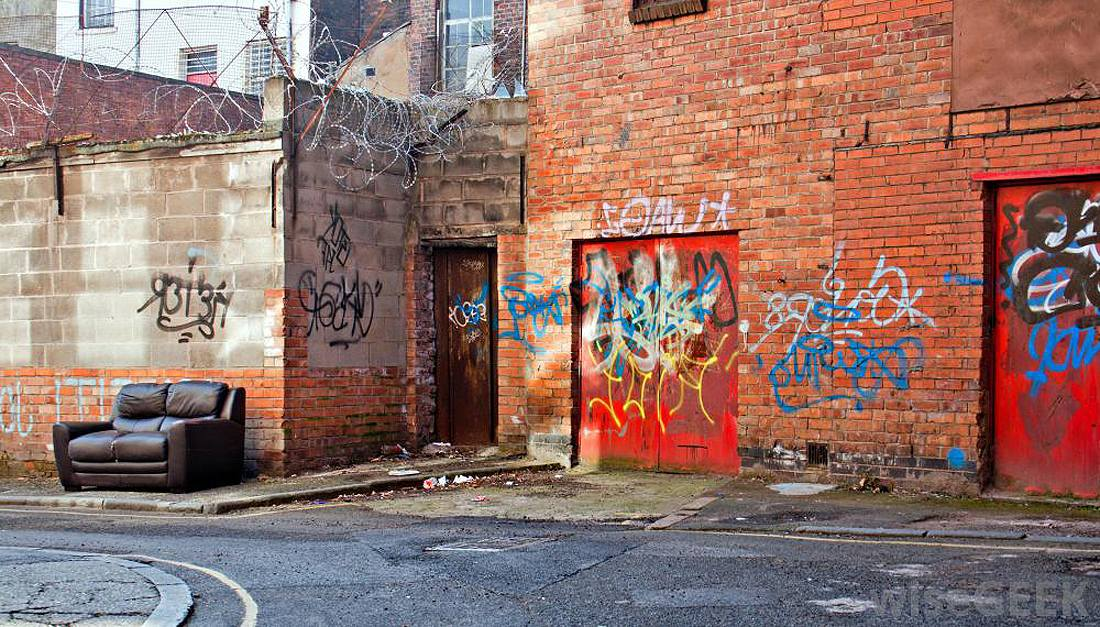
According to the theory, in the new environment the level of their involvement in offenses should have, but this did not happen, since the move did not improve their financial situation, but emphasized the social gap with their neighbors.
End of zero tolerance
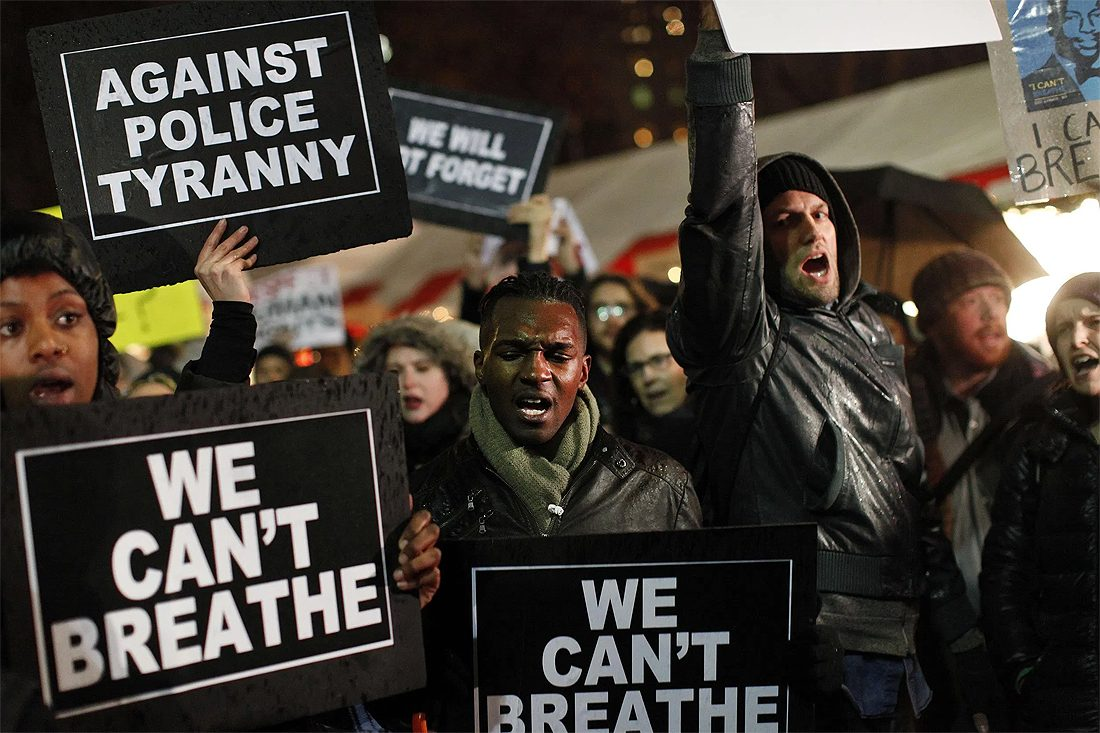
In 2014-2015, NYPD was forced to wind down its aggressive petty crime policy due to massive protests against police violence. Public outrage was caused by the death of black Eric Garner. The police tried to detain him for selling cigarettes by the piece on the street. The latter did not want to be handcuffed, and one of the policemen used a strangulation technique. Although Garner screamed that he could not breathe, the policeman continued to squeeze his neck. As a result, six children lost their father.Over the next two years, the rate of homicide, robbery, rape and other serious crimes fell by 3-6%, according to a 2017 study. The authors believe that aggressive police measures, contrary to expectations, only worsen the crime situation.
“The results are amazing. Police tactics to maintain law and order have proven to only deepen economic and social inequality, destabilize communities and harm the psyche of young people. Preventive policing can be counterproductive, ”study co-author Christopher Sullivan writes.
The Targets of Broken Window Theory
In addition to the fact that the theory of broken windows is ineffective, its targets are primarily marginal and vulnerable segments of the population. Harkur and Ludwig note that since 1994, when the NYPD introduced a zero-tolerance policy for minor offenses, by 2000 the number of administrative penalties for smoking marijuana in public places had grown 65 times, reaching 92% of all offenses related to marijuana (including its production and distribution).Moreover, in half of the cases, the detainees were black, another 30% were Hispanics. Compared to whites, detention more often resulted in arrest and conviction.
But sociologist Mitchell Daneer, in his book The Sidewalk, argues that marginalized groups can maintain order in the city, although this may not be noticeable. He researched black book and magazine sellers, street children, alcohol and drug addicts. Despite their deviant behavior, they appreciated the opportunity to earn money honestly and had their own code that made it impossible for them to commit serious violations.
In 2004, James Wilson, co-author of the theory of broken windows, said: "I still don't know if clutter control lowers crime ... God knows how it really is."
He argued that the idea was primarily to identify the relationship between the quality of life and the level of violence. However, the idea was formulated in such a way that in practice it was implemented in the form of increased police control and repression of vulnerable groups. Library "Classical psychological hypotheses" Broken windows.
© Irina Stasyuk
Does Broken Windows Theory Work?
Instead of fighting social inequality and the corruption of power structures, which often seem like an unattainable goal, the proponents of the broken window theory advise “to start with yourself” - for example, paint the entrance. Critics argue that this theory - or rather a hypothesis - is ineffective and does more harm than good.
Broken Window Theory states that general disorder and criminal behavior are inextricably linked.
In 1982, the American magazine The Atlantic Monthly published an article by political scientist James Wilson and criminologist George Kelling entitled "Broken Windows" (James Q. Wilson, George L. Kelling. Broken Windows). The authors argued that general disorder and serious crimes were inextricably linked.
"Social psychologists and the police agree that if a broken window in a house remains unrepaired, then soon the rest of the windows will also be broken," - this is the central thesis of the text. A broken window is a signal that everyone is indifferent, and further vandalism, or even more serious crimes, will remain without consequences.
In particular, the authors refer to an experiment conducted in 1969 by Stanford psychologist Philip Zimbardo. He left two identical cars without license plates in the Bronx and Palo Alto - that is, in the "black" poor area and in the "white" wealthy. In the Bronx, they started robbing the car within ten minutes and completely gutted the car within 24 hours. In Palo Alto, the car lasted a week, until Zimbardo himself hit it with a sledgehammer. After that, within a few hours, the car was completely destroyed. In this case, the vandals were mostly respectable white townspeople.
A long-term experiment, already at the municipal level, was carried out in the mid-1970s when the state of New Jersey introduced police foot patrols. The goal was close contact of law enforcement officers with the townspeople. For five years of this practice, the crime rates have not decreased in any way, on the contrary.
Street patrols give local residents an impression of order and safety on the streets.
This did not bother the authors of the broken windows theory, who noted that residents still had the impression that the level of security had improved. Wilson and Kelling assure that this is not an illusion, because the police really managed to curb minor violations of order.
The role of the patrol officers was to work out, together with "law-abiding local citizens", certain rules directed primarily against "outsiders". So, in one of the districts of the city of Newark, teenagers were forbidden to make noise, drunkards - to lie down on benches and drink alcohol in public places, vagrants - to cling to passers-by with conversations or requests (those immediately led to detention), etc. Among the rules were the following: if a quarrel broke out between an employee of a local store and a client, the client was automatically wrong, especially if he was a stranger, a stranger from another area.
The patrolled areas were dominated by blacks, while the patrols were white. In the field of view of the police, first of all, came "dubious, problematic or unpredictable people: beggars, drunkards, drug addicts, teenagers, prostitutes, vagabonds and the mentally ill."
Anti-lying homeless products on benches in Los Angeles are an example of so-called hostile architecture.
“You have to be not very intellectually careful to jump from real broken windows to homeless people on the streets. After all, a beggar on the street and a physically broken window glass often have very different reasons, which must also be addressed in different ways, ”comment on the article by Roman Leksikov and Daniil Cherny from the Center for Sociology of Law and Criminology.
However, the idea quickly gained popularity. Broken Windows is one of the most cited articles in the history of criminology; it is sometimes called the "Law Enforcement Bible," writes Erik Klinenberg in his book "Palaces for the People."
Illusion of order
Most associated with the use of the theory of broken glass is Rudolph Giuliani, who was elected mayor of New York in 1993. He expanded the city's police force by 3,660 people and introduced a zero-tolerance policy for offenses such as graffiti, public drinking, street coping, and the like. The city government even revived the old cabaret law, which forbids dancing in unintended places.According to a 2001 study, violent crime rates did drop significantly over the course of a decade - by 54%, which was seen as a victory for the broken window theory.
To one degree or another, the theory was implemented by Chicago, Los Angeles and a number of other US cities.
But criticism did not slow down either. The first book to disprove the broken window theory was Bernard Harcourt 's Illusion of Order, published in 2001. The author points out that over the 30 years of the existence of this theory, it has never been empirically confirmed, on the contrary, the available research contradicts it. The theory also relies on arbitrarily defined categories of "order" and "disorder", "law-abiding citizens" and "violators."
First of all, the drop in crime in New York occurred simultaneously with the corresponding process in the entire United States. In another study, Harcourt notes that the drop in crime rates in New York coincided with the end of the crack drug epidemic. Christina Sterbenz adds that this trend has been fueled by declining unemployment (during the 1990s, its rate fell by 40%).
Criminologist Ralph Taylor is sure that socio-economic is a significant factor that affects the crime rate. Returning to the experiment with two cars - in the Bronx initially there was a low level of welfare, and in wealthy Palo Alto, a researcher must intervene in the experiment to provoke vandalism.
The theory of broken windows has also failed to pass the test of a massive social experiment. In 1994, the US government introduced the Moving to Opportunity program, which relocated 4,800 impoverished families to prime locations. The program was implemented in New York, Los Angeles, Chicago, Boston and Baltimore. Three quarters of the resettled households were on the brink of poverty, and two thirds of the participants were African American.
Relocating the poor to prime locations has not diminished their poverty and delinquency.
According to the theory, in the new environment the level of their involvement in offenses should have, but this did not happen, since the move did not improve their financial situation, but emphasized the social gap with their neighbors.
End of zero tolerance
In 2014-2015, NYPD was forced to wind down its aggressive petty crime policy due to massive protests against police violence. Public outrage was caused by the death of black Eric Garner. The police tried to detain him for selling cigarettes by the piece on the street. The latter did not want to be handcuffed, and one of the policemen used a strangulation technique. Although Garner screamed that he could not breathe, the policeman continued to squeeze his neck. As a result, six children lost their father.Over the next two years, the rate of homicide, robbery, rape and other serious crimes fell by 3-6%, according to a 2017 study. The authors believe that aggressive police measures, contrary to expectations, only worsen the crime situation.
“The results are amazing. Police tactics to maintain law and order have proven to only deepen economic and social inequality, destabilize communities and harm the psyche of young people. Preventive policing can be counterproductive, ”study co-author Christopher Sullivan writes.
The Targets of Broken Window Theory
In addition to the fact that the theory of broken windows is ineffective, its targets are primarily marginal and vulnerable segments of the population. Harkur and Ludwig note that since 1994, when the NYPD introduced a zero-tolerance policy for minor offenses, by 2000 the number of administrative penalties for smoking marijuana in public places had grown 65 times, reaching 92% of all offenses related to marijuana (including its production and distribution).Moreover, in half of the cases, the detainees were black, another 30% were Hispanics. Compared to whites, detention more often resulted in arrest and conviction.
But sociologist Mitchell Daneer, in his book The Sidewalk, argues that marginalized groups can maintain order in the city, although this may not be noticeable. He researched black book and magazine sellers, street children, alcohol and drug addicts. Despite their deviant behavior, they appreciated the opportunity to earn money honestly and had their own code that made it impossible for them to commit serious violations.
In 2004, James Wilson, co-author of the theory of broken windows, said: "I still don't know if clutter control lowers crime ... God knows how it really is."
He argued that the idea was primarily to identify the relationship between quality of life and the level of violence. However, this idea was formulated in such a way that in practice it was implemented in the form of increased police control and repression of vulnerable groups.
Broken windows theory is primarily targeted at marginalized and vulnerable populations.
“Until now, most urban crime reduction strategies focus on punishment rather than beautification. We are investing too little in local infrastructure such as libraries, parks and community centers that attract people to the common space, ”writes Klinenberg.
He tells a positive example of restoring order that helped reduce crime. For several years, the Pennsylvania Gardens Union has been tidying up some 76 hectares of abandoned land in Philadelphia. Wastelands overgrown with dense thickets are turned into public spaces, clearing debris, planting trees and sowing lawns.
The first results showed a 39% decrease in the number of crimes with the use of weapons in areas of restored homes and 5% around reclaimed land.
Last edited:


