

Carding Forum
Professional
- Messages
- 2,788
- Reaction score
- 1,363
- Points
- 113
In this article, timed to coincide with the acquisition of legal status by an electronic signature in the United States, we decided to figure out what an electronic signature is and what its status is in Ukraine and other countries.

Electronic digital signature in the world.
On this day in 2000, the United States was allowed to certify financial documents with an electronic signature. America belongs to those countries where the status of an electronic signature is equivalent to a handwritten one. What is an electronic signature? And which countries regulate this area like the United States?
According to our Ukrainian legislation, or rather the Law of Ukraine "On Electronic Digital Signature", an electronic signature (ES) is data in electronic form that is attached to other electronic data or is logically linked to them, and is intended to identify the subscriber of this data.
Separately, the law highlights the concept of an electronic digital signature (EDS). This is a type of electronic signature obtained as a result of cryptographic transformation of a set of electronic data, which is attached to this set or logically combined with it and makes it possible to confirm its integrity and identify the identity of the signer. An electronic digital signature is applied using a private key and verified using a public key.
Simply put, an electronic digital signature is used by legal entities and individuals as an analogue of a handwritten signature. With the help of a digital signature, an electronic document acquires legal force and becomes equivalent to a paper document signed by an authorized person and sealed.
EDS has all the basic properties of a handwritten signature:
Category 2: countries where the status of an electronic signature is equivalent to the status of a handwritten signature. These countries include: USA, Canada, Great Britain, Ireland, Chile, Switzerland, Singapore, Portugal, Philippines, UAE, Ireland, Hong Kong.
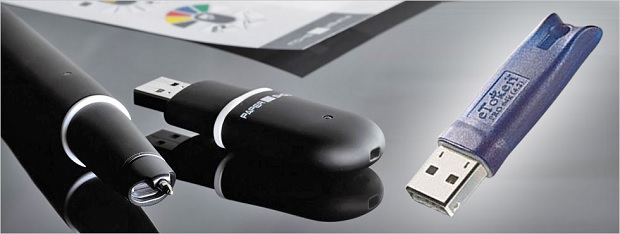
The digital signature can be stored on such a token (flash drive).
In these countries, there is no clear regulation of the use of electronic signatures. You can sign any electronic document, the signature will have legal force regardless of which document is signed with the electronic signature. Electronic signatures are issued by organizations that do not have state certification, the very concept of a certification center is absent. There is no classification of signatures by type, with the exception of highly regulated industries: medicine, real estate, contracts with the government. Some countries have adopted laws on electronic document management. Specifically, in the United States, companies are required to enter into an agreement indicating that the parties agree to conduct business electronically.
Category 2: countries where an electronic signature is used, but does not have the same broad status as a handwritten signature on paper. A similar status of using an electronic signature is valid in Russia, China, Czech Republic, France, Japan, Belgium, China, India. Legally, the use of an electronic signature is permissible, but the legislation of these countries clearly defines the scope of application of electronic signature.
Category 3: countries where the status of electronic signatures is unclear. These countries include: Argentina, Austria, Brazil, Denmark, Hungary, Germany. In these countries, the use of electronic signatures directly depends on certification authorities. At the same time, electronic signatures do not have equal legal force with signatures on paper.
The country with the most extensive use of electronic signatures is Estonia. The Republic of Estonia has introduced an ID card program, which has been issued to 95% of the population. All Estonian residents aged 15 and over are required to have an ID card. Using ID-cards, it is possible to remotely issue benefits, purchase tickets, submit tax returns, order documents from various authorities.
Electronic documents and, accordingly, electronic signatures are used most often in such cases:
Electronic digital signature in the world.
On this day in 2000, the United States was allowed to certify financial documents with an electronic signature. America belongs to those countries where the status of an electronic signature is equivalent to a handwritten one. What is an electronic signature? And which countries regulate this area like the United States?
According to our Ukrainian legislation, or rather the Law of Ukraine "On Electronic Digital Signature", an electronic signature (ES) is data in electronic form that is attached to other electronic data or is logically linked to them, and is intended to identify the subscriber of this data.
Separately, the law highlights the concept of an electronic digital signature (EDS). This is a type of electronic signature obtained as a result of cryptographic transformation of a set of electronic data, which is attached to this set or logically combined with it and makes it possible to confirm its integrity and identify the identity of the signer. An electronic digital signature is applied using a private key and verified using a public key.
Simply put, an electronic digital signature is used by legal entities and individuals as an analogue of a handwritten signature. With the help of a digital signature, an electronic document acquires legal force and becomes equivalent to a paper document signed by an authorized person and sealed.
EDS has all the basic properties of a handwritten signature:
- certifies that the received document came from the person who signed it;
- guarantees the integrity and protection against distortion / correction of the signed document;
- does not allow the person who signed the document to refuse the obligations arising from the signing of this electronic document.
Global experience and world practice
In most of the developed countries of the world, legislation on electronic signatures has been adopted in order to accelerate trade over the Internet, as well as electronic document flow. Accordingly, each country approaches this issue based on its own security and control criteria.Category 2: countries where the status of an electronic signature is equivalent to the status of a handwritten signature. These countries include: USA, Canada, Great Britain, Ireland, Chile, Switzerland, Singapore, Portugal, Philippines, UAE, Ireland, Hong Kong.
The digital signature can be stored on such a token (flash drive).
In these countries, there is no clear regulation of the use of electronic signatures. You can sign any electronic document, the signature will have legal force regardless of which document is signed with the electronic signature. Electronic signatures are issued by organizations that do not have state certification, the very concept of a certification center is absent. There is no classification of signatures by type, with the exception of highly regulated industries: medicine, real estate, contracts with the government. Some countries have adopted laws on electronic document management. Specifically, in the United States, companies are required to enter into an agreement indicating that the parties agree to conduct business electronically.
Category 2: countries where an electronic signature is used, but does not have the same broad status as a handwritten signature on paper. A similar status of using an electronic signature is valid in Russia, China, Czech Republic, France, Japan, Belgium, China, India. Legally, the use of an electronic signature is permissible, but the legislation of these countries clearly defines the scope of application of electronic signature.
Category 3: countries where the status of electronic signatures is unclear. These countries include: Argentina, Austria, Brazil, Denmark, Hungary, Germany. In these countries, the use of electronic signatures directly depends on certification authorities. At the same time, electronic signatures do not have equal legal force with signatures on paper.
The country with the most extensive use of electronic signatures is Estonia. The Republic of Estonia has introduced an ID card program, which has been issued to 95% of the population. All Estonian residents aged 15 and over are required to have an ID card. Using ID-cards, it is possible to remotely issue benefits, purchase tickets, submit tax returns, order documents from various authorities.
Electronic signature
In Ukraine, the use of electronic signatures is governed by the Law of Ukraine on Electronic Documents, adopted on 28.12.2003, and the Law on Electronic Digital Signatures, dated 01.01.2004. According to Art. 6 of the Law on Electronic Documents, EDS is a mandatory requisite of an electronic document that is used to identify the author and / or signer of an electronic document by other subjects of electronic document circulation. The creation of an electronic document is completed with the imposition of an EDS. The EDS key is stored on a specific storage medium: hard disk or drive.Electronic documents and, accordingly, electronic signatures are used most often in such cases:
- in the bank payment system;
- for the purpose of reporting;
- for the purpose of submitting applications for registration of personal data bases;
- for the purpose of registering tax invoices.


