

Brother
Professional
- Messages
- 2,590
- Reaction score
- 544
- Points
- 113
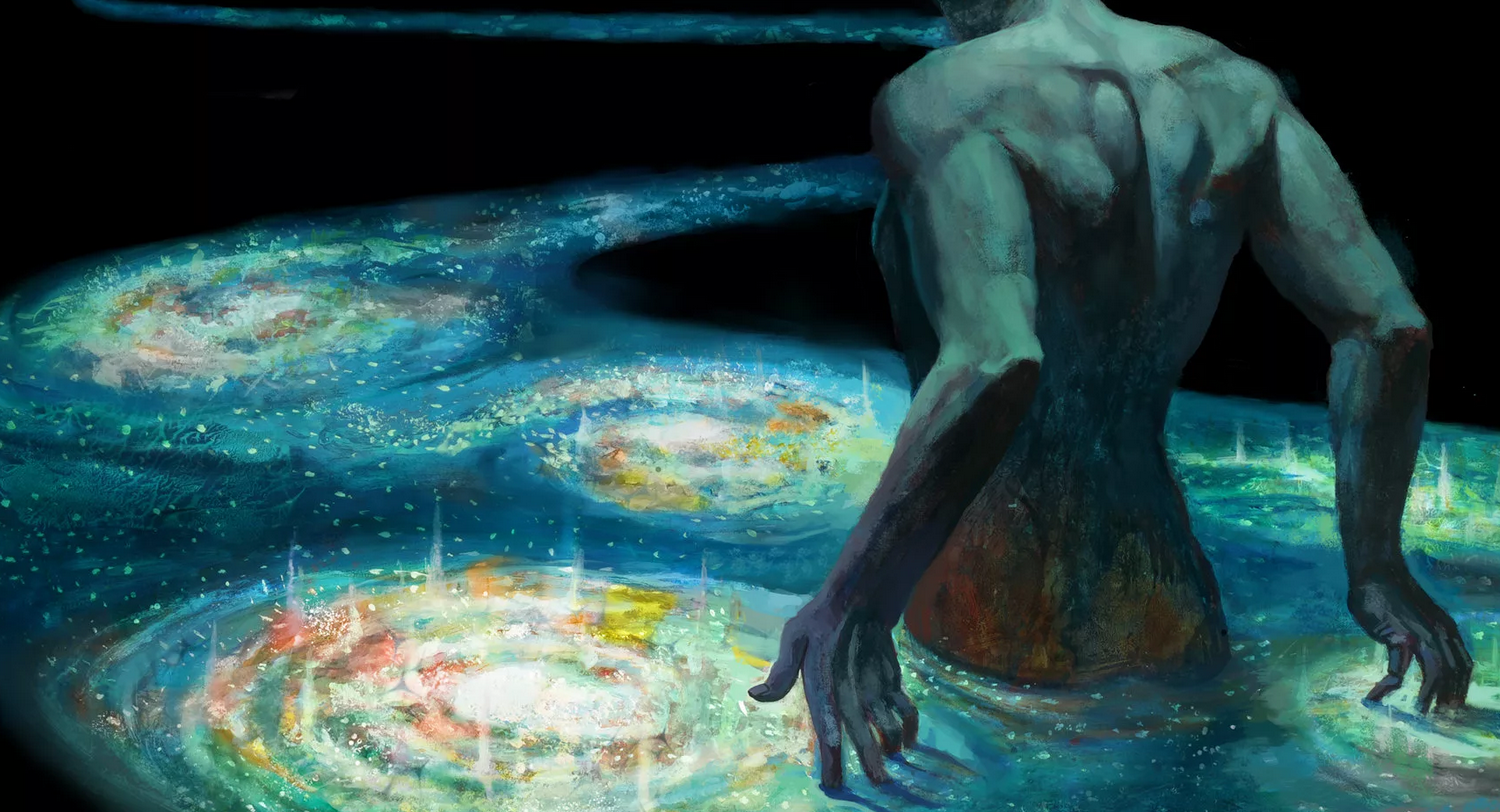
The phenomenon of the formation of personality and being oneself worried many philosophers and thinkers - from Plotinus to Nietzsche and Foucault. What does it mean to become who you are? Can the different situations we face in life make us a “different person”? Or do they just highlight those facets of our "I" that for the time being were hidden from us? What then is the role of changes in the formation of our identity and can these changes be purposeful?
“It has been six years since I discovered that my son was using drugs. I was very sad all the time and I was devastated, not to mention how worried I was about his welfare. My son was no longer the same person, ”writes Vincenzina Urzia in Anthony and I (2014), in which she talks about her son's addiction.
The puzzle here is that someone can become "not the same person." The phrase is similar to a philosophical statement, perhaps even an absurdity. At the same time, the very idea that we could stop recognizing someone we used to know is striking. Many of us have faced situations where, under the influence of strong changes, a person began to seem completely different.
Drug addiction vividly illustrates this phenomenon of alienation: the mother sees that the addiction turns her son into a shadow of his former self. Other examples may evoke the same feelings. The breakup of a relationship changes the partner so much that he seems to become a different person. The same applies to Alzheimer's disease, which affects up to half of older Americans. A parent or relative develops severe Alzheimer's disease, and it seems that the person we once knew has disappeared. A variety of situations lead to profound changes, which sometimes make well-known friends or loved ones someone else.
These examples show how certain changes can disrupt our sense of self. However, there are changes that do not affect our identity. Moreover, some profound changes seem to force us to become truly ourselves. Think about finding your true self in romantic love, discovering hidden passion in life, trying to radically improve your health, and experiencing religious or spiritual conversion. The same effect can occur in more difficult cases, such as wartime survival or imprisonment. All this leads to huge transformations, but they do not threaten identity. On the contrary, these changes seem to bring out our selves, forcing us to become who we really are. This allows us to make the seemingly paradoxical statement:a paradigm in which a person continues to be one and the same person includes the formation and interaction of radical changes.
This idea of the need for change to maintain our self can be clarified through a philosophical thought experiment. Think of yourself as a newborn. Fifteen years after you were born, your friends and family saw a person who was completely different from a newborn. This teenager had a larger body, a sharper mind, deeper values, and a richer social life. In many of these important aspects, this teenager would not be like a small child at all. But these two would undoubtedly be the same person. You are hardly expected to be like a newborn. In fact, in order for you to be the same person, there are actually many aspects in which you must differ over time from a newborn.
Philosophy often emphasizes the importance of being yourself in spite of change. She asks how various changes, such as complete memory loss or brain transplants, can create a different person. This helps to clarify aspects of personal identity and self, but it also obscures the idea of the meaning of the change itself. The ideal way to maintain the unity of your existence over time is not to remain exactly the same. Instead, you need to change.
The meaning of change is not limited to how we think about personal identity. Various practical problems are based on assumptions not about the static, but about the changing self. For example, a fiduciary account opened for a young child assumes that the adult beneficiary will be very different from that child. On the other hand, the money in this account is for a person who will be much like this little child, but it is not meant for someone with the linguistic, mental and moral abilities of a young child. Many long-term commitments share this approach. They are based on expected changes or developments, not exact similarities.
Philosophers note cases where change causes practical problems. For example, it might seem that certain personal changes require breaking promises seemingly made to another person. But in the case of a fiduciary account, we seem to be more concerned about the relevance of disbursing that account if the adult is like a child than if he is too different. The implicit conditions underlying these judgments are not just static similarities, but supposed changes over time.
What changes are conducive to such ideal transformations - according to a particular model? These essential changes are not arbitrary. Our thought experiment took into account the changes that indicated the purposeful development of the newborn. This thought experiment exemplifies a steady change that is consistent with personal identity and fundamental to the self. We would definitely discourage a teenager from striving for exact resemblance to a newborn in fear of losing his true identity. Part of what it means to a teenager to be the same person as a newborn is significant and purposeful transformation through language learning, social norms and moral codes.
Everyday life offers numerous examples of identity preservation and purposeful change. Sometimes, big changes refer to a person's essence or deep self. New relationships, career successes, or new hobbies inevitably change us, but they do so in accordance with our self-description. These changes do not make us seem "smaller than ourselves." Instead, these changes seem to help us become who we are.
The history of philosophy encourages us to purposefully change our "I". The ancient Greek philosopher Plotinus referred to the image of the statue. He calls us
Purposeful self-change does not present a personal identity problem. Rather, it reveals the facets of the true self.“Cut off everything that is excessive, straighten everything that is crooked, illuminate everything that is vague, work to make everything a radiance of beauty. Never stop working on a statue until the divine light of virtue shines on you."
Several centuries earlier, the Chinese philosopher Mencius described humans as cultivators cultivating the seeds of their virtue. If we grow into good people, it means that we have grown in the right direction, cultivating our seeds of virtue. It is important that we are born like seeds and not like mature trees of our virtue. We are not born absolutely good, keeping our virtue unchanged. On the contrary, we are born as simple seeds of virtue that will flourish through development.
Similar ideas are repeated throughout the history of philosophy. In Ecce Homo, Friedrich Nietzsche describes the phenomenon of becoming who you are:
“Becoming who you truly are requires that you have no idea who you are ... the organizing, dominant 'idea' continues to grow deep within ... before giving any hint of an overarching task, 'purpose',“ meaning"".
And in an interview with On the Genealogy of Morality, Michel Foucault notes that:
"We have to create ourselves as a work of art."
My essay draws inspiration from these sayings, despite the fact that each of them remains a subject of discussion. The main idea is that, in contrast to the idea of the relationship of our identity with constancy or similarity, in fact, "I" is an organic and dynamic phenomenon. Being the same person in time is not an attempt to hold on to all aspects of our current self, but it is about purposeful change.
A common feature of all these historical views is the vision of something deep within, be it the image of a statue, the seed of virtue, or the guiding idea of "becoming who you are." This brings to light an important conjecture about purposeful development. With proper development, the future self will not be exactly the same as the present self. Instead, the future self must purposefully evolve and thus become a different version of the present self. And often the future self will be a colored or flourishing version of an earlier self that contained small seeds or hints of the future.
Understanding this kind of change requires broader reflection. What does it mean to purposefully develop? Human goals are complex, so let's first look at the goal of something simpler. Let's take an acorn. The purpose of the acorn is to become an oak tree. We could attribute this purpose to individual acorns in different ways. For example, since we know that acorns usually grow into oak trees, it would seem that each acorn could have such a purpose. But we also assign goals retrospectively. Having seen how an unknown object turns into an oak, we can look back and attribute the transformation to an oak as the object's goal. Moreover, upon learning that a particular acorn has evolved into a very tall oak tree, we can go back in time and think that transforming into a very tall oak tree is the more specific purpose of this acorn.
However, human goals of a person are broader than the development of language and values, becoming a social and moral being. But there are some similarities to the acorn. We study many of the obvious goals of people through theory. Humans usually develop language and morality, and so it seems that newborns also have this goal, even when the newborns themselves do not exhibit any linguistic or moral behavior. The same reasoning can be applied to more individualized goals. Perhaps, having learned that a particular child has become a great athlete, we might even look back in time and think that such a specific goal was visible in a young child who has not yet shown such traits and inclinations. It seems to us that the main aspects of personal identity can be traced back to youth.
This notion of a dynamic and purposeful self is in conflict with the focus of some discussions about personal identity. This debate focuses on immutability with change, and rests on the idea that immutability implies similarity to something. In a broad sense, this notion of purposefulness presupposes a similarity - an identical goal throughout life, but, as Nietzsche notes, the goal is often hidden. Often we have no idea who we are until we become one.
An interest in the problem of not knowing who we are or who we will become initiates philosophical speculation about "transformational experiences." It is an experience that changes a person in a fundamental and unpredictable way: having a child, serving in the army, starting a new career, being imprisoned, or falling in love. Decisions to gain such experience pose a problem for decision theory. How can we evaluate what we do not know? Of course, we can appreciate some vague decisions. Although I have never tried tequila or the Twinkie diet, I conclude that this is probably a bad choice. But other unknown decisions are more difficult to assess, because the person I would become by virtue of my decision is somehow fundamentally different from my current self. For example, having a baby can lead to such profound personal changes, that it is difficult even to evaluate this decision. The list of pros and cons from my current perspective seems to inadequately reflect this decision, as the self that emerges as a response to the birth of a child may be radically different from my current self.
A possible answer to these problems is provided by an intuition about the meaning of personal change. The key to understanding is our belief in purpose. Remember how we talked about an acorn that should turn into an oak. In the same way, we understand that a newborn person must develop, grow, become wiser, more morally and socially prepared. Language acquisition transforms our experience, but we have no doubt that it is the experience that preserves and enriches identity, rather than upsetting identity or destroying the true self. Radical changes like language learning develop us into the people we really should be, although the personalities we become are shaped in different ways.
However, humans are very different from plants and other animals. Our obvious goals are broader than those given by nature or even culture. While the acorn's sole purpose is to grow into an oak, humans are creatures of multifaceted and varied possibilities. This implies an exciting but dangerous aspect of self-goal setting. Often, who we seem to ourselves now becomes more comprehensible over time. To clarify this property, consider examples of great achievements. Imagine a small child growing up to be a great artist. In this case, we reflect on what happened before and see the seeds of genius in the child. This opinion may be a mistake or bias; perhaps that was not his goal. But this is undoubtedly a common story we tell.
Whether this story is right or wrong, it seeps into our morality. The philosopher Bernard Williams presented an imaginary thought experiment about Paul Gauguin, inspired by the artist's real life. In a thought experiment, young Gauguin decides to leave his family for the sake of his artistic ambitions. As Williams astutely pointed out, the assessment of young Gauguin's choice may depend on the randomness of his outcome. Philosophers call this phenomenon "moral luck." If old Gauguin fails as an artist, young Gauguin will be blameworthy. But if old Gauguin succeeds, we will say, as Williams did in Moral Fortune (perhaps a little reluctantly): “Well, it's done, well done.” Another way to tell this story is to try to view it in terms of the true self and the undoubted goals of the young Gauguin. Seeing old Gauguin, a successful artist, we immediately attribute the seeds of artistic potential to the young Gauguin. In a hypothetical world in which old Gauguin fails, we fear that the young man who left his family years ago has moved away from his moral and family goals (as we now realize that he really did not have artistic talent).
In the interpretation of "I" through determination, an additional argument appears in the light of the discovery of a philosophical experiment: we tend to see improvements in the constancy of our identity rather than its destruction. People rate changes for the better as more consistent with identity than changes for the worse. The purposeful interpretation hypothesis is that change for the better shapes our impression of a person's past experience. When we see someone improving, we attribute this value to the potentiality of their earlier self.
Seeing the growth of a magnificent oak tree will make us more confident that it should have been planted in the acorn. And, having seen a positive strong change in a person, we think with greater confidence about that part of his true “I” that preceded the improvement in time. However, seeing the deterioration of a person's condition, we fear that he has departed from his real calling.
Understanding the self in terms of purposefulness also explains the limit of this idea: not all improvements seem to preserve identity. We do not perceive any improvement as part of self-development. As Aristotle noted, and Martha Nussbaum clarified, we would not want our friends to become gods, because we would have lost them. Extraordinary and unusual changes - even changes for the better - can make someone seem like a different person. The acorn that magically turns into an apple is no longer the same as the person who magically turns into a god is no longer the same. A person can remain through enormous transformations in the form of a speaker, a moral and social being, an artist or an athlete, but not in the form of a god.
While this idea of a purposeful and sustainable being answers some philosophical riddles, we can object to its implacable naturalistic message. Becoming talkative and social creatures is a rewarding transformational experience, but what about children? It is not obvious that by abandoning this explicit naturalistic goal, we cannot truly become ourselves. What about a cochlear implant in a deaf person - does this choice take him away from his true self? Talking about a person's "purpose" has a detrimental effect when talking about different ways of being. Typical or "natural", according to the majority, purposeful changes do not necessarily correspond to the true "I" of each person.
Our guesses about human goals raise deep and challenging questions. What makes us discriminate between goals? What are the goals of different people? Moreover, the whole discussion so far has been about obvious goals. But are these "goals" real or illusory? If they are real, do they really have to do with personal identity or true self? Or maybe we remain ourselves, even if we do not achieve these goals?
This leaves us in a difficult position. Our concepts of identity and self are entangled in web of purpose prejudice. Of course, understanding yourself as a dynamic and purposeful self provides clarity in understanding. In contrast to the static view of identity, we should support some developmental model and criteria of identity, at least those that recognize our moral and social development. Not all changes threaten our identity, and we should embrace the meaning of purposefully changing our self. But we also have to be careful about unconscious teleological reasoning.
Despite these questions about the boundaries of goals related to identity and self, for now, these reflections justify the modern model of morality. Since the mysteries of personal identity emphasize the importance of the integrity of the self despite changes - for example, keeping the same body or mind - we should also be mindful of the vital role of change itself. Every commonplace example of continuous personal identity involves tremendous transformations, whether it is mastery of language, social and moral norms, meeting with hidden passion, exposure, changing profession, starting or ending love relationships, creating or looking for a family. However, this dynamic does not challenge our identity. These changes represent some of the most significant aspects of our self.

