

Lord777
Professional
- Messages
- 2,576
- Reaction score
- 1,577
- Points
- 113
What's your favorite color? Did you choose it deliberately? Is it a tribute to society and fashion? To be like everyone else? Or is it something internal and unconscious? As it turned out, your favorite color can say much more about you than you can imagine!
Introduction
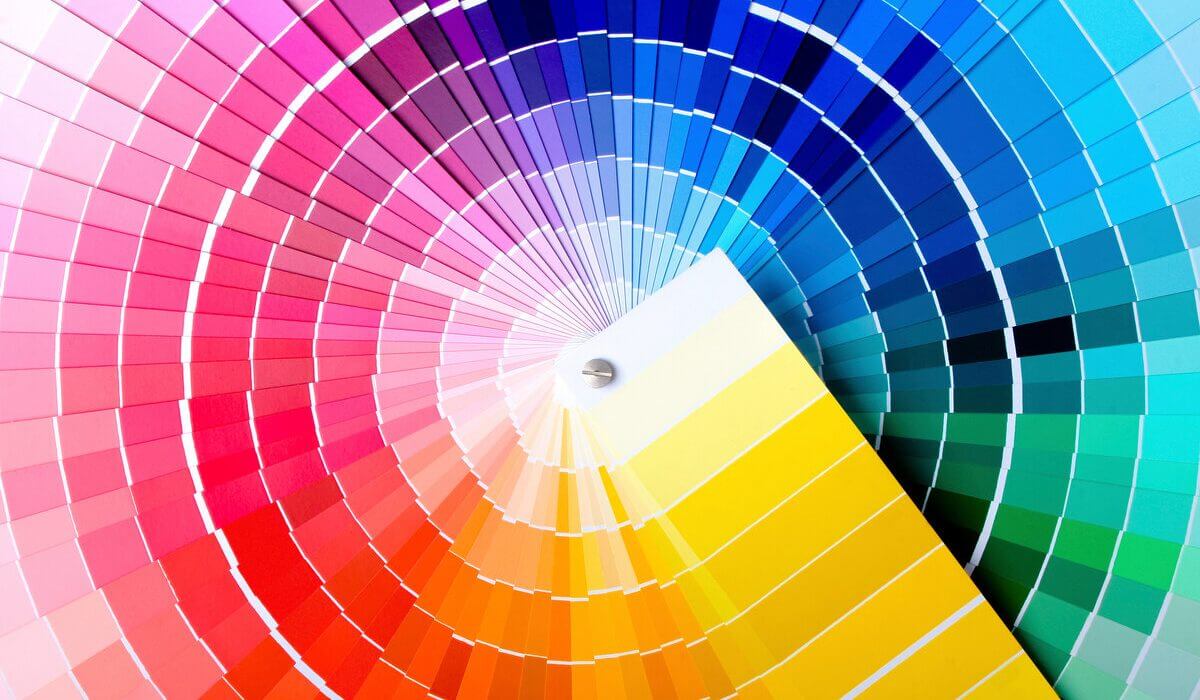
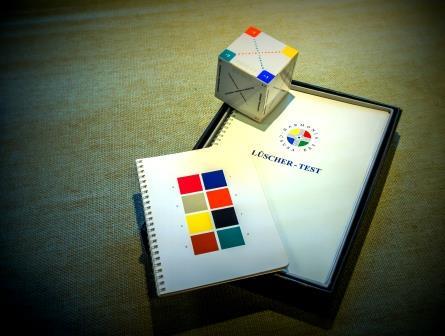
8 paper cards. 8 most common colors. Looks like a choice of palette in paint, or a catalog of paint colors to refresh your dull room. In fact, this is one of the most common psychological tests. What can he tell about you now and we'll find out!

History
And another test comes from Switzerland. The story of the author of the test, Max Luscher, is a classic success story. As a child, he studied Freud and attended lectures in psychology at a local university. At the age of 18, he learned about the Rorschach test, which prompted him to think that with the help of color it is possible to carry out a psychological diagnosis of personality. At the same age, he developed a method that made it possible to evaluate the logic of thinking with this test, and this gave him full carte blanche in developing his own methodology. He had access to thousands of patients and their medical records. A huge number of scientific congresses and teaching at leading universities in Europe. Access to all possible color combinations and materials thanks to the bonds in the coarse chemistry. combine. All this resulted in Luscher's color test, which at one time caused a real sensation in the world of psychology.
What is it based on?
As in the case of the Rorschach test, it was not possible to prove 100% effectiveness of the Luscher test. Nevertheless, it is still often used and here's why. Luscher himself all his life was firmly convinced that sensory perception in the perception of color is objective and universal, and only sympathy for the color is subjective. This means that regardless of race and age, the perception of colors for all people will be equally objective. Red - and red in Africa. Except for color blind people of course. Okay, color perception is objective, but what does it give us? I suggest that you familiarize yourself with the interpretation of the content of the test from the words of the author himself, since a simplified explanation will not convey the whole point to you.
Test
There are two main options for the test - short and full. In the short, 8 cards of different colors are placed in front of you. You need to choose which colors you like the most at a given time, and which, on the contrary, are unpleasant. In the extended test, you will have 8 rounds from a selection of colored cards ranging from 5 shades of gray to shades of red and yellow. You need to choose without thinking. Purely subjective feelings. Interpretation of the test is quite difficult and can tell about your mood at the time of the test, type of character, the presence of depression, inner aspirations, stress resistance, etc. There are so many options that I don't see much point in describing them all here. You'd better go through it yourself on the first links in Google and share the results in the comments.
For example here: https://psytests.org/result?v=lus13ImBMutVVuSFUv .
Introduction
8 paper cards. 8 most common colors. Looks like a choice of palette in paint, or a catalog of paint colors to refresh your dull room. In fact, this is one of the most common psychological tests. What can he tell about you now and we'll find out!
History
And another test comes from Switzerland. The story of the author of the test, Max Luscher, is a classic success story. As a child, he studied Freud and attended lectures in psychology at a local university. At the age of 18, he learned about the Rorschach test, which prompted him to think that with the help of color it is possible to carry out a psychological diagnosis of personality. At the same age, he developed a method that made it possible to evaluate the logic of thinking with this test, and this gave him full carte blanche in developing his own methodology. He had access to thousands of patients and their medical records. A huge number of scientific congresses and teaching at leading universities in Europe. Access to all possible color combinations and materials thanks to the bonds in the coarse chemistry. combine. All this resulted in Luscher's color test, which at one time caused a real sensation in the world of psychology.
What is it based on?
As in the case of the Rorschach test, it was not possible to prove 100% effectiveness of the Luscher test. Nevertheless, it is still often used and here's why. Luscher himself all his life was firmly convinced that sensory perception in the perception of color is objective and universal, and only sympathy for the color is subjective. This means that regardless of race and age, the perception of colors for all people will be equally objective. Red - and red in Africa. Except for color blind people of course. Okay, color perception is objective, but what does it give us? I suggest that you familiarize yourself with the interpretation of the content of the test from the words of the author himself, since a simplified explanation will not convey the whole point to you.
To think that red is exhilarating because it is the color of blood or dark blue is soothing because it is the color of the night is certainly nonsense. The first thing we need to do is find a language in which we can explain how we think and how we feel. To do this, you need to take into account the special categories. For any person in the world, there are two options. We can either perceive, comprehend something and this can be called a receptive option or a sensory perception option. Another option is the opposite. We can do or organize something, and this will be a directive option. So, the first categories of what we see and do can be either perception, reception, or management, direction. However, there is another dimension. There are things that are constant, constant, for example, my parents, who have always been and will be my parents, this is unchanged. The opposite is that things are changeable, variable: clouds or different acquaintances. These things are changeable. So we get the following categories: receptive - directive and constant - variable. If we try to depict them, then on the horizontal line there will be directive and receptive options, and on the vertical line below there will be constant ones and above - variable ones. This way we can get four squares. These four squares are a kind of classic criterion that people have always used (4 elements: fire, water, air, earth; 4 temperaments - choleric, sanguine, phlegmatic, melancholic, 4 seasons - spring, summer, autumn, winter, four sides light - north, west, south, east). Why is there always four? All this is because what we think and feel according to this structure and it is the main one of our feelings and thoughts. Now let's think about which color is most suitable for the concepts of directivity and variability? It's orange red. What color is opposite and appropriate for receptivity and constancy? Navy blue. What color corresponds to directive and constant position? Blue-green. What color is variable and receptive? It is yellow. Luscher's color test uses objective colors to measure the emotionality of an individual. And here everything is different: one prefers orange-red, he is excited and always ready to act, while the other person does not like orange-red, considering him aggressive and unpleasant. People who do not like orange-red, do not share this excitement, are usually exhausted, depressed, and so on. So, using objective colors, we ask the question: which color do you prefer, which one do you like or dislike? And it turns out that people who love a certain color would like to be similar to this color, and people who do not like a certain color do not like the emotions of this color either. And this is the basis of the Luscher color test: with the help of an objective instrument - colors, we measure the subjective state of the personality
Test
There are two main options for the test - short and full. In the short, 8 cards of different colors are placed in front of you. You need to choose which colors you like the most at a given time, and which, on the contrary, are unpleasant. In the extended test, you will have 8 rounds from a selection of colored cards ranging from 5 shades of gray to shades of red and yellow. You need to choose without thinking. Purely subjective feelings. Interpretation of the test is quite difficult and can tell about your mood at the time of the test, type of character, the presence of depression, inner aspirations, stress resistance, etc. There are so many options that I don't see much point in describing them all here. You'd better go through it yourself on the first links in Google and share the results in the comments.
For example here: https://psytests.org/result?v=lus13ImBMutVVuSFUv .
For me personally, for some points, the test hit right to the point!

