

Man
Professional
- Messages
- 3,221
- Reaction score
- 1,242
- Points
- 113
Hello everyone. I've been reading the forum for a long time, I'm writing an article for the first time, because I have something to write about.
Everyone probably knows how much different "software" for allegedly searching for forgotten Bitcoin addresses is being sold through different channels. Someone is taken in, someone guesses to find the source code on GitHub, someone knows at least a little theory.
By the way, a little theory, for those who don't know, I'll describe it briefly.
Bitcoin addresses based on Base58 (like "1PnVcifB9EBwbaAauprqcucPgfUnrRLtWg") are generated based on a random 256-bit value. Someone will now talk about seed phrases and so on, but no, a seed phrase is essentially a shortened 256-bit number. (those who know the mat, don't swear, I understand everything perfectly, I'm just trying to explain in a simple way). In general, a random 256-bit number turns into a 64-bit number, it turns into a private key, and a public key is created based on the private key, using caching.
And all these "miracle scripts and programs" generate a random number, create a private and public key based on it, and in theory, you might get lucky and accidentally generate a wallet that already exists, and even with a balance.
Sounds tempting, but there are more combinations of this number than atoms in the universe. I even found an interesting article on some forum where a guy calculated how much energy is spent on generating one number, and how much energy is needed to generate all possible combinations. So, you need a year's energy, a sun a hundred times more powerful than ours. This is just so you understand the scale at least a little, even when we create a super quantum computer, it will still need to be fed millions of suns so that it has enough energy to create all the combinations.
But of course, no one rules out luck. Anything is possible. True, no one talks about another problem, even the software that will generate a million addresses per minute (it is sold and free on GitHub), is essentially useless junk, because generation is one thing, but checking the balance is something completely different. Even software for 500 bucks, stupidly uses open API and proxy) At the moment, there is simply no way, even a paid one, to check millions of addresses in the flow for balance. Why would anyone give such computing operations for free. Of course, you can deploy your own node, create your own database based on it, place it all on the server, use terabytes of blockchain data, but something tells me that a person who can afford it will not be interested in looking for forgotten wallets.
In general, I described in simple language why you shouldn't even rely on paid software. I am a programmer and system administrator, and I knew all this before, so I always smiled when I saw another advertisement for such a mega product on TikTok, where people calmly find wallets with a balance of 400 dollars and enjoy it. Although you can't call it a scam, "you understand that it purely depends on luck."
But literally a month ago, something made me change my mind about mining these wallets. The thing is that with the development of neural networks, people noticed that no no, but money from old wallets disappears
I checked this information and was convinced of it. So some way does exist, and neural networks can help find this way. I don't know how, but this topic captured me, and bore fruit.
After a long and brutal rape of Gemini (which really doesn't want to talk about vulnerabilities), having reread many forums and even scientific articles, an interesting detail was revealed. Yes, there are a huge number of 256-bit number options. But here everything again rests on the human factor. At the dawn of Bitcoin development, and especially when the boom began, there were a huge number of different services and sites for quickly creating wallets. Here is the darknet and so on. Different bitcoin mixers, mining farms, the list is endless. So, the scripts that allow people to create such wallets were made manually, and using free libraries like Random for Python and so on. (nowadays, advanced libraries are mainly used for generation) So, as it turned out, no, no, but these libraries screwed up. Either the processor glitched somewhere or something else, and they began to generate not just random numbers, but with patterns, what exactly?

I can only give an example on a piece of eight bits. Let's say the number "00011000" was created, then a glitch and "00110000", "0110000", "11000000". Well, that is, the same number could be generated, but let's say with a shift to the left. Or a 256-bit number could be generated, where the first 200 bits are zero, and the rest are random. And so on. In this way, thousands and hundreds of thousands of wallets could be created, in which the difference in the 256-bit number could be only one value.
And I got an idea, why generate a completely random number, if you can try to generate only parts of this number, where the rest of the parts will be fixed. After all, it is much more likely that somewhere someone used this pool because of buggy libraries than to poke a finger in the sky. This is how the first version of the program was born under the name "Pidor1.0" (I haven't found such a name yet).
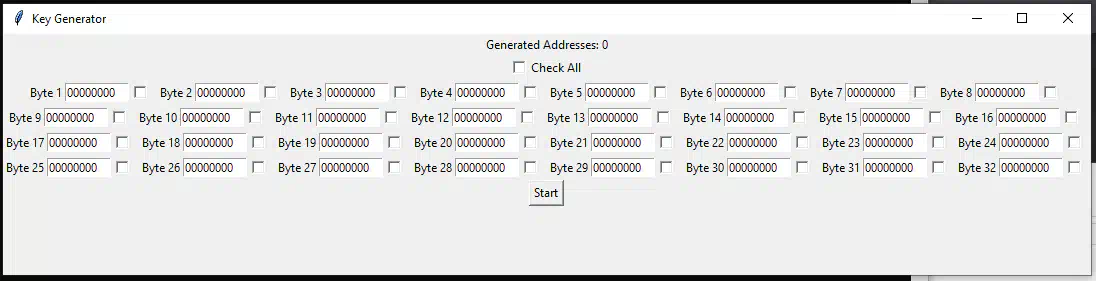
As you can see from the screenshot, I split the 256-bit number into 8-bit cells, into which you can write your own values, you can fix them so that they remain unchanged, and so on. And what was mine

when after working with the program for only 10 minutes, I found real addresses that made transactions (unfortunately, they had a zero balance). I will post all sorts of proofs and a bunch of addresses with private keys at the end of the article, you can safely go into them and see everything with your own eyes. So far, in the end, in total I found about a thousand wallets in a week of tests (tests, not continuous generation). Unfortunately, all with zero balances so far, but through some decent amounts passed, and the last transactions were this year. For example, this one, I will also post the private key from it:

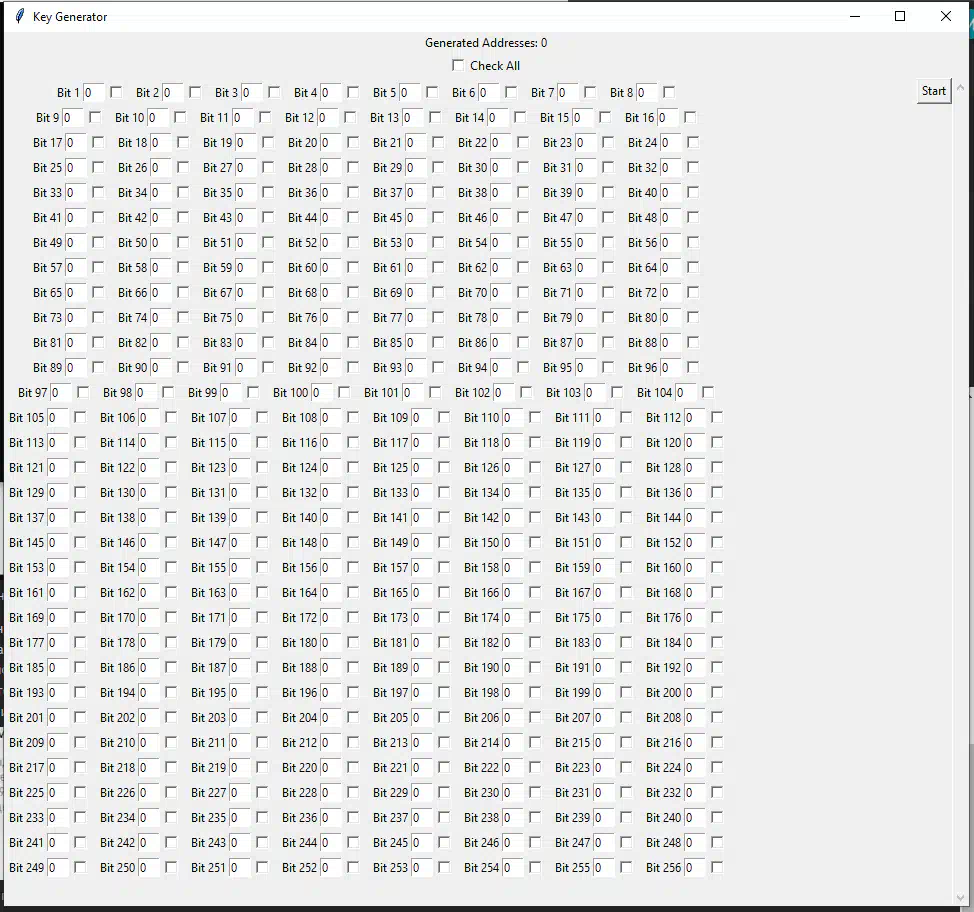
Well, here it goes, different versions of "Pidora" appeared, here for example I made it possible to fix all 256 bits
But the real dancing with tambourines began when I insisted on somehow checking the balance of millions of generated wallets. And of course, looking for free methods. And through long nights, I came to the conclusion that I completely refused to check the balance via the Internet. How? By parsing absolutely all addresses through which at least one transaction was made. In the end, a txt file came out no more no less than 50 GB and one and a half billion lines. True, since I left only Bip58 keys in it, it turned out to be 20 GB in weight and 800 million lines.
But climbing into the txt file every time and checking whether the bitcoin address we generated exists in it is very stressful for the system, and takes a long time. Therefore, based on this file, I had to create a database file based on Sql Lite. Which turned out to be almost 60 GB. What about the speed, you ask? On Intel(R) Core(TM) i5-8350U CPU @ 1.70GHz generation and instant check - million per second. Haven't tested on more serious devices yet.
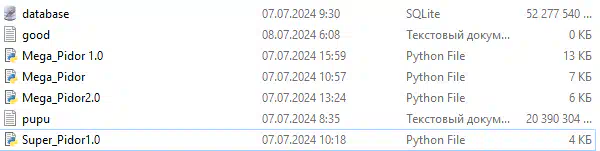
I think you got the idea? Why check the balance if you can just check whether such a wallet already exists and whether there were any transactions on it.
In the end, the program has turned into this:
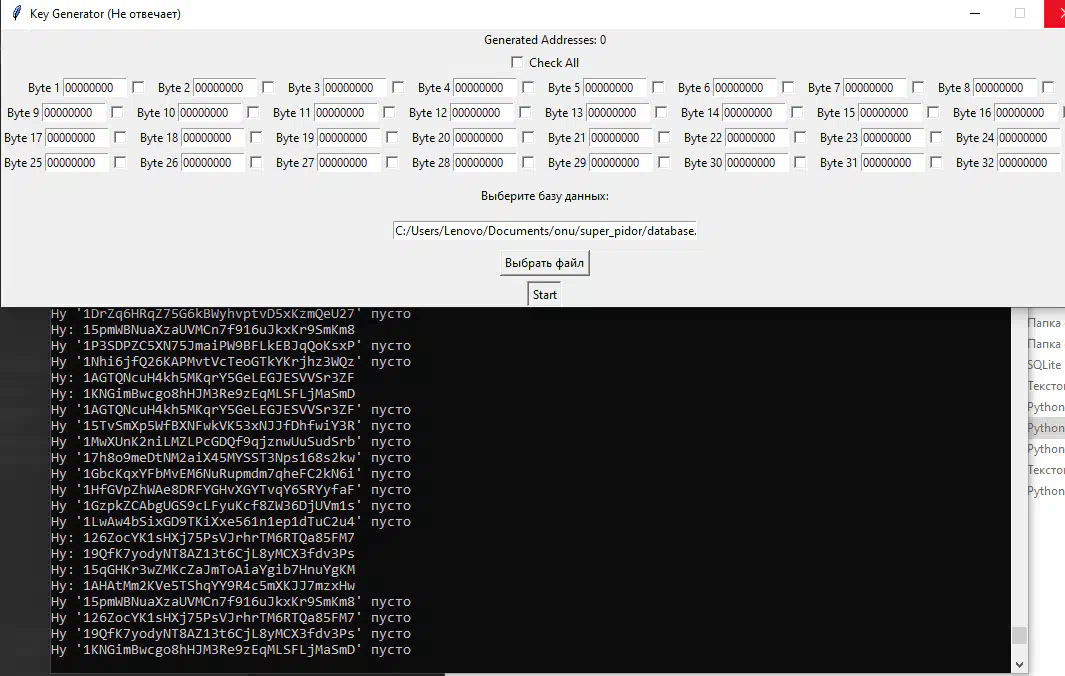
In general, I have given you some food for thought. So far, this is only the beginning, but it is already pleasing that I have accomplished the simply impossible, because ask any neural network if it is possible to generate an existing address, and see what it will tell you. And here it was not just an address, but hundreds. I am not selling the software, by the way, I have already shared the algorithm with you. It took too much effort and nerves to give it away for a couple of thousand. There are still many tests and deployment on normal hardware ahead.
And here are the keys I received, as promised, and private messages to them. The line number of the key corresponds to the line in the private message, sorry, I was too lazy to do it properly, I just write them to different files.
Public addresses:
Everyone probably knows how much different "software" for allegedly searching for forgotten Bitcoin addresses is being sold through different channels. Someone is taken in, someone guesses to find the source code on GitHub, someone knows at least a little theory.
By the way, a little theory, for those who don't know, I'll describe it briefly.
Bitcoin addresses based on Base58 (like "1PnVcifB9EBwbaAauprqcucPgfUnrRLtWg") are generated based on a random 256-bit value. Someone will now talk about seed phrases and so on, but no, a seed phrase is essentially a shortened 256-bit number. (those who know the mat, don't swear, I understand everything perfectly, I'm just trying to explain in a simple way). In general, a random 256-bit number turns into a 64-bit number, it turns into a private key, and a public key is created based on the private key, using caching.
And all these "miracle scripts and programs" generate a random number, create a private and public key based on it, and in theory, you might get lucky and accidentally generate a wallet that already exists, and even with a balance.
Sounds tempting, but there are more combinations of this number than atoms in the universe. I even found an interesting article on some forum where a guy calculated how much energy is spent on generating one number, and how much energy is needed to generate all possible combinations. So, you need a year's energy, a sun a hundred times more powerful than ours. This is just so you understand the scale at least a little, even when we create a super quantum computer, it will still need to be fed millions of suns so that it has enough energy to create all the combinations.
But of course, no one rules out luck. Anything is possible. True, no one talks about another problem, even the software that will generate a million addresses per minute (it is sold and free on GitHub), is essentially useless junk, because generation is one thing, but checking the balance is something completely different. Even software for 500 bucks, stupidly uses open API and proxy) At the moment, there is simply no way, even a paid one, to check millions of addresses in the flow for balance. Why would anyone give such computing operations for free. Of course, you can deploy your own node, create your own database based on it, place it all on the server, use terabytes of blockchain data, but something tells me that a person who can afford it will not be interested in looking for forgotten wallets.
In general, I described in simple language why you shouldn't even rely on paid software. I am a programmer and system administrator, and I knew all this before, so I always smiled when I saw another advertisement for such a mega product on TikTok, where people calmly find wallets with a balance of 400 dollars and enjoy it. Although you can't call it a scam, "you understand that it purely depends on luck."
But literally a month ago, something made me change my mind about mining these wallets. The thing is that with the development of neural networks, people noticed that no no, but money from old wallets disappears
I checked this information and was convinced of it. So some way does exist, and neural networks can help find this way. I don't know how, but this topic captured me, and bore fruit.
After a long and brutal rape of Gemini (which really doesn't want to talk about vulnerabilities), having reread many forums and even scientific articles, an interesting detail was revealed. Yes, there are a huge number of 256-bit number options. But here everything again rests on the human factor. At the dawn of Bitcoin development, and especially when the boom began, there were a huge number of different services and sites for quickly creating wallets. Here is the darknet and so on. Different bitcoin mixers, mining farms, the list is endless. So, the scripts that allow people to create such wallets were made manually, and using free libraries like Random for Python and so on. (nowadays, advanced libraries are mainly used for generation) So, as it turned out, no, no, but these libraries screwed up. Either the processor glitched somewhere or something else, and they began to generate not just random numbers, but with patterns, what exactly?
I can only give an example on a piece of eight bits. Let's say the number "00011000" was created, then a glitch and "00110000", "0110000", "11000000". Well, that is, the same number could be generated, but let's say with a shift to the left. Or a 256-bit number could be generated, where the first 200 bits are zero, and the rest are random. And so on. In this way, thousands and hundreds of thousands of wallets could be created, in which the difference in the 256-bit number could be only one value.
And I got an idea, why generate a completely random number, if you can try to generate only parts of this number, where the rest of the parts will be fixed. After all, it is much more likely that somewhere someone used this pool because of buggy libraries than to poke a finger in the sky. This is how the first version of the program was born under the name "Pidor1.0" (I haven't found such a name yet).
As you can see from the screenshot, I split the 256-bit number into 8-bit cells, into which you can write your own values, you can fix them so that they remain unchanged, and so on. And what was mine
when after working with the program for only 10 minutes, I found real addresses that made transactions (unfortunately, they had a zero balance). I will post all sorts of proofs and a bunch of addresses with private keys at the end of the article, you can safely go into them and see everything with your own eyes. So far, in the end, in total I found about a thousand wallets in a week of tests (tests, not continuous generation). Unfortunately, all with zero balances so far, but through some decent amounts passed, and the last transactions were this year. For example, this one, I will also post the private key from it:
Well, here it goes, different versions of "Pidora" appeared, here for example I made it possible to fix all 256 bits
But the real dancing with tambourines began when I insisted on somehow checking the balance of millions of generated wallets. And of course, looking for free methods. And through long nights, I came to the conclusion that I completely refused to check the balance via the Internet. How? By parsing absolutely all addresses through which at least one transaction was made. In the end, a txt file came out no more no less than 50 GB and one and a half billion lines. True, since I left only Bip58 keys in it, it turned out to be 20 GB in weight and 800 million lines.
But climbing into the txt file every time and checking whether the bitcoin address we generated exists in it is very stressful for the system, and takes a long time. Therefore, based on this file, I had to create a database file based on Sql Lite. Which turned out to be almost 60 GB. What about the speed, you ask? On Intel(R) Core(TM) i5-8350U CPU @ 1.70GHz generation and instant check - million per second. Haven't tested on more serious devices yet.
I think you got the idea? Why check the balance if you can just check whether such a wallet already exists and whether there were any transactions on it.
In the end, the program has turned into this:
In general, I have given you some food for thought. So far, this is only the beginning, but it is already pleasing that I have accomplished the simply impossible, because ask any neural network if it is possible to generate an existing address, and see what it will tell you. And here it was not just an address, but hundreds. I am not selling the software, by the way, I have already shared the algorithm with you. It took too much effort and nerves to give it away for a couple of thousand. There are still many tests and deployment on normal hardware ahead.
And here are the keys I received, as promised, and private messages to them. The line number of the key corresponds to the line in the private message, sorry, I was too lazy to do it properly, I just write them to different files.
Public addresses:
Code:
1ADtEbG5UAnrqSTz8CssEPXFLYTM6mfCiA
1CSPhHszH4S4Hhrrx8ZdmJWC3GLTpuhsur
1LagHJk2FyCV2VzrNHVqg3gYG4TSYwDV4m
179NZfVhPXssS42hs2o9ANABMcReQiovym
1C77q aBvJ2mGAb9QmcuBHrD6sbYy9V8Rc7
1Mv7xTXisEUQZ4aeQmDmmYKqLVw3PoNGA1
1HxpsY48MpH4kvi2H23vDwdaBSa2paSipX
137DbqLHaL32CLg91FYStaGi99y3H5xHNS
1LvbRi7aCjENKCzDMTsaoZ8sKsg1B9CqLQ
132vDcKDe96wL2GLLznueKnGVP4RnAX5xH
134hoUfpzKWFqLMgrELRnERQemU3FAiY3v
1LNLqCerQQ6j9iKs39VP6vNJHSpzNrFKJj
182WMwUZYz4vksjnhzU6GpCtKW3g3HKwhb
1P1Dur122Pzey73fFyUgfSbcxDdedSSm4z
1EoXPE6MzT4EnHvk2Ldj64M2ks2EAcZyH4
1Pt8N7xSic1oEKE8pPDEJ96KcnVFU69HRp
1GgD7fHa8ZRczoMQagVzYc73ioTvoe3sZu
1GTy3GAexCP74XVouxc7ZUP9s2qheQVDDz
18XrReT5ChW8qgXecNgKTU5T6MrMMLnV8H
1Cyr9LQ7F3PZNjiJCcafLLh6F1RDireoCn
1LWWyaRP
tU7PHHEN67Zh8qhmZyAoaRubcw 15CHsSNH3SmEfoc2mau11z7inZiUZvRfyr
18CW9Zv8rC8UcLSMHJGZSJ2uTHcqBEoa7D
1EtppGCHU29KoJAwwU5sLdmeMim7GzBb5z
1FB8cZijTpRQp3HX8AEkNuQJBqApqfTcX7
19WcSz4FxGH7CRqChvXaFW42UHnbQBicky
1EYQRFJ1z1WzhPs17sZPzYnWxoYXUs8cKj
1EWCz4DrTShf9vFThywg2WfDyrdV4W
y2SN
1Q4rfQLQF9yKN2Ay2NNBwLNPSy4sDbwNnd 1Px5Kp4aZgPmVxJV9sWgLj6dEWcFMec9Fo
1GDWJm5dPj6JTxF68WEVhicAS4gS3pvjo7
1KmobiUwSFcKyDX2z1Ss2TVL5yLq2BnxrS
1AS5u8iJsUFjQ3KmjkF5saBrHMLWdQMSpY
13zGBax475zUoLFatjye7Rp48vPrtiaeqs
1BoH6QH9n2pftQYRU5kganogxaNtTCo5cJ
1LtUq
EjvsTh4B5GtDmBV8upuRD6QcRTeCx 1MsUtV4HwbEX6pnPa1cAfzJTn7oNufW5p4
1KWj99Jwd9LGGC2Y1c9c4cmvWvYTQrLFVc
1PnVcifB9EBwbaAauprqcucPgfUnrRLtWg
19vxtDbLMNasSpbAEZd7va5Qge6d2zYWbp
1Jhh65j6YvN3p4gE2zxcS4MkYkwcTpcCAE
1BBwZVdBjoPxotHfrKLpHJBSy7vmc2pjex
1E1NUNmYw1G5c3FKNPd435QmDvuNG3auY
k 1Cw4iTCkanJFZhLAQh3hBzD22QdBMrkPND
1NcyZoVby5LbHXNVedcQpwtYj5TMGqGQzZ
1MqWUyivo9sj323sirtbxZ1S23vPA36FDK
17RjnQF8VWkcqyAHvY1QA1jNyx1xPVnB5d
1HGn3jxoSh8twi4mR3iaNmZr6pbHgjFJEg
18JVE1MSS7a2NEhtHJkxhwgvT4hLQYBw3w
1KeF7jzYkq8FdSnKwYLBEc3uJH7fwaxE8S
1JMcEcKXQ7xA7JLAMPsBmHz68bzug Ytdrv
1FHcYth4LRJMwNx2y8NR5DH7sYCiVzXs3Y
1KgVr2GExouGLAeAt79KwxykCck4k9Cexk
16Uhv71wNqMeaTW6YZQ8L3SaeVuomoD3dX
1Akt9SAP6Vvq1BfNcNWwvANgqXkNmZ2uz7
1MnyqgrXCmcWJHBYEsAWf7oMyqJAS81eC
1MNagJqYUsWBD47QbsebCT2Lt7GwZtjkg
1DBnH9vswDSbojbw3zeNUQBmmL494cyW8W
16NUWSmWh 7K6e885kybvaDdBoFQPZeDUpy
1CKAkV2EVrPFF8oqKvCPGLvBVJ63wpChmD
1B7nMKLwh76G84u1xvk4CnhPK5YcPr2jvT
1AdaHxALc5jknZVmNtcduvkD33WBv3sX6i
14FEwXgmVL37WvqVAucoijV1piKyzSCxzc
1B8EsE44dqKSbVdqgnd9aTQex7r4G6Bw1P
1P4C2RHfYZjU2Eca3mAwcHFwnYHcM4PxLn
1EcDD3QLhSg9zmPnExs5etYaXP5o4yT8xM
1L2YxutDBfZ33e4mM7gxoDo7t8rj
9UxB8z 1NsXxb6oeKhp5kw3vUm5aRxmfL2GeBX6f
1LWsLyY2j2mPtYcG9yG2bDFwTWryiJL6sp
1NZUP3JAc9JkmbvmoTv7nVgZGtyJjirKV1
1BfGgoPFwehgJxZKHnvm3ytCNv5ApD7vTu
1EEp8e3dhdGc8MARVh9zPYqFGBdyGX6hxc
1LPLZnAzj34AgehA56DvDahuyxinZgeM3e
1B5edeYL7WEmhkKP3FEkURjB9ZXVrc3FCQ
1LYxTHbQLwmeTFa2dpYUFWwYZqoeJwAQmt
17zHuCFs5WNBkFfH38RDN8NDCUZv34aUwE
1CijKR7rDvJJBJfSPyUYrWC8kAsQLy2B2e
1BYbgHpSKQCtMrQfwN6b6n5S718EJkEJ41
13xG3mC4TXUn8cRgqJG5eG9TDw4fFcztfE
1UCZSVufT1PNimutbPdJUiEyCYSiZAD6n
1Q2ndXEiSc1yevvPzEfQ4wuwKEhyyE1Nsj
189mvaHbMhvah3JYYPk9TVZTBp4bDyZWxm
1
Gggh1qxKS7qSZJ8u3gKNqnSvHXQhQDyo2 1L6qp71nqFbTTFTQYGQeLg94AkaeYJW1J
1DerC5SzMPgBN4o6yaxcRZ7TMBCDus6nLT
1HKvprhpBuuL5sbY6wkmgKcM97ggEG14Ab
19JJNLkZkaV9Z6SpxUbPuJ7X6hBsgsQ8K6
163bgHt747rfMKf7tM6XEoCzhKbvrYgZ6N
16RwUYX9uRx3AttTa8zY6JvauPYSgLDoSy
1LwjY8QPCW46jXn79eeN5SfZDs YNB9qDj1
18wkBZj5sTSUPT9Vvw66eb99ZvBA7STvBg
1MAieZnEeibHBCnSitY7ujKs4Gfi2RuZDy
1GgWkqiKTYgZmWbx824AfKrHBLKHn71NL7
145TcwDemMhjNiSAMxA5q14HTRuvNJFRx4
17SNLYKhp1sacBNRQRJyfmh1ZLHdFYwhNC
1BHQRSk1X4ERn3UAMcsSgJzCkvw2wvE5CC
13TQKnr3psXk7Zw9xi6hsrJcdqKRLidhux
1B iXAVzed7Ue5kG2ehnsWcfqQjdMcY2hqu
1FaFkutPqwakXYwS4umygTAa7ozUkKfxSp
1QCoHemDLMTaSJb7heXUHLsu6YPyu5iDEv
1DCYmXCRYXSPxsSFTRuveKRfqiCFmwNFbW
1GqHRfbwAtWc6zN4TL5xC5yNRwAXunfhUJ
15FPq6oDDn2sjtMZfnMn2QhvR7XeEMDYQS
1BRBsf9HojfnZRMRADLUra6HsDqzZo8LqN
13ogqrMb6hJK1tuD6xhiVzGepr3sWLUQJD
1L
xiFMHGc7PJv3ZnF9jJcpA2cr9CzsZ6xp 1F83LVL8YKm4ugbNt2ePFVmsyoiHrx4NF7
1NwhxtuUW2dg7RPkaypDpLW9JS2dqfEzNb
1KFLggHezq3kiAtpaKMeQPcnoWsXuZHRyn
1BLXTrgdmZfjk26ULK5FzdY9hHYcT9vGkY
16g79Dj7FiAZ964LxqcoBFNjFbL6kJoisX
1EHNa6Q4Jz2uvNExL497mE43ikXhwF6kZm
1Pnd4E94wguWsTWw8iGhyjdJ4FHUouTu7
K
19HkpLyo2WQJ3SiCmFANVuoQvg4UAX43uG 1NokMRjkCGBmy8F3JRdX5XHyXqY8Yxvd4i
19tbjBguyRGMSq9EVSNhrCA23ZUx4Cgx23
1MNViv4dYbLkxH5UyiVxs9AZqYbPBwz995
1BAjqraowRUrDXbruNShnQ32Fwiy5m5M5v
18zQpC5g54xA6mWeLi8cucQjykHVNoeSJH
1QAALUJNskZWEbvwKXoTteowgs9xGGeAZR
1BsyFuJS Kj58dmWXSt2EeE5PAp2EmyYwnJ
1PcTuSTm1UGK58YiuDir58ED7KnrNMUjpr
1PffYARJERxj2Y3wUpLY8LJ9hcRRRCkB5Z
17fGEEDHbspV7xAxpjhsFFK4tkgfvonyEE
1PFwKya5dQFrxE9XZ9LV24ASaq5v58WLEe
1GYFF26ZNohcFXNPPgrcovQH2XPvG38y7h
1HHKanEL28o5Nrui8byqTNwFtWpdVEPzw5
1FaxsybmpvrX4yDCt1R9mu2oGHpdpLzbkb
1GZnahwoL6K91sdzNEg1vxZ5LJogFSu1b
14cqgYHNZ4c9EVxb3CtEZH1CLmvgUfKnzP
1N6X DASWPttVf1yNCbZYgyE8trkM2k9RH7
1JZC74Q76Ms8TSvB7H7Dc93SNRzRzNmYFc
14sNbmEhgiGX6BZe9Q5PCgTQT3576mniZt
1GX2tP5ds3LyFypjD1wnKapvwV1mgZos3G
157RMZhbBLC1wucv3jxQqqHjbKezL1yy7g
1NvxH7VHMwVdwHCpwLLVhecieHZy3oVPoZ
1DbZj2r2pSz8iq6MrMLENMusrar3YdhdaY
1Q9DQUn6aeWKEQFDVYSMNBjCcLYaQnRccB
1Baf2cr6Sh1va2mEjPnNMxeFtQ2p3u5bNe

private keys

5HpHagT65TZzG1PH3CSu63k8DbpvD8s5ip4nEB3kEsreEhfUb47
5HpHagT65TZzG1PH3CSu63k8DbpvD8s5ip4nEB3kEsreFjUrh8k
5HpHagT65TZzG1PH3CSu63k8DbpvD8s5ip 4nEB3kEsreBKdE2NK
5HpHagT65TZzG1PH3CSu63k8DbpvD8s5ip4nEB3kEsreDmLg88w
5HpHagT65TZzG1PH3CSu63k8DbpvD8s5ip4nEB3kEsreDSDY8dy
5HpHagT65TZzG1PH3CSu63k8DbpvD8s5ip4nEB3kEsreL2F4Gjy
5HpHagT65TZzG1PH3CSu63k8DbpvD8s5ip4nEB3kEsreDQbAmx9 5HpHagT65TZzG1PH3CSu63k8DbpvD8s5ip 4nEB3kEsreCXbRta3
5HpHagT65TZzG1PH3CSu63k8DbpvD8s5ip4nEB3kEsreLp8VN4c 5HpHagT65TZzG1PH3CSu63k8DbpvD8s5ip4nEB3kEsreJQmdp3Y 5HpHagT65TZzG1PH3CSu63k8DbpvD8s5ip4nEB3kEsreCpWSv5Y 5HpHagT65TZzG1PH3CSu63k8DbpvD8s5ip4nEB3kEsreP9WciJJ 5HpHagT65TZzG1PH3CSu63k8DbpvD8s5ip4n EB3kEsreRMTfq7A 5HpHagT65TZzG1PH3CSu63k8DbpvD8s5ip4nEB3kEsreDwUb9yY 5HpHagT65TZzG1PH3CSu63k8DbpvD8s5ip4nEB3kEsreJ58DM42 5HpHagT65TZzG1PH3CSu63k8DbpvD8s5ip4nEB3kEsreLwB7DbW 5HpHagT65TZzG1PH3CSu63k8DbpvD8s5ip4nEB3kEsreMVM6PNC 5HpHagT65TZzG1PH3CSu63k8DbpvD8s5ip4n EB3kEsreJZrCr3e 5HpHagT65TZzG1PH3CSu63k8DbpvD8s5ip4nEB3kEsreMrbQN7V 5HpHagT65TZzG1PH3CSu63k8DbpvD8s5ip4nEB3kEsreRBLscCA 5HpHagT65TZzG1PH3CSu63k8DbpvD8s5ip4nEB3kEsreAvUcVfH 5HpHagT65TZzG1PH3CSu63k8DbpvD8s5ip4nEB3kEsreQTdvJta 5HpHagT65TZzG1PH3CSu63k8DbpvD8s5ip4 nEB3kEsreDEUj22G 5HpHagT65TZzG1PH3CSu63k8DbpvD8s5ip4nEB3kEsreNdjkc6L 5HpHagT65TZzG1PH3CSu63k8DbpvD8s5ip4nEB3kEsreCMUnXUo 5HpHagT65TZzG1PH3CSu63k8DbpvD8s5ip4nEB3kEsreQM87c2m 5HpHagT65TZzG1PH3CSu63k8DbpvD8s5ip4nEB3kEsreJFuEycp 5HpHagT65TZzG1PH3CSu63k8DbpvD8s5ip 4nEB3kEsrePWp5Mt9 5HpHagT65TZzG1PH3CSu63k8DbpvD8s5ip4nEB3kEsreQbpfitE 5HpHagT65TZzG1PH3CSu63k8DbpvD8s5ip4nEB3kEsreNxQWW7Y 5HpHagT65TZzG1PH3CSu63k8DbpvD8s5ip4nEB3kEsreEa9SGDP 5HpHagT65TZzG1PH3CSu63k8DbpvD8s5ip4nEB3kEsreBR6zCMU 5HpHagT65TZzG1PH3CSu63k8DbpvD8s5ip4nEB3 kEsreJxh5nsg 5HpHagT65TZzG1PH3CSu63k8DbpvD8s5ip4nEB3kEsrePTVqv3S 5HpHagT65TZzG1PH3CSu63k8DbpvD8s5ip4nEB3kEsreGwFNuPr 5HpHagT65TZzG1PH3CSu63k8DbpvD8s5ip4nEB3kEsreaXSbUeR 5HpHagT65TZzG1PH3CSu63k8DbpvD8s5ip4nEB3kEsreFMSs18A 5HpHagT65TZzG1PH3CSu63k8DbpvD8s5ip4n EB3kEsreBbMaQX1 5HpHagT65TZzG1PH3CSu63k8DbpvD8s5ip4nEB3kEsreG7q5WCf 5HpHagT65TZzG1PH3CSu63k8DbpvD8s5ip4nEB3kEsreCh1de82 5HpHagT65TZzG1PH3CSu63k8DbpvD8s5ip4nEB3kEsreAnchuDf 5HpHagT65TZzG1PH3CSu63k8DbpvD8s5ip4nEB3kEsreEnwTmuW 5HpHagT65TZzG1PH3CSu63k8DbpvD8s5ip4nEB3k EsreJf8B1SD 5HpHagT65TZzG1PH3CSu63k8DbpvD8s5ip4nEB3kEsreMuv36HW 5HpHagT65TZzG1PH3CSu63k8DbpvD8s5ip4nEB3kEsreNkcfT1c 5HpHagT65TZzG1PH3CSu63k8DbpvD8s5ip4nEB3kEsreB4AD8Yi
5HpHagT65TZzG1PH3CSu63k8DbpvD8s5ip4nEB3kEsreLAxEBPw
5HpHagT65TZzG1PH3CSu63k8DbpvD8s5ip4nEB3kEsreFeCCsFW
5HpHagT65TZzG1PH3CSu63k8DbpvD8s5ip4nEB3 kEsreKUmwqXK
5HpHagT65TZzG1PH3CSu63k8DbpvD8s5ip4nEB3kEsreBoNWTw6
5HpHagT65TZzG1PH3CSu63k8DbpvD8s5ip4nEB3kEsreHHanpkZ
5HpHagT65TZzG1PH3CSu63k8DbpvD8s5ip4nEB3kEsreHZ7dG6X
5HpHagT65TZzG1PH3CSu63k8DbpvD8s5ip4nEB3kEsreZYXNHaP
5HpHagT65TZzG1PH3CSu63k8DbpvD8s5ip4 nEB3kEsreDan2uta
5HpHagT65TZzG1PH3CSu63k8DbpvD8s5ip4nEB3kEsreQ8Arh4e
5HpHagT65TZzG1PH3CSu63k8DbpvD8s5ip4nEB3kEsreNNCT2yY
5HpHagT65TZzG1PH3CSu63k8DbpvD8s5ip4nEB3kEsreHdeJUVG
5HpHagT65TZzG1PH3CSu63k8DbpvD8s5ip4nEB3kEsreR42AY81
5HpHagT65TZzG1PH3CSu63k8DbpvD8s5ip4n EB3kEsreFWRXmfT
5HpHagT65TZzG1PH3CSu63k8DbpvD8s5ip4nEB3kEsreM9y1taS
5HpHagT65TZzG1PH3CSu63k8DbpvD8s5ip4nEB3kEsreH9yDMyT
5HpHagT65TZzG1PH3CSu63k8DbpvD8s5ip4nEB3kEsreQyNNN1W
5HpHagT65TZzG1PH3CSu63k8DbpvD8s5ip4nEB3kEsreMjo5bB4
5HpHagT65TZzG1PH3CSu63k8DbpvD8s5ip4n EB3kEsreKamq6aB
5HpHagT65TZzG1PH3CSu63k8DbpvD8s5ip4nEB3kEsreGAk6qMH
5HpHagT65TZzG1PH3CSu63k8DbpvD8s5ip4nEB3kEsreFAzJ4As
5HpHagT65TZzG1PH3CSu63k8DbpvD8s5ip4nEB3kEsreE3Nwh9x
5HpHagT65TZzG1PH3CSu63k8DbpvD8s5ip4nEB3kEsreDAgeFqw
5HpHagT65TZzG1PH3CSu63k8DbpvD8s5ip4n EB3kEsreM2VQnPJ
5HpHagT65TZzG1PH3CSu63k8DbpvD8s5ip4nEB3kEsreP4J74KK
5HpHagT65TZzG1PH3CSu63k8DbpvD8s5ip4nEB3kEsreGv1DVzQ
5HpHagT65TZzG1PH3CSu63k8DbpvD8s5ip4nEB3kEsreBF8or94
5HpHagT65TZzG1PH3CSu63k8DbpvD8s5ip4nEB3kEsreSHT43mj
5HpHagT65TZzG1PH3CSu63k8DbpvD8s5ip4n EB3kEsreGdtctZw
5HpHagT65TZzG1PH3CSu63k8DbpvD8s5ip4nEB3kEsreEYP1uta
5HpHagT65TZzG1PH3CSu63k8DbpvD8s5ip4nEB3kEsreCAVyVnh
5HpHagT65TZzG1PH3CSu63k8DbpvD8s5ip4nEB3kEsreHP2DXbg
5HpHagT65TZzG1PH3CSu63k8DbpvD8s5ip4nEB3kEsreNqaKH8Y
5HpHagT65TZzG1PH3CSu63k8DbpvD8s5ip4 nEB3kEsreJMps1fr
5HpHagT65TZzG1PH3CSu63k8DbpvD8s5ip4nEB3kEsreF5LqgkE
5HpHagT65TZzG1PH3CSu63k8DbpvD8s5ip4nEB3kEsrePxLM2Uo
5HpHagT65TZzG1PH3CSu63k8DbpvD8s5ip4nEB3kEsreQi1XfkP
5HpHagT65TZzG1PH3CSu63k8DbpvD8s5ip4nEB3kEsreLRLivrj
5HpHagT65TZzG1PH3CSu63k8DbpvD8s5ip4n EB3kEsreakL7yRD
5HpHagT65TZzG1PH3CSu63k8DbpvD8s5ip4nEB3kEsreLGUF4YR
5HpHagT65TZzG1PH3CSu63k8DbpvD8s5ip4nEB3kEsreFGiZbKb
5HpHagT65TZzG1PH3CSu63k8DbpvD8s5ip4nEB3kEsreUs6zno1
5HpHagT65TZzG1PH3CSu63k8DbpvD8s5ip4nEB3kEsreZDiJHGk
5HpHagT65TZzG1PH3CSu63k8DbpvD8s5ip4n EB3kEsreGVpYN24
5HpHagT65TZzG1PH3CSu63k8DbpvD8s5ip4nEB3kEsreKnSXYds
5HpHagT65TZzG1PH3CSu63k8DbpvD8s5ip4nEB3kEsreCUtzTQw
5HpHagT65TZzG1PH3CSu63k8DbpvD8s5ip4nEB3kEsreEQTrFTY
5HpHagT65TZzG1PH3CSu63k8DbpvD8s5ip4nEB3kEsreKuhp1DY
5HpHagT65TZzG1PH3CSu63k8DbpvD8s5ip4nEB3kEsreKLMhKmG
5HpHagT65TZzG1PH3CSu63k8DbpvD8s5ip4n EB3kEsreQYt2Gms
5HpHagT65TZzG1PH3CSu63k8DbpvD8s5ip4nEB3kEsreHsrkqUw
5HpHagT65TZzG1PH3CSu63k8DbpvD8s5ip4nEB3kEsreD437Nay
5HpHagT65TZzG1PH3CSu63k8DbpvD8s5ip4nEB3kEsrefGxBaWm
5HpHagT65TZzG1PH3CSu63k8DbpvD8s5ip4nEB3kEsreMbi1WL5
5HpHagT65TZzG1PH3CSu63k8DbpvD8s5ip4nEB 3kEsreJwwNRRr
5HpHagT65TZzG1PH3CSu63k8DbpvD8s5ip4nEB3kEsreBd7uGcN
5HpHagT65TZzG1PH3CSu63k8DbpvD8s5ip4nEB3kEsreNL5cPwC
5HpHagT65TZzG1PH3CSu63k8DbpvD8s5ip4nEB3kEsrecTDy178
5HpHagT65TZzG1PH3CSu63k8DbpvD8s5ip4nEB3kEsreN7qoa75
5HpHagT65TZzG1PH3CSu63k8DbpvD8s5ip4 nEB3kEsreFufkfcw
5HpHagT65TZzG1PH3CSu63k8DbpvD8s5ip4nEB3kEsreKeQXCm1
5HpHagT65TZzG1PH3CSu63k8DbpvD8s5ip4nEB3kEsreB1FQ8BZ
5HpHagT65TZzG1PH3CSu63k8DbpvD8s5ip4nEB3kEsreH48LE9C
5HpHagT65TZzG1PH3CSu63k8DbpvD8s5ip4nEB3kEsreKA9Sz8L
5HpHagT65TZzG1PH3CSu63k8DbpvD8s5ip4n EB3kEsreGRmRFDZ
5HpHagT65TZzG1PH3CSu63k8DbpvD8s5ip4nEB3kEsrePng1DKR
5HpHagT65TZzG1PH3CSu63k8DbpvD8s5ip4nEB3kEsreHyRyQVZ
5HpHagT65TZzG1PH3CSu63k8DbpvD8s5ip4nEB3kEsreCHK2Zzv
5HpHagT65TZzG1PH3CSu63k8DbpvD8s5ip4nEB3kEsreLem9Za7
5HpHagT65TZzG1PH3CSu63k8DbpvD8s5ip4n EB3kEsreN3RLkWA
5HpHagT65TZzG1PH3CSu63k8DbpvD8s5ip4nEB3kEsrePJzmYK5
5HpHagT65TZzG1PH3CSu63k8DbpvD8s5ip4nEB3kEsreQDpvAKR
5HpHagT65TZzG1PH3CSu63k8DbpvD8s5ip4nEB3kEsreCw2uZTA
5HpHagT65TZzG1PH3CSu63k8DbpvD8s5ip4nEB3kEsrefTAtA4s
5HpHagT65TZzG1PH3CSu63k8DbpvD8s5ip4nEB 3kEsreEGj3uXG
5HpHagT65TZzG1PH3CSu63k8DbpvD8s5ip4nEB3kEsreE85b5kg
5HpHagT65TZzG1PH3CSu63k8DbpvD8s5ip4nEB3kEsreGKdi6NZ
5HpHagT65TZzG1PH3CSu63k8DbpvD8s5ip4nEB3kEsreDktNmBc
5HpHagT65TZzG1PH3CSu63k8DbpvD8s5ip4nEB3kEsreJkEG3cV
5HpHagT65TZzG1PH3CSu63k8DbpvD8s5ip4 nEB3kEsrePdw4eNk
5HpHagT65TZzG1PH3CSu63k8DbpvD8s5ip4nEB3kEsreHkaB6rR
5HpHagT65TZzG1PH3CSu63k8DbpvD8s5ip4nEB3kEsreYYXLuwc
5HpHagT65TZzG1PH3CSu63k8DbpvD8s5ip4nEB3kEsrePsqVrAf
5HpHagT65TZzG1PH3CSu63k8DbpvD8s5ip4nEB3kEsreBquB4Rj
5HpHagT65TZzG1PH3CSu63k8DbpvD8s5ip4 nEB3kEsreMQiR4w7
5HpHagT65TZzG1PH3CSu63k8DbpvD8s5ip4nEB3kEsreLch3pDc
5HpHagT65TZzG1PH3CSu63k8DbpvD8s5ip4nEB3kEsreFtDpdAZ
5HpHagT65TZzG1PH3CSu63k8DbpvD8s5ip4nEB3kEsreMEFkFWC
5HpHagT65TZzG1PH3CSu63k8DbpvD8s5ip4nEB3kEsreGhAGxmP
5HpHagT65TZzG1PH3CSu63k8DbpvD8s5ip4nEB 3kEsreLKXuCN4
5HpHagT65TZzG1PH3CSu63k8DbpvD8s5ip4nEB3kEsreC4p2u5o
5HpHagT65TZzG1PH3CSu63k8DbpvD8s5ip4nEB3kEsreNXqEJTk
5HpHagT65TZzG1PH3CSu63k8DbpvD8s5ip4nEB3kEsreEttVnpm
5HpHagT65TZzG1PH3CSu63k8DbpvD8s5ip4nEB3kEsreQuyVxqv
