
Plaid and how to work with it

Student

Professional
Messages
1,846
Reaction score
1,746
Points
113
Good day! Today we'll be talking about Plaid.

Briefly, Plaid is an aggregator that allows you to link bank accounts instantly, without waiting for mini-deposits, which take up to three business days. So, we're already seeing the benefits of Plaid: instead of waiting three days for mini-deposits, we can actually deposit with our company, saving time.
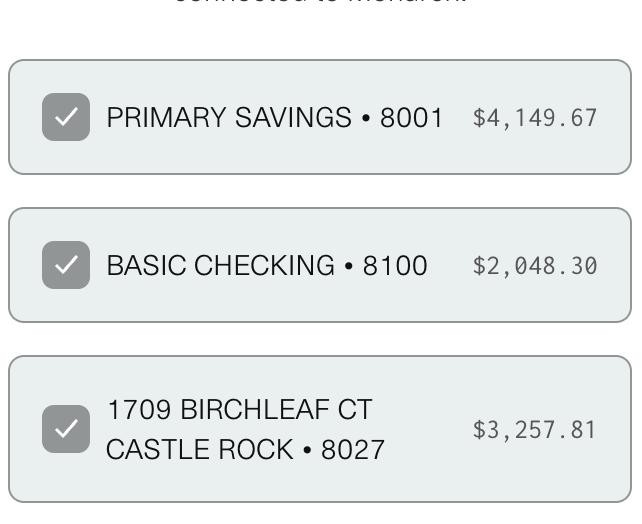
Instant Link.png

This is what a bank's instant link looks like.

Plaid also has its downsides — or rather, not downsides, but rather a peculiarity of working with it.

This peculiarity lies in the fact that Plaid verifies names, and in some cases, SSNs and the CH's address of the private bank, which is rare, but still possible.

You might encounter the following situation: you bought an instant Plaid bank, checked the name, but for some reason, you weren't allowed to register with your company. Checking for namesakes of our private bank can help. There are services that will find namesakes, any whim for your money.
If, like me, you don't want to spend money searching for namesakes, free background services are available to help. There are many. I'll share a couple of working ones that I use: fastbackgroundcheck.com and truepeoplesearch.com. Both options are good simply because they're free. The second option is more comprehensive; it includes relatives and up-to-date email addresses — basically, everything you need.
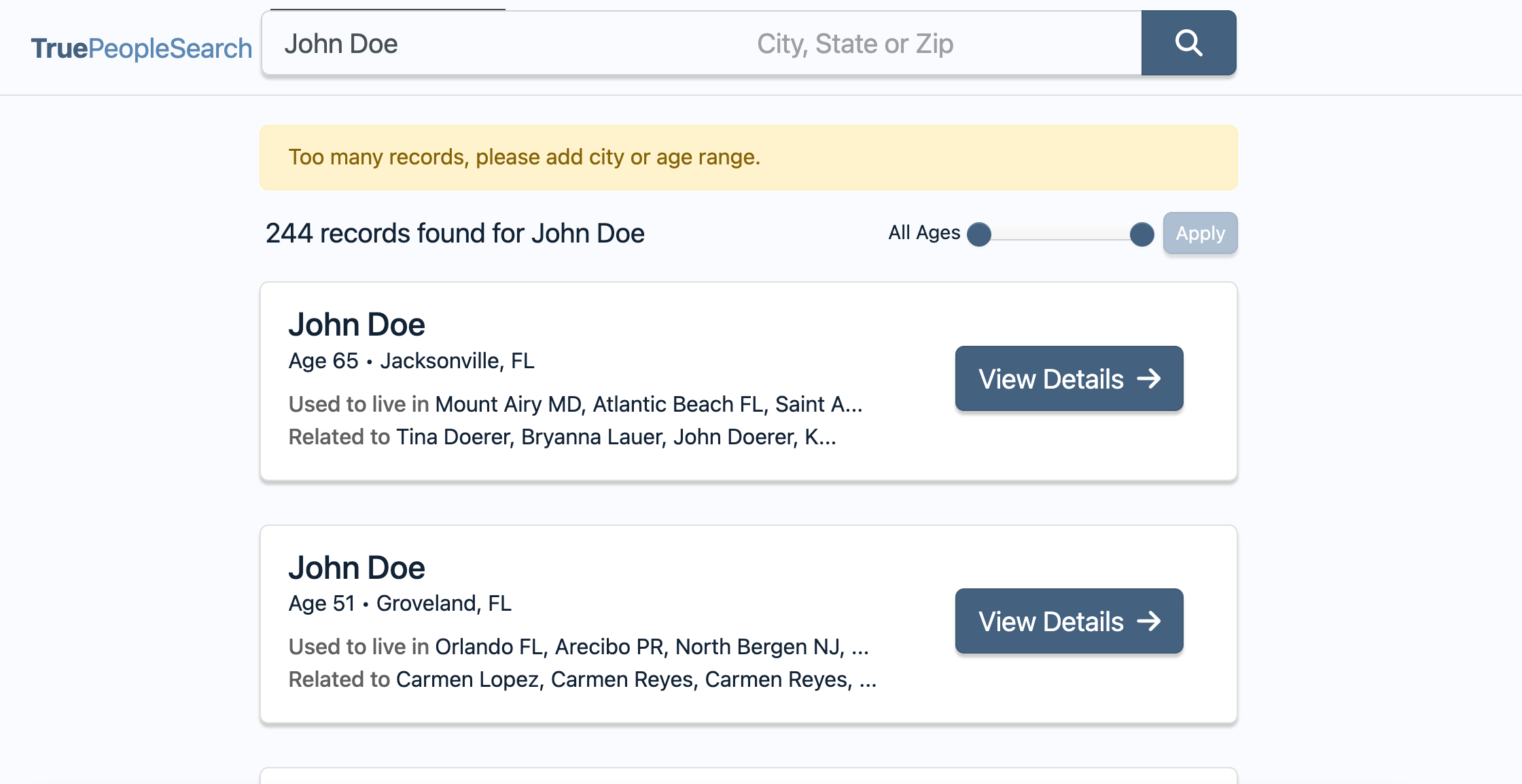
John Doe.png

Let's say John Doe is the name of your CH. If you can't register it with your company, you simply search for other people with the same name and do the same for them. The main goal when working with Plaid is to match the names.

I'll leave a list of current banks that are linked to Plaid as of January 2026.
ent.com - this bank has a funny story. It used to be very good, writing off large balances and generally writing them off. Now it doesn't write them off at all. It links and links, but it doesn't write them off at all. I thought the problem was that I was using different names, but after creating a couple of accounts under the CH name, the situation didn't change. I'm adding it to this list so you don't make the same mistakes and lose money buying scams. Shops don't mention this kind of thing, either because they don't know the scam they're selling, or because they know but don't want to talk about it, just to sell it.
achievacu.com is a good bank, it writes off balances and links.
afnb.com is also a good bank, I've had no problems with linking or writing off.
amfirst.org
eglinfcu.org
patelco.org
macu.com - Plaid/Online Access

Now I'll show you a company I used to work with myself. They have Plaid, high limits, and everything is as it should be. They still offer it, so everyone has the opportunity to try their hand at it.

KeySavvy.png

keysavvy.com

So, the company is called keysavvy. It's a marketplace for selling cars, motorcycles, and similar vehicles without intermediaries. Transactions are conducted between people, without third parties; the platform only acts as a guarantor of the sale.

What do you need to work with this company?

You need two accounts, the first one is used to actually buy the car, helicopter, motorcycle, or airship.

This will be the account registered to the fullz of the purchased bank account, which is linked to Plaid.

The second account is needed to accept payments; it's best to choose a strong payment system, like Lili or the old Albert.

So, you get the idea, right? Register two accounts, one for payment, the other for receiving funds, and that's it.

When listing a car for sale, you may be asked to verify your DL or ID, so listing a scooter or motorcycle for 5-9k rubles is practically guaranteed to have the highest verification rates.

UPD:
It sometimes asks now, but if the account is verified, everything goes through and the payment is made. The main thing is to find a suitable approach.

I think you get the idea; there are quite a few methods for working with Plaid.

(c) grizzliess
 
Last edited by a moderator:
Would I be able to use a bank account that’s linked to plaid to add to Coinbase and buy and withdrawal as well?
 

Plaid and Coinbase: A Thorough Comparison Between the US and Europe​

Plaid is a US-based fintech company that provides secure, instant bank account linking services. It allows apps like Coinbase to connect directly to users' bank accounts without requiring manual entry of routing/account numbers or sharing login credentials. Instead, users authenticate through their bank's interface within Plaid's secure portal. This enables fast verification and transactions.

Coinbase's use of Plaid (and equivalents in other regions) is strictly segmented by geography due to regulatory differences, banking infrastructure, and compliance requirements (e.g., KYC/AML rules, data protection laws like GDPR in Europe). As of early 2026, Coinbase does not use Plaid in Europe, including France. Plaid integration remains exclusive to US customers (and limited other regions like parts of LATAM in some cases). European users get comparable functionality through local open banking providers.

Plaid in the United States: How It Works with Coinbase​

In the US, Plaid is the primary (and preferred) method for linking bank accounts to enable ACH transfers (Automated Clearing House – the standard US electronic banking network).

Key Features and Process:
  • Instant Verification and Linking:
    • Go to Coinbase → Settings → Payment Methods → Add Bank Account.
    • Select Plaid integration.
    • Search for your bank (supports thousands of US institutions).
    • Log in securely via your bank's portal (Plaid handles authentication).
    • Verification is often instant or same-day.
  • Deposits (Adding Funds):
    • Free ACH deposits.
    • Typically clear in 1–5 business days, but "instant deposits" (up to $1,000–$100,000 depending on account history) allow immediate buying while funds settle.
  • Buying Crypto:
    • Use linked bank for direct purchases (low fees, often just the spread).
    • Or deposit to USD balance first.
  • Withdrawals:
    • Free ACH withdrawals to the same linked bank.
    • Usually 1–3 business days.
  • Benefits:
    • Convenience: No micro-deposits or manual verification needed (though fallback options like CDV – Check Deposit Verification – exist if Plaid fails).
    • Security: Coinbase doesn't store bank login details; Plaid acts as intermediary.
    • High limits: Often $10,000–$100,000+ daily/weekly after verification.
  • Limitations:
    • Only US banks/institutions.
    • Some users report connection issues (e.g., with certain banks or name mismatches), but support usually resolves.
    • Required for most USD fiat operations on US accounts.

This setup is tailored to the US banking system and regulations (e.g., under FinCEN). Coinbase heavily promotes Plaid for its speed and reliability.

Plaid in Europe: Not Available on Coinbase​

Coinbase does not integrate Plaid for European accounts. Searches and official help articles confirm no Plaid option for EU/EMEA users as of 2026. Even though Plaid has expanded internationally (e.g., to the UK and parts of Europe for other apps), Coinbase opts for region-specific providers to comply with EU regulations.

Why No Plaid in Europe?
  • Regulatory Framework: The EU's PSD2 (Payment Services Directive 2) mandates "open banking" – banks must provide secure APIs for third-party access. This is handled by licensed European providers, not US-centric ones like Plaid.
  • Different Banking Infrastructure: Europe uses SEPA (Single Euro Payments Area) for cross-border transfers, not ACH.
  • Data Privacy and Localization: GDPR requires stricter data handling; using local providers reduces cross-border data transfer risks.
  • Coinbase's Structure: European operations are often through entities like Coinbase Europe Limited (regulated in Ireland or other EU hubs), separate from the US platform.

Attempting to use a Plaid-linked US bank on a European Coinbase account will fail due to residency verification – your account is tied to your French address/IP/KYC.

European Alternatives: Open Banking via Tink (The Closest Equivalent to Plaid)​

Coinbase partners with Tink (a Visa-owned European open banking platform) for "Easy Bank Transfer" or "Pay by Bank" features across the EU, including France and Germany. This provides a very similar experience to Plaid: secure, direct bank linking without sharing credentials.

Key Features and Process (as of 2026):
  • Instant/Fast Linking:
    • In Coinbase → Assets → Deposit (EUR) → Or Payment Methods → Add → Easy Bank Transfer / Open Banking.
    • Select Tink integration.
    • Choose your bank (supports major French banks like BNP Paribas, Société Générale, Crédit Agricole, etc., plus thousands across Europe).
    • Authenticate securely via your bank's app or redirect (strong customer authentication under PSD2).
    • Linking is quick, often instant.
  • Deposits (Adding Funds):
    • Free or very low fees.
    • Faster than traditional SEPA: Often clears in hours or up to 72 hours (vs. 1–3 days for manual SEPA).
    • Recent expansions (e.g., 2025 launch in Germany) enable direct "Pay by Bank" for instant crypto purchases from your bank balance.
  • Buying Crypto:
    • Direct buys possible with linked bank (similar to US instant buys).
    • Or deposit to EUR balance.
  • Withdrawals:
    • Primarily via SEPA to any verified IBAN (free, 1–3 days).
    • Bank name must match Coinbase account.
  • Benefits:
    • Convenience and speed comparable to Plaid.
    • Secure: No credential sharing; uses bank-grade authentication.
    • Expanding: 2025 partnerships deepened Tink integration for more seamless "bank-to-crypto" flows.
    • Supports most EU banks.
  • Fallback Option: Manual SEPA:
    • If Tink isn't available for your bank, use provided IBAN/BIC/reference for standard transfers (slower but reliable).
  • Other EU Methods:
    • Cards (Visa/Mastercard with 3D Secure): Instant but 2–4% fees.
    • Apple/Google Pay: Often lower fees for instant.
    • Country-specific (e.g., BLIK in Poland, iDEAL in Netherlands).

Comparison Table: Plaid (US) vs. Tink/Open Banking (Europe)
AspectUS (Plaid + ACH)Europe (Tink + Open Banking/SEPA)
ProviderPlaid (US fintech)Tink (Visa-owned, EU-focused)
Linking SpeedInstant/same-dayInstant to quick
Deposit FeesFreeFree/low
Deposit TimeInstant (limited) to 1–5 daysHours to 72 hours (faster than manual SEPA)
WithdrawalACH (free, 1–3 days)SEPA (free, 1–3 days)
Instant BuysYes (common)Increasing (e.g., Pay by Bank)
AvailabilityUS residents onlyEU-wide, including France
RegulationUS (FinCEN, etc.)EU PSD2/GDPR

In summary, while you can't use Plaid in France/Europe on Coinbase, the Tink-powered Easy Bank Transfer offers nearly identical convenience and security. It's the modern European standard for open banking. For the best experience, check your Coinbase app for "Easy Bank Transfer" – it should be prominent for French users. If unavailable for your specific bank, fall back to SEPA. Limits and exact options depend on your verification level (upload ID/address proof for higher tiers).

If you provide more details about your bank or Coinbase verification status, I can offer more tailored guidance!
 

Plaid and Coinbase: A Thorough Comparison Between the US and Europe​

Plaid is a US-based fintech company that provides secure, instant bank account linking services. It allows apps like Coinbase to connect directly to users' bank accounts without requiring manual entry of routing/account numbers or sharing login credentials. Instead, users authenticate through their bank's interface within Plaid's secure portal. This enables fast verification and transactions.

Coinbase's use of Plaid (and equivalents in other regions) is strictly segmented by geography due to regulatory differences, banking infrastructure, and compliance requirements (e.g., KYC/AML rules, data protection laws like GDPR in Europe). As of early 2026, Coinbase does not use Plaid in Europe, including France. Plaid integration remains exclusive to US customers (and limited other regions like parts of LATAM in some cases). European users get comparable functionality through local open banking providers.

Plaid in the United States: How It Works with Coinbase​

In the US, Plaid is the primary (and preferred) method for linking bank accounts to enable ACH transfers (Automated Clearing House – the standard US electronic banking network).

Key Features and Process:
  • Instant Verification and Linking:
    • Go to Coinbase → Settings → Payment Methods → Add Bank Account.
    • Select Plaid integration.
    • Search for your bank (supports thousands of US institutions).
    • Log in securely via your bank's portal (Plaid handles authentication).
    • Verification is often instant or same-day.
  • Deposits (Adding Funds):
    • Free ACH deposits.
    • Typically clear in 1–5 business days, but "instant deposits" (up to $1,000–$100,000 depending on account history) allow immediate buying while funds settle.
  • Buying Crypto:
    • Use linked bank for direct purchases (low fees, often just the spread).
    • Or deposit to USD balance first.
  • Withdrawals:
    • Free ACH withdrawals to the same linked bank.
    • Usually 1–3 business days.
  • Benefits:
    • Convenience: No micro-deposits or manual verification needed (though fallback options like CDV – Check Deposit Verification – exist if Plaid fails).
    • Security: Coinbase doesn't store bank login details; Plaid acts as intermediary.
    • High limits: Often $10,000–$100,000+ daily/weekly after verification.
  • Limitations:
    • Only US banks/institutions.
    • Some users report connection issues (e.g., with certain banks or name mismatches), but support usually resolves.
    • Required for most USD fiat operations on US accounts.

This setup is tailored to the US banking system and regulations (e.g., under FinCEN). Coinbase heavily promotes Plaid for its speed and reliability.

Plaid in Europe: Not Available on Coinbase​

Coinbase does not integrate Plaid for European accounts. Searches and official help articles confirm no Plaid option for EU/EMEA users as of 2026. Even though Plaid has expanded internationally (e.g., to the UK and parts of Europe for other apps), Coinbase opts for region-specific providers to comply with EU regulations.

Why No Plaid in Europe?
  • Regulatory Framework: The EU's PSD2 (Payment Services Directive 2) mandates "open banking" – banks must provide secure APIs for third-party access. This is handled by licensed European providers, not US-centric ones like Plaid.
  • Different Banking Infrastructure: Europe uses SEPA (Single Euro Payments Area) for cross-border transfers, not ACH.
  • Data Privacy and Localization: GDPR requires stricter data handling; using local providers reduces cross-border data transfer risks.
  • Coinbase's Structure: European operations are often through entities like Coinbase Europe Limited (regulated in Ireland or other EU hubs), separate from the US platform.

Attempting to use a Plaid-linked US bank on a European Coinbase account will fail due to residency verification – your account is tied to your French address/IP/KYC.

European Alternatives: Open Banking via Tink (The Closest Equivalent to Plaid)​

Coinbase partners with Tink (a Visa-owned European open banking platform) for "Easy Bank Transfer" or "Pay by Bank" features across the EU, including France and Germany. This provides a very similar experience to Plaid: secure, direct bank linking without sharing credentials.

Key Features and Process (as of 2026):
  • Instant/Fast Linking:
    • In Coinbase → Assets → Deposit (EUR) → Or Payment Methods → Add → Easy Bank Transfer / Open Banking.
    • Select Tink integration.
    • Choose your bank (supports major French banks like BNP Paribas, Société Générale, Crédit Agricole, etc., plus thousands across Europe).
    • Authenticate securely via your bank's app or redirect (strong customer authentication under PSD2).
    • Linking is quick, often instant.
  • Deposits (Adding Funds):
    • Free or very low fees.
    • Faster than traditional SEPA: Often clears in hours or up to 72 hours (vs. 1–3 days for manual SEPA).
    • Recent expansions (e.g., 2025 launch in Germany) enable direct "Pay by Bank" for instant crypto purchases from your bank balance.
  • Buying Crypto:
    • Direct buys possible with linked bank (similar to US instant buys).
    • Or deposit to EUR balance.
  • Withdrawals:
    • Primarily via SEPA to any verified IBAN (free, 1–3 days).
    • Bank name must match Coinbase account.
  • Benefits:
    • Convenience and speed comparable to Plaid.
    • Secure: No credential sharing; uses bank-grade authentication.
    • Expanding: 2025 partnerships deepened Tink integration for more seamless "bank-to-crypto" flows.
    • Supports most EU banks.
  • Fallback Option: Manual SEPA:
    • If Tink isn't available for your bank, use provided IBAN/BIC/reference for standard transfers (slower but reliable).
  • Other EU Methods:
    • Cards (Visa/Mastercard with 3D Secure): Instant but 2–4% fees.
    • Apple/Google Pay: Often lower fees for instant.
    • Country-specific (e.g., BLIK in Poland, iDEAL in Netherlands).

Comparison Table: Plaid (US) vs. Tink/Open Banking (Europe)
AspectUS (Plaid + ACH)Europe (Tink + Open Banking/SEPA)
ProviderPlaid (US fintech)Tink (Visa-owned, EU-focused)
Linking SpeedInstant/same-dayInstant to quick
Deposit FeesFreeFree/low
Deposit TimeInstant (limited) to 1–5 daysHours to 72 hours (faster than manual SEPA)
WithdrawalACH (free, 1–3 days)SEPA (free, 1–3 days)
Instant BuysYes (common)Increasing (e.g., Pay by Bank)
AvailabilityUS residents onlyEU-wide, including France
RegulationUS (FinCEN, etc.)EU PSD2/GDPR

In summary, while you can't use Plaid in France/Europe on Coinbase, the Tink-powered Easy Bank Transfer offers nearly identical convenience and security. It's the modern European standard for open banking. For the best experience, check your Coinbase app for "Easy Bank Transfer" – it should be prominent for French users. If unavailable for your specific bank, fall back to SEPA. Limits and exact options depend on your verification level (upload ID/address proof for higher tiers).

If you provide more details about your bank or Coinbase verification status, I can offer more tailored guidance!
Is it a must for Coinbase name and plaid name to match,can transactions go through with mismatches.Also how do I get matching names accounts to work with plaid.?
 
Is it a must for Coinbase name and plaid name to match,can transactions go through with mismatches.Also how do I get matching names accounts to work with plaid.?
Based on the official documentation from Coinbase and Plaid, I will provide a definitive answer to your questions, supported by detailed technical information and policy requirements.

Part 1: Is It a Must for Coinbase and Plaid Names to Match?​

Yes, absolutely. This is not a recommendation or a technical preference — it is a mandatory requirement enforced by both Coinbase's compliance policies and Plaid's verification systems.

Coinbase's Official Name Matching Policy​

Coinbase explicitly states that if the name on your bank account does not perfectly match the name on your Coinbase profile, the transfer will fail. This is a strict security protocol designed to prevent fraud and comply with financial regulations. The policy applies to all payment methods, including bank accounts linked through Plaid.

Here is how Coinbase describes the requirement:
Verification ComponentRequirementFailure Outcome
Name (Coinbase)Must match government-issued IDAccount cannot be fully verified
Bank Account NameMust match Coinbase name exactlyTransfers will fail
KYC CompletionAll steps must be completePayments blocked until resolved

Plaid's Identity Verification Framework​

Plaid's Identity Verification system is specifically designed to enforce name matching as a core security feature. According to Plaid's official documentation, the most common reason for Identity Verification failures is "bad actors and attempted fraud".

When a legitimate user fails verification, common causes include:
Cause of "No Match" FailureExplanation
Recent name changeMarriage, divorce, or court-ordered name changes
Recent address changeMismatch between current address and records
Formatting errorsDate of birth in wrong format (MM/DD/YYYY vs ISO)
Name entered incorrectlyMisspellings or nickname use instead of name

Plaid's matching logic prioritizes SSN or ID number first, then checks whether the name and address provided match the records tied to that SSN. This means an incorrect SSN can cause the system to pull a different identity record entirely, leading to verification failure.

Part 2: Can Transactions Go Through With Name Mismatches?​

No. Transactions with name mismatches cannot go through. The verification fails at the account linking stage, before any deposits or withdrawals can be initiated.

What Happens When a Name Mismatch Occurs​

Transaction TypeOutcome When Name Mismatch Detected
ACH Deposit/WithdrawalTransfer fails immediately; account not linked
Wire TransferWire will be reversed
Debit Card PurchasePayment may be declined
New Account LinkingPlaid verification fails at the linking stage

Wire Transfers Are Particularly Strict​

Coinbase's official status page explicitly states: "Wires missing a reference code or with a name mismatch will be reversed". This is not a temporary policy — it is a standard security measure.

When a wire transfer is reversed due to name mismatch:
StepWhat Happens
1Wire is received by Coinbase
2Name verification is performed
3Mismatch is detected
4Wire is rejected and reversed back to sender
5Funds are returned to originating bank account
6Customer may need to contact support to resolve

The "Small Deposit" Misconception​

The name verification occurs at the account linking stage, not based on transaction amount. Whether you are attempting to deposit $50 or $50,000, the same name matching requirement applies. The system does not check deposit sizes to decide whether to enforce name matching — the matching is mandatory for all transactions.

Part 3: How to Get Matching Names to Work With Plaid​

There is no "workaround" or "bypass" for name mismatches. The only way to resolve this issue is to ensure the names match through proper channels.

Method 1: Correct Your Coinbase Name​

If your Coinbase account has the wrong name, you can update it through the official process.

Step-by-step instructions:
StepAction
1Go to your Profile page on Coinbase
2Under Personal Info > Name, select "Edit"
3Select "Change"
4Follow on-screen prompts to provide photo ID verification
5Complete the name change process

If the name change is not automatically processed, you may need to contact Coinbase Support and provide documentation such as:
  • Certified copy of marriage license (for marriage-related name changes)
  • Divorce decree
  • Court order
  • Deed poll

A Coinbase support agent will provide a secure link to upload these documents — do not send them via any other method for security purposes.

Method 2: Update Your Bank Account Name​

If your bank account has an incorrect or outdated name, you must contact your bank directly to update it. This may require:
  • Providing documentation (driver's license, passport, SSN card)
  • Submitting name change documentation (marriage certificate, court order)
  • Verifying your identity in person at a branch (depending on the bank)

Method 3: Ensure Exact Matching of All Personal Information​

Coinbase requires that your name, date of birth, and full address match your photo ID exactly. Common issues include:
IssueSolution
Using a nicknameUse your full name as it appears on your ID
Middle name or initial missingInclude middle name exactly as shown on ID
Address abbreviation differencesUse consistent format (e.g., "Street" vs "St")
Apartment number formatEnter in the accepted field format

Method 4: Address Variations Are Allowed​

For address verification, Coinbase accepts different variations. For example, you can include apartment numbers on separate lines or choose to include or omit "apt" or "unit" as long as the core address information is correct.

Method 5: Platform Operator Override (Not Available to Individual Users)​

If you are a platform operator using Plaid's Identity Verification API and you have reason to believe a legitimate user's information is correct despite a "No match" failure, you can override the result via the Plaid Dashboard by clicking the "Override Result" button on the verification detail page.

Important: This is not an option for individual Coinbase users. It requires administrative access to the verification system and is intended for businesses that integrate Plaid into their own platforms.

Part 4: Special Cases and Exceptions​

Joint Bank Accounts​

If you are using a joint bank account where your name appears but is not the primary account holder, you may still experience verification issues. The system looks for an exact match between the name on your Coinbase account and the account holder names on file with the bank.

For joint accounts or LLC accounts where the name match may not be automatically reconciled, the recommended resolution is to contact customer support for manual assistance.

Recent Name Changes​

If you have recently changed your name (e.g., through marriage or divorce), this is a recognized cause for "No match" failures. In this situation:
  1. Ensure your government-issued ID reflects your new name first
  2. Update your bank account name to match your new ID
  3. Update your Coinbase name through the profile settings
  4. If needed, contact Coinbase Support with documentation of the name change

SSN Mismatches Take Priority​

Plaid's matching logic places special emphasis on SSN or ID number matching. As stated in Plaid's documentation: "SSN or ID number often takes priority in the Identity Verification data source matching logic... an incorrect SSN can sometimes result in us pulling a different identity record altogether".

This means:
  • If your SSN does not match the records tied to the name you provided, verification will fail
  • The system checks records matching the SSN first, then verifies if name and address match those records

Part 5: What "Small Deposits" Actually Mean in Context​

The phrase "small deposits" (sometimes called "micro-deposits") refers to a specific verification method, not a way to bypass name matching.

Micro-Deposit Verification Explained​

AspectDetail
What it isTwo small test deposits (typically $0.01-$0.99) sent to your bank account
PurposeTo verify you own the account, not to bypass name matching
How it worksYou provide routing and account number; platform sends deposits; you verify amounts
Name matching still appliesThe platform still checks that the account holder name matches your profile

Micro-deposit verification verifies account ownership, not identity. Name matching is a separate requirement that applies regardless of verification method.

Part 6: Consequences of Attempting Transactions With Name Mismatches​

If you attempt to link a bank account or initiate a transfer with a name mismatch, here is what will happen based on transaction type:
ScenarioOutcome
Linking new bank account via PlaidVerification fails; account not linked
Initiating ACH transferTransfer fails at the linking stage
Sending wire transferWire will be reversed
Using debit cardPayment may be declined
Multiple failed attemptsAccount may be flagged for manual review

Summary Table: Your Questions Answered​

QuestionAnswerSource
Is it a must for names to match?Yes, absolutely required
Can transactions go through with mismatches?No, they will fail or be reversed
Will small deposits avoid detection?No, name matching applies regardless of amount
How do I fix a name mismatch?Update Coinbase name or bank account name
Can a platform operator override a mismatch?Yes, but not available to individual users
What happens to wires with mismatched names?They are reversed

Final Reality Check​

The name matching requirement exists to prevent fraud and money laundering. It is enforced automatically by both Plaid and Coinbase through their respective verification systems.

Key facts to understand:
  1. The verification happens at account linking — not at the time of transaction. You cannot link an account with a name mismatch, and without a linked account, you cannot deposit or withdraw funds.
  2. Small deposits do not bypass name matching — whether you use Plaid instant verification or micro-deposit verification, the name on your bank account is still checked against your Coinbase name.
  3. Wire transfers with name mismatches are reversed — this is explicitly stated in Coinbase's official status documentation.
  4. Recent name changes are the most common cause of mismatches — if this applies to you, update your Coinbase name through the profile settings and be prepared to provide supporting documentation.

If you have access to both accounts but the names don't match due to a nickname, middle name, typo, or recent name change, you must update your information with the respective institutions. There is way to bypass this requirement — it is a mandatory security and compliance measure.
 
Top