

Carding Forum
Professional
- Messages
- 2,788
- Reaction score
- 1,363
- Points
- 113
The blockchain behind bitcoin carries more value than the coin itself
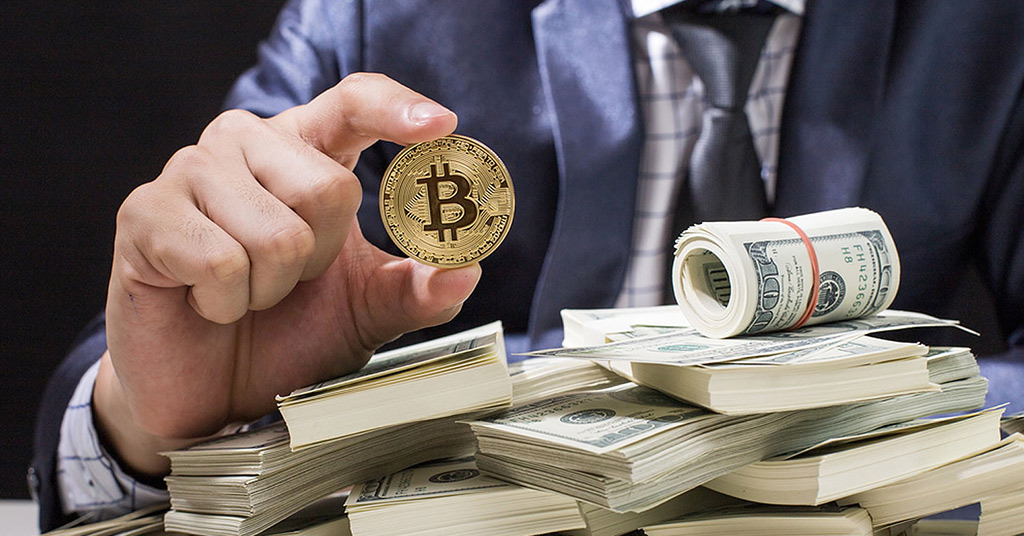
Why Bitcoin won't replace money: 8 reasons.
Introduced in 2009 by some (or some) developer Satoshi Nakamoto, Bitcoin is often perceived as a decentralized virtual alternative to fiat currencies. Indeed, its emission is not controlled by any government - everyone can mine bitcoins through a series of complex computer calculations, and the maximum possible number of coins of 21 million was initially fixed by the developer.
However, Bitcoin does not actually fulfill any of the three traditional functions of money: a medium of exchange, a store of value, and a unit of settlement.
PaySpace Magazine has prepared a list of reasons why Bitcoin cannot be considered a currency.
1. Nearly zero acceptance as a means of payment
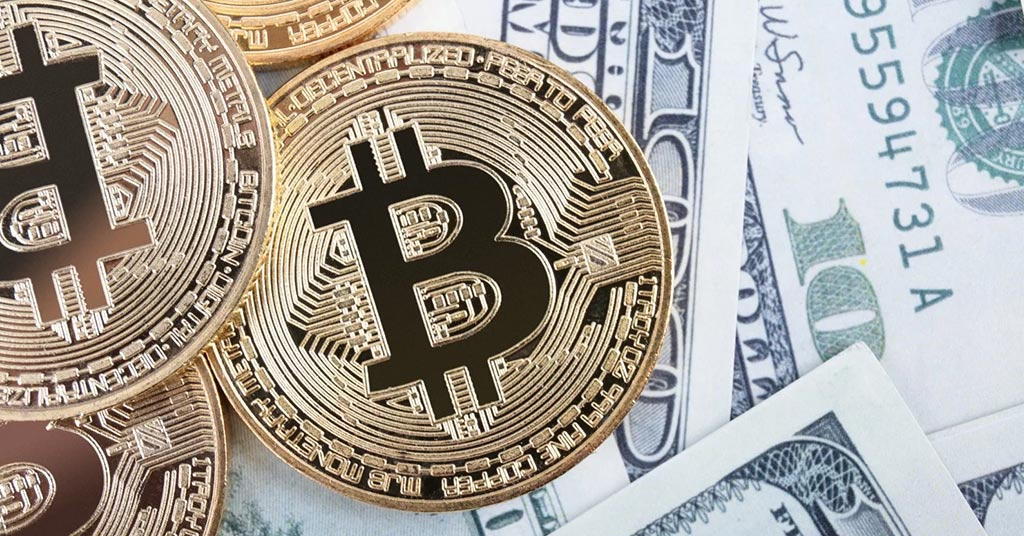
At the moment, bitcoin cannot be considered a means of payment.
The first of the three functions of money is its acceptance as a medium of exchange - that is, the ability to use money to pay for goods and services. According to research by investment bank Morgan Stanley for December 2017, less than 1% of the TOP-500 e-commerce companies accept Bitcoin for payment. Moreover, the year before that the indicator was 5%, which means that the adoption of bitcoin by merchants is very much reduced. At the same time, for physical stores, this indicator, both before and now, is close to zero.
Thus, at the moment, bitcoin cannot be considered a means of payment.
2. Low entry barriers for crypto competitors
Fiat currencies have an important competitive advantage - their role is recognized and enshrined at the legislative level. The regulatory framework of many countries assigns the national currency the role of the only legal tender, including for the payment of taxes and fees. In addition, as the investment bank UBS emphasized in its October 2017 report, "governments set taxes, and the tax is the largest single payment in almost any economy." This fact alone suggests that Bitcoin is unlikely to ever gain widespread acceptance as a medium of exchange.
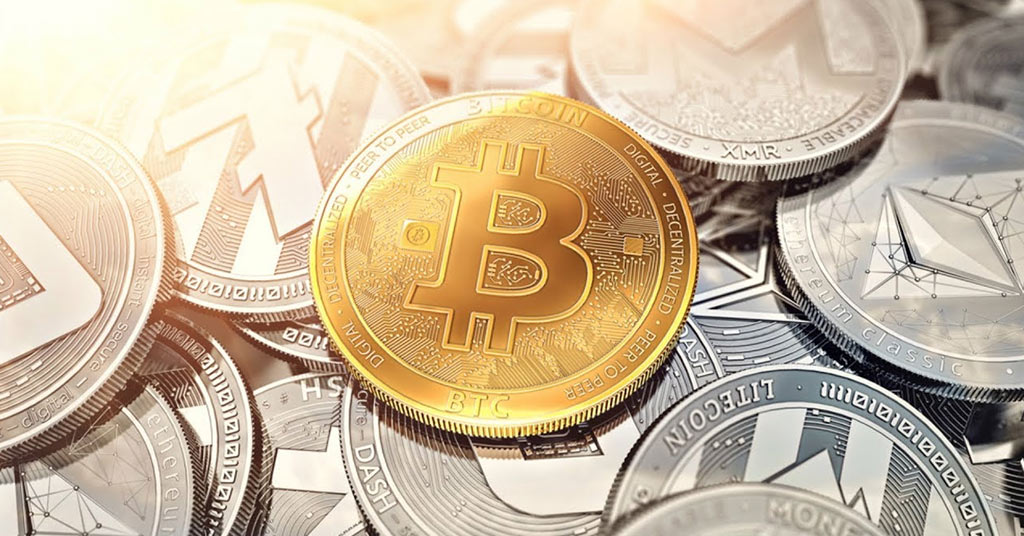
Water barriers for new cryptocurrencies are very low.
Meanwhile, the barriers to entry for new cryptocurrencies are very low. Moreover, Bitcoin Core, the reference implementation of Bitcoin, is an open source software project. Nothing prevents developers from using parts of this code to create new digital coins.
Given the limited supply of bitcoins, excessive demand creates a powerful economic incentive for the creation of competing cryptocurrencies. So, on the Coinmarketcap portal there are already more than 1800 different digital coins.
Bitcoin is not an adequate store of value.
Cryptocurrency prices are highly volatile. This bothers few people while it goes up, but since the beginning of 2018, Bitcoin has fallen in price by almost half. This also happens with stocks, the prices of which are also volatile, but stocks, unlike bitcoin, have intrinsic value. Bitcoin is completely unusable as a store of value.
4. Nobody counts in bitcoins
If a currency cannot function as a store of value, it cannot normally be used as a unit of account either. This function of money allows entrepreneurs and governments to set prices for goods and services.
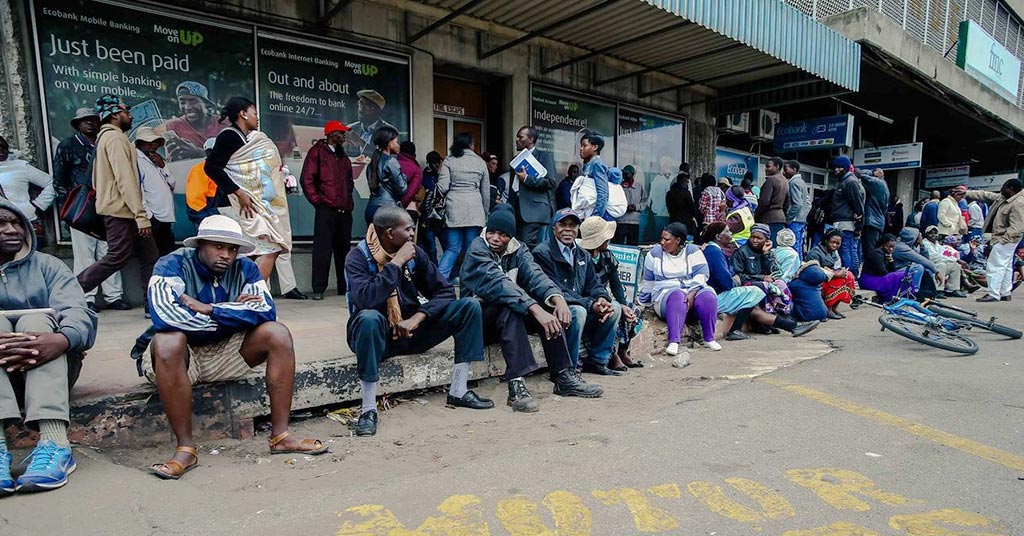
In Zimbabwe, hyperinflation has doubled the price of goods every few days.
This is clearly illustrated by the example of Zimbabwe, where in 2008, due to hyperinflation, entrepreneurs were forced to update price tags several times a day. Goods were doubling in price every few days. Then the Zimbabwean dollar was unable to function either as a store of value or as an effective unit of account. As a result, the US dollar and the currencies of neighboring countries spread as a means of payment.
It is unlikely that someone, calculating the size of their fortune, converts dollars to get a figure in bitcoins. Usually it turns out the other way around.
5. It is environmentally ineffective
Bitcoin mining is the process by which bitcoin transactions are added to the public ledger and new bitcoins are created. Using mining software, miners compete to generate a computationally time-consuming “proof of work” to validate pending transactions. A miner who succeeds receives a transaction fee and new bitcoins.
Bitcoin mining currently requires over 60 terawatt hours of electricity annually, according to research platform digiconomist. Switzerland, whose economy is estimated at $ 700 billion (with companies such as Nestle SA, Roche Holdings AG, Novartis AG and Glencore PLC) and 8.5 million people, spends about the same per year. Against this background, bitcoin in its current incarnation is perceived as a complete waste. Moreover, it is mainly used for speculative purposes.
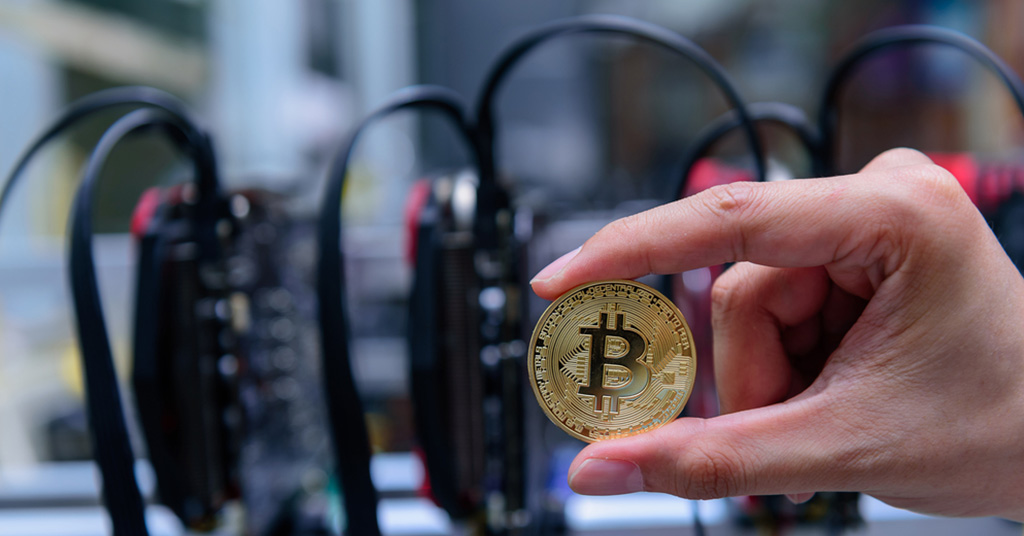
Bitcoin mining currently requires over 60 terawatt hours of electricity annually.
It is worth noting that, according to a study by the University of Cambridge, among the miners themselves, only 9% believe that mining does not harm the environment.
By the way, China is the largest consumer of electricity for bitcoin mining, despite the fact that in 2016 62% of electricity in China was obtained by burning coal.
Consequently, Bitcoin is very expensive in terms of its environmental impact.
6. No guarantee of deposits
Bitcoin has another significant drawback in comparison with national currencies, including the hryvnia - the lack of guaranteeing deposits. In Ukraine, the maximum amount of reimbursement of bank deposits, including accrued interest, for one depositor is UAH 200 thousand. In the United States, this figure is $ 250 thousand.

Before the introduction of deposit guarantees, bank customers were at risk by transferring their savings to them.
Before the introduction of guaranteeing deposits, bank customers were exposed to risk by transferring their savings to them - they actually relied on the reputation of the chosen financial institution. This is exactly what cryptocurrency supporters do by opening accounts on crypto-exchanges and registering wallets.
7. An account on a crypto exchange is not a bank account
Price volatility is far from the only risk for bitcoin holders. There is also an operational risk associated with difficulties in withdrawing bitcoins from exchanges. This is not the same as going to the bank and collecting cash.
For example, about one of the largest exchanges, Coinbase, on the Better Business Bureau website, customers have left more than a thousand reviews with complaints, a significant part of which went unanswered. Exchange representatives said that this is due to the large influx of users. Likewise, Coinbase's Reddit, which operates as an online customer service channel, contains numerous complaints from users who face issues such as restricting access to their accounts, unexpected withdrawal fees, or waiting weeks (and sometimes months!) For Bitcoin to be withdrawn. And all this despite the fact that the exchange is one of the most reputable in the world.

Crypto exchange customer complaints remain unanswered.
8. Break-ins and thefts
In December last year, it was reported that a total of more than 980,000 bitcoins (worth approximately $ 8 billion) were stolen from cryptocurrency exchanges. This is almost 6% of all bitcoins in circulation, and almost 5% of the total possible amount of bitcoins (21 million). This is an astounding frequency of theft considering the asset appeared less than ten years ago. Unsurprisingly, many users choose to store their bitcoins in a cold wallet (a storage medium that is not connected to the Internet), and crypto exchanges are not considered a safe place to store funds.
It's hard to imagine what would happen if Bank of America suddenly announced that most of its clients' assets were stolen. This is exactly what happened 4 years ago with the Mt. Gox.
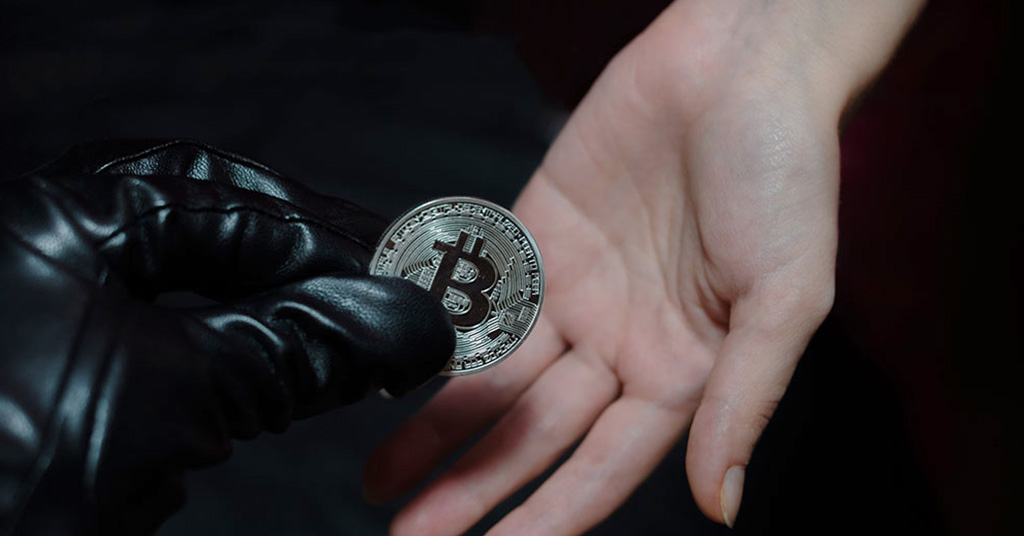
Crypto exchanges are not considered to be a secure place to store funds.
Why Bitcoin won't replace money: 8 reasons.
Introduced in 2009 by some (or some) developer Satoshi Nakamoto, Bitcoin is often perceived as a decentralized virtual alternative to fiat currencies. Indeed, its emission is not controlled by any government - everyone can mine bitcoins through a series of complex computer calculations, and the maximum possible number of coins of 21 million was initially fixed by the developer.
However, Bitcoin does not actually fulfill any of the three traditional functions of money: a medium of exchange, a store of value, and a unit of settlement.
PaySpace Magazine has prepared a list of reasons why Bitcoin cannot be considered a currency.
1. Nearly zero acceptance as a means of payment
At the moment, bitcoin cannot be considered a means of payment.
The first of the three functions of money is its acceptance as a medium of exchange - that is, the ability to use money to pay for goods and services. According to research by investment bank Morgan Stanley for December 2017, less than 1% of the TOP-500 e-commerce companies accept Bitcoin for payment. Moreover, the year before that the indicator was 5%, which means that the adoption of bitcoin by merchants is very much reduced. At the same time, for physical stores, this indicator, both before and now, is close to zero.
Thus, at the moment, bitcoin cannot be considered a means of payment.
2. Low entry barriers for crypto competitors
Fiat currencies have an important competitive advantage - their role is recognized and enshrined at the legislative level. The regulatory framework of many countries assigns the national currency the role of the only legal tender, including for the payment of taxes and fees. In addition, as the investment bank UBS emphasized in its October 2017 report, "governments set taxes, and the tax is the largest single payment in almost any economy." This fact alone suggests that Bitcoin is unlikely to ever gain widespread acceptance as a medium of exchange.
Water barriers for new cryptocurrencies are very low.
Meanwhile, the barriers to entry for new cryptocurrencies are very low. Moreover, Bitcoin Core, the reference implementation of Bitcoin, is an open source software project. Nothing prevents developers from using parts of this code to create new digital coins.
Given the limited supply of bitcoins, excessive demand creates a powerful economic incentive for the creation of competing cryptocurrencies. So, on the Coinmarketcap portal there are already more than 1800 different digital coins.
3. Cannot be used as a store of value
The second function of money is to be a store of value. Of course, fiat currencies are not ideal in this regard. For example, the dollar has lost about 2.8% of its purchasing power per year over the past century. However, this rate of decline is relatively slow and stable, so the dollar can be considered an adequate store of value, which is not the case with bitcoin.
Bitcoin is not an adequate store of value.
Cryptocurrency prices are highly volatile. This bothers few people while it goes up, but since the beginning of 2018, Bitcoin has fallen in price by almost half. This also happens with stocks, the prices of which are also volatile, but stocks, unlike bitcoin, have intrinsic value. Bitcoin is completely unusable as a store of value.
4. Nobody counts in bitcoins
If a currency cannot function as a store of value, it cannot normally be used as a unit of account either. This function of money allows entrepreneurs and governments to set prices for goods and services.
In Zimbabwe, hyperinflation has doubled the price of goods every few days.
This is clearly illustrated by the example of Zimbabwe, where in 2008, due to hyperinflation, entrepreneurs were forced to update price tags several times a day. Goods were doubling in price every few days. Then the Zimbabwean dollar was unable to function either as a store of value or as an effective unit of account. As a result, the US dollar and the currencies of neighboring countries spread as a means of payment.
It is unlikely that someone, calculating the size of their fortune, converts dollars to get a figure in bitcoins. Usually it turns out the other way around.
5. It is environmentally ineffective
Bitcoin mining is the process by which bitcoin transactions are added to the public ledger and new bitcoins are created. Using mining software, miners compete to generate a computationally time-consuming “proof of work” to validate pending transactions. A miner who succeeds receives a transaction fee and new bitcoins.
Bitcoin mining currently requires over 60 terawatt hours of electricity annually, according to research platform digiconomist. Switzerland, whose economy is estimated at $ 700 billion (with companies such as Nestle SA, Roche Holdings AG, Novartis AG and Glencore PLC) and 8.5 million people, spends about the same per year. Against this background, bitcoin in its current incarnation is perceived as a complete waste. Moreover, it is mainly used for speculative purposes.
Bitcoin mining currently requires over 60 terawatt hours of electricity annually.
It is worth noting that, according to a study by the University of Cambridge, among the miners themselves, only 9% believe that mining does not harm the environment.
By the way, China is the largest consumer of electricity for bitcoin mining, despite the fact that in 2016 62% of electricity in China was obtained by burning coal.
Consequently, Bitcoin is very expensive in terms of its environmental impact.
6. No guarantee of deposits
Bitcoin has another significant drawback in comparison with national currencies, including the hryvnia - the lack of guaranteeing deposits. In Ukraine, the maximum amount of reimbursement of bank deposits, including accrued interest, for one depositor is UAH 200 thousand. In the United States, this figure is $ 250 thousand.
Before the introduction of deposit guarantees, bank customers were at risk by transferring their savings to them.
Before the introduction of guaranteeing deposits, bank customers were exposed to risk by transferring their savings to them - they actually relied on the reputation of the chosen financial institution. This is exactly what cryptocurrency supporters do by opening accounts on crypto-exchanges and registering wallets.
7. An account on a crypto exchange is not a bank account
Price volatility is far from the only risk for bitcoin holders. There is also an operational risk associated with difficulties in withdrawing bitcoins from exchanges. This is not the same as going to the bank and collecting cash.
For example, about one of the largest exchanges, Coinbase, on the Better Business Bureau website, customers have left more than a thousand reviews with complaints, a significant part of which went unanswered. Exchange representatives said that this is due to the large influx of users. Likewise, Coinbase's Reddit, which operates as an online customer service channel, contains numerous complaints from users who face issues such as restricting access to their accounts, unexpected withdrawal fees, or waiting weeks (and sometimes months!) For Bitcoin to be withdrawn. And all this despite the fact that the exchange is one of the most reputable in the world.
Crypto exchange customer complaints remain unanswered.
8. Break-ins and thefts
In December last year, it was reported that a total of more than 980,000 bitcoins (worth approximately $ 8 billion) were stolen from cryptocurrency exchanges. This is almost 6% of all bitcoins in circulation, and almost 5% of the total possible amount of bitcoins (21 million). This is an astounding frequency of theft considering the asset appeared less than ten years ago. Unsurprisingly, many users choose to store their bitcoins in a cold wallet (a storage medium that is not connected to the Internet), and crypto exchanges are not considered a safe place to store funds.
It's hard to imagine what would happen if Bank of America suddenly announced that most of its clients' assets were stolen. This is exactly what happened 4 years ago with the Mt. Gox.
Crypto exchanges are not considered to be a secure place to store funds.


