Introduction
Halloween is already over, and in general, I noted it pretty well, as you can see from yesterday's photo. I apologize for trying to scare you, so I will only do it now. Or rather, I'm not going to scare you at all. Watch a second-rate horror movie better. We've got educational content here, by the way! Therefore, we will understand what fear is and why we need it.
Strem
Today, it is obvious to any minimally educated person that we inherited fear from our ancestors. Yes, yes, the very ones who ran with spears, hunting for mammoths. But if you dig even further, then you can come to the conclusion that it is from animals. I am not afraid to say one of the most important emotions in our life, because thanks to it we are still alive. Our brain has a well-developed defense mechanism. This is a mechanism of fear, which more than once saved our not very smart ancestors and allowed us to build exactly the civilization in which we live to this day.
Abomination
Why do you think we are afraid of poisonous snakes or spiders, if they are not found at all in modern metropolitan areas? It's all about genetic memory. Valiant cavemen faced an endless array of dangers, be they wild predators or the inept use of fire. For centuries, they memorized the dangers that were programmed by the nervous system and made people understand what exactly threatened their lives and what did not. These ancient skills were encoded in our genes and became our dubious inheritance from our ancestors. Fear is the emotion that turns on when we are in danger, or at least we think so. A kind of alarm that, at the slightest danger, calls the kidneys. Those, in turn, release adrenaline, which helps us fight dangers. Well, either just do the legs. And yes, you got it right. In our brain and specifically in his security system, since ancient times there are only two attitudes - to fight or to run away. Our brain chooses to run away in most cases, since it is easier and there is no risk of injury during the battle. But to fight, you still need to be able to.

Mechanism
Now let's take a look at how fear and our built-in defense mechanisms work from a biological point of view. It all starts with sensors - first of all, eyes or hearing work. For example, you see a riot policeman running at you with a truncheon. The main trigger for fear is pain. For example, when you are kicked in the ass with ankle boots, the nerve cells in it send a signal to the spinal cord, then everything goes to the brain, where the main performance takes place. It all starts with a variety of physical reactions, such as, for example, withdrawing from the source of pain. This is followed by an emotional reaction - when your main desire is to quickly hide from danger. The place in the brain where it all forms is the hypothalamus and the amygdala. The hypothalamus contains precisely those nerve cells that generate either a fear reaction or an aggression reaction, depending on what decision the brain makes. (passive defensive reaction of the body, or active defensive reaction of the body). Interestingly, the cells that cause panic are a millimeter away from those that cause rage. At the helm of the hypothalamus sits the amygdala, into which all signals are received. The amygdala detects danger, then sends a signal to the hypothalamus, which generates a reaction. The degree of cooperation of the amygdala with the rest of the brain determines how aggressive or fearful we are, because different people are more or less prone to panic reactions. Therefore, there are choleric and melancholic people, which greatly determines the nature of our personality. those that cause panic are a millimeter away from those that cause rage. At the helm of the hypothalamus sits the amygdala, into which all signals are received.
:no_upscale()/imgs/2021/08/25/12/4849006/2ff70a2cafff696d6d82a5e4ba2baab010ab7775.jpg)
Phobia
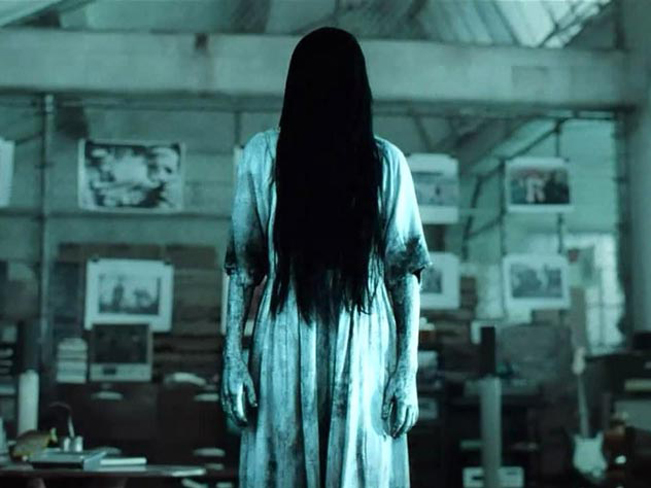
Now let's talk about more pressing things. As humans evolved so much, so did our fear. In our modern world, there are very few threats to life, but they still need to be afraid of something. Therefore, people have a huge number of far-fetched fears that hinder us in life. Such fears are called phobias, and their difference from real fear is that ordinary fear is a reaction to real events. For example, you are afraid when an airplane's engine will catch fire. In the case of a phobia, you are afraid of just imagining how the engine will light up. Therefore, phobias are bad and must be dealt with. Not even so, they need to be treated. But ordinary fear can be enjoyable. Why do we like watching horror movies? They use triggers that cause innate fear. These are the scrimmers whipping up the atmosphere, incomprehensible sounds in a dark environment. All this is a game on the inherited feelings of a caveman who, sitting in a cave by the fire at night, twitched at every rustle, thinking that it was a saber-toothed tiger. Then his life really depended on such reactions. Now people get high with fear, because thanks to it they get a free dose of adrenaline while sitting in an easy chair, but about the adrenaline itself it is worth making a separate article. There are some other useful uses of fear, though. For example, political scientists or marketers. Politicians intimidate their electorate with potential threats if they are not elected. Or marketers. "If you don't buy this alarm today, your children will be kidnapped tomorrow." And many more like that. All this is a game on the inherited feelings of a caveman who, sitting in a cave by the fire at night, twitched at every rustle, thinking that it was a saber-toothed tiger. Then his life really depended on such reactions. Now people get high with fear, because thanks to it they get a free dose of adrenaline while sitting in an easy chair, but about the adrenaline itself it is worth making a separate article. There are some other useful uses of fear, though. For example, political scientists or marketers. Politicians intimidate their electorate with potential threats if they are not elected. Or marketers. "If you don't buy this alarm today, your children will be kidnapped tomorrow." And many more like that. All this is a game on the inherited feelings of a caveman who, sitting in a cave by the fire at night, twitched at every rustle, thinking that it was a saber-toothed tiger. Then his life really depended on such reactions. Now people get high with fear, because thanks to it they get a free dose of adrenaline while sitting in an easy chair, but about the adrenaline itself it is worth making a separate article. There are some other useful uses of fear, though. For example, political scientists or marketers. Politicians intimidate their electorate with potential threats if they are not elected.

Outcome
Hope you like the fear theme. Be sure to evaluate the post with a good comment, and also discard your comrades so that they, too, would slowly turn from cavemen into an educated intelligentsia. I wish you to be afraid only for the sake of pleasure, and not in case of a threat to life. But, however, a knife in the liver - no one lasts forever.