

Brother
Professional
- Messages
- 2,590
- Reaction score
- 544
- Points
- 113
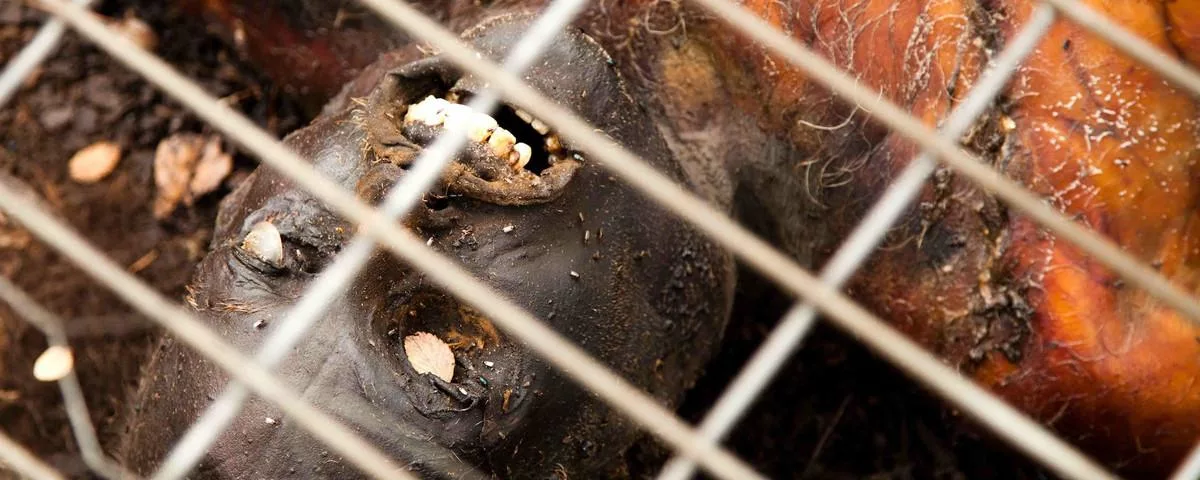
Recently, from the Australian state of New South Wales, a message came about the results of observations by specialists in the study of the processes of decomposition of bodies: it turned out that corpses left in the open air in the local climate are capable of spontaneous movement. Research of this kind is still being carried out on only two continents - in North America and in Australia, where special areas have been equipped for this. These "body farms" often provoke protests from the local population, but their activities are extremely important both for practical purposes (when training investigators and forensic experts) and for theoretical purposes - they allow you to restore a clinically accurate picture of decomposition and study the necrobiome. We will tell you how body farms appeared, whether they are really so needed and how legal and ethical their activities are.
In 1995, the local Tennessee television station WSMV-TV aired the controversial report that scientists had been conducting experiments in Knoxville for years in which they left human corpses to decompose in the open.
“Research that has no analogues in the world. They receive budgetary funding, although no one has ever been interested in their methods and ethics, ”- said in the investigation of the leading and journalist Demetria Kalodimos (Demetria Kalodimos). She also saw the scientific work as "shocking violations of state laws, disrespect for the rights of veterans, and deceiving grieving families."
After the reportage, local residents and civil society organizations filed a number of complaints and held a demonstration, but this did not have any serious consequences. This is how the world learned about the existence of the first laboratory of forensic anthropology.
Now there are eight of them, and they are better known under the semi-official name "body farms" ("corpse farms", body farms). These institutions are designed to bring to a new level of knowledge about what happens to the human body after death in different conditions, in order to help answer the main questions of forensic medical examination: whose corpse is it and when did death occur.
It all depends on the conditions
First, a little theory. There is no unified classification of the stages of decomposition of a corpse - different schools and authors have different approaches to it. However, in general terms, this process can be described as follows.After the onset of biological death, the so-called early cadaveric phenomena occur due to circulatory arrest. Posthumous cooling begins almost immediately - a gradual decrease in temperature to the level of ambient temperature due to the cessation of metabolism.
Soon after this, rigor mortis sets in - in the absence of oxygen, the connections between the contractile proteins of the muscles (actin and myosin) become irreversible, the muscles thicken and shorten, fixing the joints in a bent state. At about the same time, the blood released from the vessels begins to move to the lower (relative to the surface) parts of the body under the influence of gravity - violet-cyanotic cadaveric spots form on the skin in these areas.
Chemically, these processes correspond in time to the onset of autolysis. It consists in the fact that in the absence of blood supply, self-destruction of cells begins under the action of the enzymes in them, which during life are involved in the exchange and utilization of proteins, fats, carbohydrates and other molecules. As a result, the tissues partially lose their structure and release fluid, which is externally manifested by the detachment of the skin with the formation of blisters.
Along with autolysis, decay is responsible for the decomposition of the corpse - the decay of tissues under the action of anaerobic bacteria, both living in the person himself (primarily in the intestines) and coming from the environment (soil, dust, etc.), as well as fungi. In the course of their vital activity, these microorganisms convert complex biological molecules into low molecular weight organic compounds (most of them - polyamines, thiols, indole, skatole - have a characteristic unpleasant odor).
The gases released during this cause cadaveric emphysema (swelling), due to which the body significantly increases in volume, and putrefactive fluid comes out through the natural openings and breaks of the skin. Hemoglobin is converted to sulfhemoglobin, which gives the corpse a dirty green hue.
Autolysis (its contribution to decomposition decreases with time) and putrefaction (and its contribution increases) create conditions for seeding the corpse with insect larvae, which accelerate tissue decay. Various scavengers also play a role, if available. As a result of the common efforts of micro- and macroorganisms, soft tissues are completely decomposed. Remaining bones and teeth can be preserved for a long time, and with fossilization (fossilization) - almost forever.
In specific conditions, instead of decay or before its final stages, conservative cadaveric processes can occur, in which soft tissues are modified, but to a certain extent are preserved.
These processes include mummification (high temperature, minimum humidity and good ventilation are required); saponification, or fat wax (extremely high humidity and minimal contact with oxygen, even better when the corpse is completely under water); peat tanning (the name speaks for itself); freezing and some others, more exotic (remember, for example, the remains of animals in amber). Conservation can also be artificial, for example, embalming.
In the description of posthumous changes, time intervals are deliberately not indicated, since the beginning and end of any stage strongly depend on many conditions: temperature, humidity, precipitation, the presence of oxygen, the state of the body at the time of death ( including body weight, existing diseases, the nature of the contents of the digestive tract), burial (including its depth, type of soil and material in which the body is placed), clothing, the presence of scavengers, conservation factors.
How it all began
Attempts to study posthumous changes and apply this knowledge for forensic purposes have been made by people for a long time. The first known systematic work on this topic was published in the middle of the 13th century by the Chinese statesman and scholar Song Qi. His book "Xi yuan ji lu" (in various translations of "Notes on washing away insult", "Collection of reports on the removal of unfair accusations", etc.), in addition to describing other forensic techniques, contained instructions for examining and autopsy of corpses, as well as data on the influence of insects and weather on the decomposition process.At the same time, Song Qi relied not only on his own observations, but also on previous works, such as the anonymous treatise of the X-XII centuries "Nei shu lu" ("Compassionate Records"). Xi yuan ji lu, repeatedly supplemented and corrected by various authors, has served as a practical guide in China for almost seven centuries.
European colleagues lagged behind Sun Qi by more than three centuries - a textbook on forensic medicine by the Sicilian surgeon Fortunato Fedele was published in 1602, and 19 years later the more famous and voluminous work "Forensic medical questions" ("Quaestiones medico-legales" ) of the papal court physician Paolo Zacchia. More or less regularly, Western publications on this topic began to appear from the end of the 18th century, and in its modern form, forensic science began to take shape only in the second half of the 20th century.
For the past several decades, modern medical and biological technologies, such as DNA analysis, have been increasingly used in forensic science (forensic experts first used it in 1984). Nevertheless, until now, in most cases, the time of death is determined by the cadaveric changes described above, information about which is based mainly on previous observations of the discovered remains and experiments on animals, most often pigs and rabbits. Unfortunately, such information does not have sufficient accuracy, which often leads to inaccuracies in conclusions, sometimes very significant.
A similar mistake was made in 1977 by William Bass, then head of the Department of Anthropology at the University of Tennessee and the state's official forensic anthropologist. Local police found traces of excavations at a grave from the American Civil War and suspected that the attackers were trying to hide a fresh corpse in it. Bass, who was invited as a consultant, confirmed these suspicions, concluding that death occurred in the interval from a month to a year.
However, subsequent analysis of the teeth and clothing showed that the grave was its "rightful owner" - who died in 1864, Colonel William Shy (William Shy). The expert was let down by the exceptional preservation of the body, which, as it turned out, was ensured by the timely embalming and burial in a metal coffin.
Bass, whose mistake confirmed the imperfection of existing methods, came up with the idea to rectify the situation with the help of a kind of open-air laboratory, where you can systematically observe the full cycle of decomposition of human corpses, comparing the results with lifetime data and environmental conditions. In 1980, his efforts in Knoxville opened the first Anthropology Research Facility (ARF) at the University of Tennessee, seven years later becoming the basis of the newly created Forensic Anthropology Center (FAC).
According to the title of the detective novel by Patricia Cornwell, the complex (and then all similar institutions) received the unofficial, but quickly established name "farm of bodies." Bess himself called his autobiography, like the brainchild described in it, "Death's Acre". He directed the FAC until 1998 and continues to advise scientists and investigators to this day.
In death is life
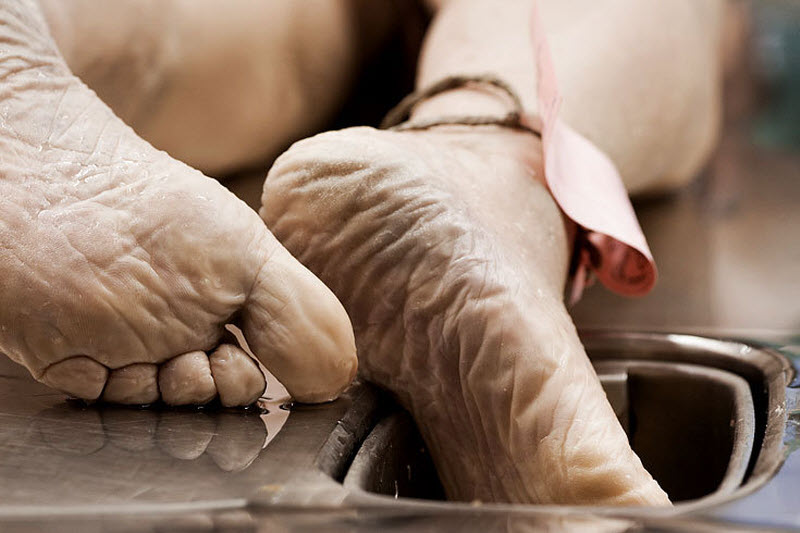
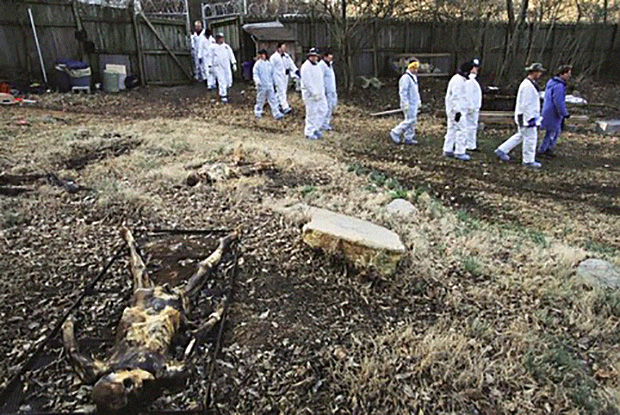
The oldest body farm is a section of forest fenced with barbed wire (now its area has increased to 2.5 acres, or more than 10 thousand square meters), where fresh corpses are placed to study decomposition processes. To obtain the maximum amount of information, bodies are placed at different times of the year in different conditions: under the open sky, in the shade of dense bushes, in car interiors, in containers with water buried at different depths, with or without clothing , and so on.Staff and student volunteers record data at all stages of decomposition using video cameras, by visual observation and taking samples for various analyzes. On the territory of the complex, in addition to the landfill itself, there are a morgue, a laboratory and other service premises.
When a corpse is completely skeletonized, its bones are cleaned, processed and placed in a collection for further study and use as visual material in the preparation of forensic anthropologists - from a well-preserved skeleton, a specialist must accurately determine gender, age at the time of death, race, physique, etc. some diseases. Demographic, medical and anatomical information about body donors is entered into a special database.
The constantly growing collection already contains more than 1800 skeletons of people of different ages (from prenatal period to 101 years) and origin. More than a hundred corpses are handed over to the FAC every year.
About half of this amount comes from special wills, under which people donate their bodies in advance to the FAC. To date, more than four thousand people from all 50 American states and from six more countries have signed such wills. The other half is provided by the relatives of the deceased, who, without any prior agreement with the FAC, choose this way to dispose of the dead body. Unclaimed corpses seem to make up a very small percentage.
The complex has been very successful, and to date, six more similar institutions have opened in the United States - in North Carolina, two in Texas, Illinois, Colorado and Florida. They are designed to study posthumous processes in various climatic and ecological zones, as well as serve as training centers for forensic experts and forensic criminologists. The proving grounds are also used to train investigators from various agencies, including the Federal Bureau of Investigation (FBI).
In 2016, an Australian body farm appeared near Sydney - the first and so far the only one outside the United States.
During the work of the body farm, they managed to collect an impressive array of data on what chemical and biological processes occur during the decomposition of the human body and how external and internal conditions affect them. In addition to simple observations, employees conduct high-tech research, such as decoding of cadaveric and microbial genomes and proteomes, isotope analysis, and others.
The accumulated data array and their processing from the standpoint of multiomics (including genomics, transcriptomics, metabolomics, and so on) made it possible to create a complete picture of which bacteria are responsible for decomposition under specific conditions. These studies confirmed that the corpse is a dynamic ecosystem in which populations of various microorganisms - with or without the participation of insects and fungi - replace each other in accordance with the stages of post-mortem changes. Since the beginning of the study of such ecosystems in animals, they have been called necrobiomes (literally "living community of death").
The study of necrobiomes, far from complete, has already yielded many interesting results. For example, the researchers found that at the stage of cadaveric emphysema, aerobic bacteria give way to the dominant position of anaerobic bacteria, that microorganisms in the oral cavity can serve as a kind of "clock" for determining the time of death, that animals are a poor model for studying the decomposition of human bodies (they decompose faster in warmth, and slower in the cold; there are other differences) and much more.
The analysis of volatile compounds and gases released during the decomposition of the corpse served as the basis for the development of a portable device LABRADOR (Lightweight Analyzer for Buried Remains and Decomposition Odor Recognition) for detecting buried victims of crimes. According to experts, this technology will become widespread in the coming decades.
Australian researchers also presented the first fruits of their work. They found that under the influence of tissue changes, the corpse can make a much larger range of movements than previously thought - this must be taken into account when examining the crime scene.
This is not all the data obtained on "body farms", and the volume of research on them continues to grow.
"It makes us sick"
Despite the obvious benefits of farms for science and practice, the specifics of the research conducted on them naturally arouses rejection among individuals (especially those living in the neighborhood) and activists. After the aforementioned journalistic investigation by WSMV-TV, some residents of Knoxville began to complain that they smell a characteristic smell or even see decomposing corpses from the windows (in response to these claims, the ARF landfill was fenced off with a higher fence).The public organization “Solutions to Issues of Concern to Knoxvillians” (SICK) even staged a picket with posters “This makes us SICK”, which can be translated as “We are sick of this,” but the action had no serious consequences.
Periodically concerned citizens are filing lawsuits, mostly against the opening of new body farms, but the number of research sites continues to grow.
Perhaps the most interesting story happened with the preparations for the opening of the largest such institution to date at the Freeman Ranch in Texas. Local residents and nearby San Marcos airport protested, expressing fears that the corpses would attract vultures. The University of Texas, the founder of the farm, proved that this would not pose a danger, and at the same time included the question of the role of vultures in the scientific program of the new test site. And published the results.
It would seem that the media should pick up such a fertile and controversial topic as experiments with the decomposition of human corpses. But it should be admitted that most reports, both in tabloids, and in serious publications, and on TV channels, cover the activities of body farms from a positive side, describing the benefits of this work for science and society. Artists also do not pass by - from the already mentioned Cornwell to the famous photographer Sally Mann. Bess himself, in collaboration with journalist Jon Jefferson, has produced a series of detective stories popularizing the work of forensic anthropologists.
How Legal and Ethical is Acres of Death? In the United States, there are no special rules in this regard - the activities of farms are subject to the general law on donating bodies for scientific purposes. According to him, in research and educational purposes, you can use either unclaimed corpses, or the bodies of people who bequeathed themselves to science during their lifetime, or donated by close relatives.
Centers of forensic archeology are guided by the same principles - they have their own donation programs, which have even fewer restrictions than educational institutions for doctors. The main thing is that the donor at the time of death does not weigh more than 500 pounds (about 230 kilograms) and does not have HIV infection, viral hepatitis or diseases caused by antibiotic-resistant microorganisms.
It should be noted that the law on donation has long been interpreted quite broadly: in particular, the auto industry has been using the bodies of the deceased since the 1930s as dummies for crash tests, and the defense industry - to study the effects of ammunition and the effectiveness of protection against them. Periodically, this use of corpses causes shock and outrage among relatives, who believed that they were helping to research diseases and develop drugs, unaware of other experiments that look less lofty.
This is especially pronounced after the scandals with dishonest companies, which, in fact, open unobvious "shops" of corpses and their parts, disregarding all the rules for the dignified treatment of remains. Of course, such stories are fraught with lawsuits against "entrepreneurs" rather than scientists, but they undermine the credibility of donating bodies - valuable research objects that are always in short supply.
The situation is aggravated by the fact that if posthumous organ donation in the eyes of society looks on the whole noble and honorable, the donation of the body to science is still dubious. But do not forget that if the first can save individual lives, then the second - many times more, even if not so straightforward.


