

Tomcat
Professional
- Messages
- 2,695
- Reaction score
- 1,072
- Points
- 113
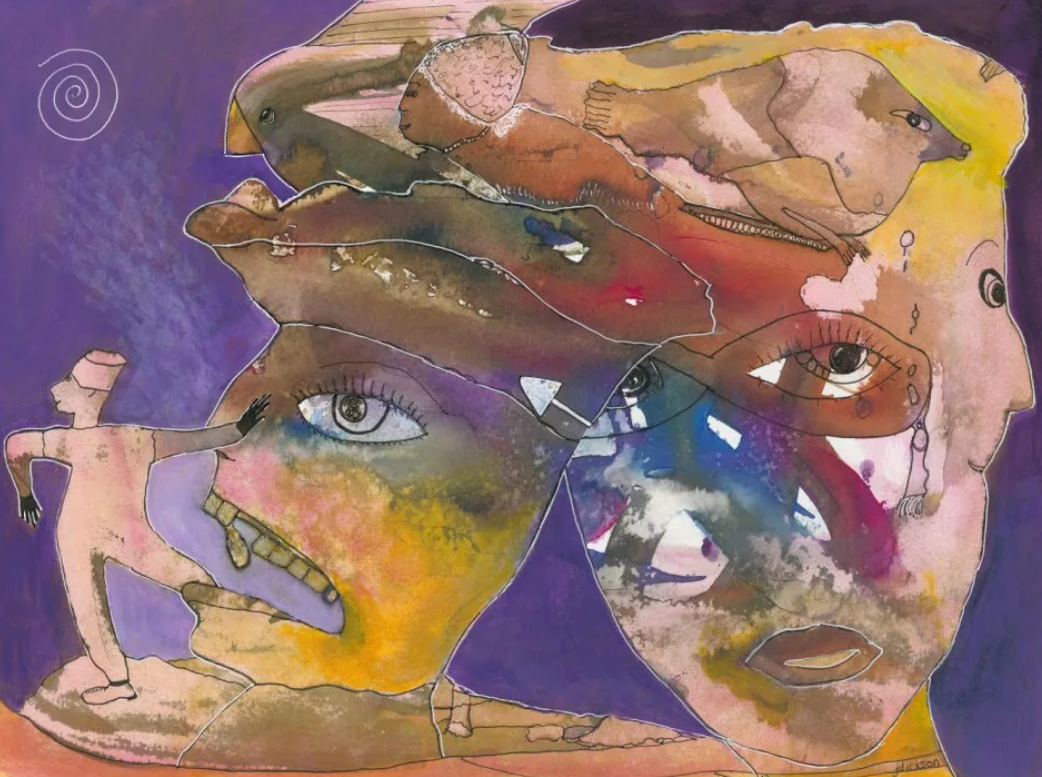
You need to carry more chaos in yourself to be able to give birth to a dancing star.Anthropology professor David Berliner from the Free University of Brussels tells why contradictions are “so human” and it is so difficult for us to be in “perfect harmony between our moral statements and behavior”, as we sublimate internal contradictions into creative energy, why for objects with opposite properties are so attractive to our consciousness, and how the ability to draw boundaries helps us to get along with our ability to contradict ourselves.
Friedrich Nietzsche
Have you ever wondered how many conflicting thoughts come to your mind in a day? How many times have these very thoughts contradicted your actions and actions? How often did your feelings coincide with your own principles and desires? In most cases, we ourselves do not notice such paradoxes in ourselves - it is much easier to observe similar differences in others. But you are as full of contradictions as I am. We, people woven from contradictions, get along peacefully, sometimes painfully, with our antagonistic essences. This feature was precisely noted by the American poet Walt Whitman in his poem "A Song of Myself":
Do you think I'm contradicting myself?Well, then I'm contradicting myself.(I am wide; I accommodate many different people.)
Take those who buy tech gadgets while speaking out against child labor and environmental waste, or those who condemn theft but illegally download music and movies from the Internet, who rant about respect for personal space, all in a moment uploads personal photos to Facebook. There are ecologists who use the same vehicles, priests who preach the faith, but have personally lost it. Sebastian Marroquin remembers his father humming lullabies to him fondly before bed, given the fact that Sebastian was the son of the famous drug lord Pablo Escobar, one of the most influential crime bosses in Colombian history. Living a contradictory life is so human.
American historian Joan Wallach Scott assures that the main quality that characterizes a critical thinker is the ability to “point the finger at contradictions,” although critical thinkers themselves also cannot avoid contradictions. In his book The Genius of Lies, the French philosopher Francois Nodelman describes Michel Foucault, who calls for courage to speak the truth, but at the same time hides his fatal illness, and Jean-Paul Sartre, an intellectual who played a rather ambiguous role during the period of Vichy France ⓘ The Vichy regime is a collaborationist regime in southern France, established after the defeat at the beginning of the Second World War.
Perhaps contradictions are a necessary component for the impetus to intellectual creativity. While many people try to achieve a sense of psychological unity, contradictions create destabilizing gaps within us. On a conscious or unconscious level, these breakdowns only contribute to inspiration, which can be interpreted as a way to resolve and sublimate internal disagreements. This can be said about all areas of creative activity. Perhaps art, literature, science and philosophy would have been impossible without internal contradictions and the desire to find ways to solve them.
Are there those who live according to Plutarch's stoic principles - in "perfect harmony between their moral statements and behavior"? Perhaps not, but this does not always lead to a crisis. We divide our knowledge, skills and emotions on the shelves. In certain situations in life, some actions are acceptable, but in others they are not. In particular, lying can be presented as a heroic and selfless step taken to protect victims under the yoke of cruelty, but in a friendly relationship, such antics are impossible. In laboratories, scientists can conduct research within the framework of their professional activities, based on rationality, sobriety and sanity, then go home and participate in religious prayers based on belief in the existence of supernatural and invisible forces.
People quite peacefully get along with their contradictions due to their ability to draw boundaries. And when conflicting actions, actions or emotions go out of context, we perfectly find excuses for them that can mitigate cognitive dissonance. One of my conservationist friends, to whom I pointed out that smoking is harmful to the world around him, replied, “I know, but I smoke hand-rolled cigarettes,” as if they were less toxic than industrial ones and were not part of the destructive tobacco industry. which, by the way, he fiercely condemned.
Contradictions are omnipresent in our inner lives, and they are especially noticeable when our strong beliefs, such as faith, morality, belligerence, and resilience, are manifested. In Guinea and Laos, where I conducted ethnographic research, most residents are fully confident in the existence of supernatural beings, spirits that are capable of transforming into various animals, plants and objects invisible to us, despite all the paradoxicality of such beliefs. Even our modern pop culture is overflowing with half-dead and half-alive zombies at the same time, and robots can express emotions and feelings similar to humans. In fact, our minds are filled with conflicting entities that challenge the "principle of consistency." Without noticing it, people adore objects with conflicting properties. As cognitive psychologists have shown, such inconsistencies are especially attractive to human consciousness. They challenge the ontological expectations we have about animals, objects, and people. As a result, they carry important cognitive potential and are better remembered.
Everything becomes much more complicated when a person goes beyond his own personality and begins to interact with other people. Human communication consists of subtle maneuvers between contradictions that can be expressed, for example, by what is said and what is expressed in gestures and tone. Thus, a person persistently seeks to interpret the inconsistent messages of our interlocutors and decode the inconsistent behavior that she observes in public life (the English anthropologist Gregory Bateson and his colleagues in the Palo Alto group in California lucidly explained the features of such phenomena in their writings).
In life, situations often arise in which people become victims of paradoxical prescriptions, for example, when teachers suddenly voice the task "Be spontaneous!" The worst-case scenario develops when a “double duty” is triggered, which leaves children squeezed by the emotional demands of their parents. However, anthropologists have described other, "non-pathological attitudes", such as rituals, where contradictions are presented and evaluated as quite familiar means of communication. Take the same Jewish slap in the face that is associated with puberty in girls. Among the Eastern European Jews in the past, the following was introduced: when a girl told her mother about her maturation, she gave her daughter a slap in response and at the same time exclaimed "Mazel Tov!" ("Congratulations!").
Based on the thoughts of the poet John Keats, psychoanalyst Adam Phillips in his work "Promises, Promises" describes three "negative opportunities" that are indispensable for the formation of a real adult personality: become a hindrance for someone, experience the experience of loss and the experience of helplessness. I would like to add another significant feature to this list: the ability to find and accept our contradictions, even if it is sometimes difficult to do.

