

Brother
Professional
- Messages
- 2,590
- Reaction score
- 544
- Points
- 113
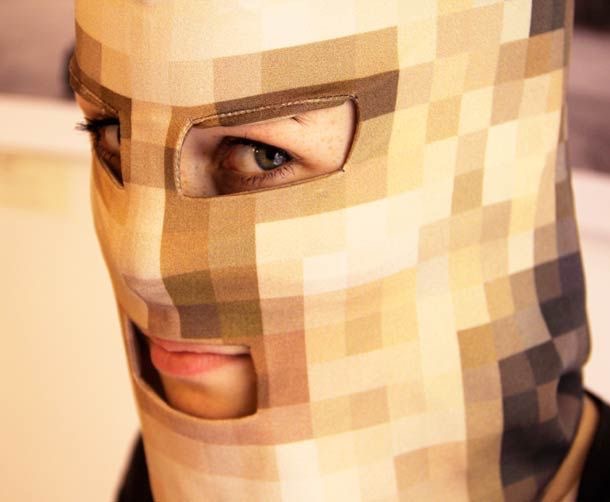
Scientists at the Novosibirsk State Technical University (NSTU) for the first time in Russia taught the "smart home" system to recognize faces under a medical mask using inexpensive video adapters, the press service of the university reported on Wednesday.
According to the developers, the system can be used at enterprises with checkpoints. "To identify a person whose face is hidden under a mask, a special algorithm was developed: it highlights key points in the upper part of the face and identifies a person by them. The system reads that part of the face that is not hidden by the mask and compares it with biometric data loaded into base ", - the message says.
It is noted that the development uses conventional processors costing from 14 thousand rubles - about 20 times cheaper than video cards used in similar systems.
The algorithm allows up to 30-40 people per minute to pass through the turnstile: there is no need to specially stop in front of the camera. At the same time, the algorithm does not allow deceiving the system using a photograph or an image on the screen. The development allows not only to recognize faces and objects, but also to perform intelligent video surveillance and remote identification.
"We are forming a database to determine whether a person has access to the enterprise or not. The database stores not images of faces, but their digitized values: the distance between key points on the face. The base is formed as follows: all employees of the organization take photographs from different angles and download their biometric data. If someone comes, whose data is not in the database, the system will show it ", - quoted in the message the words of one of the developers, associate professor of the Department of Automated Control Systems of NSTU Ivan Tomilov.
The message also notes that such a system can be run even on an ordinary computer. The development is currently at the trial operation stage. The project is designed for two years.


