

Carding Forum
Professional
- Messages
- 2,788
- Reaction score
- 1,363
- Points
- 113
What problems do neobanks face when doing business?
What problems do mobile banks solve?
“Mobile banks are a real threat to traditional financial institutions,” - this is how FinTech conference speakers often begin their reports. Arguing for it by the growing importance of digital technologies in our lives and the need to be mobile.
Of course, neobanks combine these qualities. However, how long will this last? After all, their traditional competitors are actively introducing innovative services. And regulators around the world ask financial startups as many (and sometimes more) questions than their more experienced counterparts.
In this article, the PaySpace Magazine editors figured out what problems mobile banks face.
The need to comply is directly reflected in mobile banking. After all, their activities involve rather atypical processes for identifying customers, signing contracts, maintaining documentation, etc. If until now such operations were treated loyally and many of these processes followed a simplified procedure, over time they will receive more and more attention.
Neobanks that continue to operate with an EMI e-money license (such as Monese and Anytime) or are an authorized payment institution (such as Holvi) are not yet subject to banking restrictions. But in the future, you can expect new requirements for financial companies of this type.
In addition, mobile banks that work with prepaid payment cards should take into account that the new directive provides for more thorough checks and new restrictions for such payment instruments. So, 5MLD sets a limit of 150 euros on the card balance. And 50 euros - for online transactions.
Also in the field of view of 5MLD were platforms that trade cryptocurrencies and online services of cryptocurrency wallets. And the intention to issue regulations for the crypto industry has already been announced by FATF President Marshall Billingsley. This is true for banks like Revolut, which has been offering its clients a cryptocurrency exchange service since 2021.
FATF will continue to respond to new and emerging threats. Financial innovations such as digital ID or virtual assets require the FATF to track risks in this area.
Since now many neobanks work with a banking license, they will be affected by all these changes in banking regulation. Moreover, there are concerns that neobanks are more vulnerable to criminal activity than traditional financial institutions. And they are not groundless.
In the summer of 2021, representatives of Revolut bank turned to British law enforcement agencies with a message that they suspected dubious transactions through the bank's systems.
In the fall of that year, the bank had to temporarily shut down its transaction monitoring system after it mistakenly recognized 8,000 normal payments as potentially dangerous.
These incidents have raised questions about whether Revolut is paying enough attention to compliance issues. BBC reporters spoke to informants from Revolut and found out that some employees are concerned about the company's methods of combating money laundering. One former employee generally described money laundering control systems as unusable. And he added that the management of Neobank is not ready to listen to employees' ideas for improving compliance policies.
“I’m not going to pretend that we’re perfect, but we are aiming for that.” Nick Stronsky, CEO of Revolut.
Over the past three years, two key risk management officers have left Revolut, as well as two employees who were involved in identifying money laundering cases.
German mobile bank N26 has also faced accusations from banking regulator BaFin (German Federal Financial Supervision Authority). BaFin officials said the fintech startup is not actively fighting money laundering and terrorist financing.
Experts believe that, unlike traditional banks, it is more difficult for mobile financial institutions to achieve AML compliance, to maintain a balance between rapid growth and security.
In addition, large institutions may simply allocate more staff and more money for compliance.
Compliance is not a matter of technology reliability, but a matter of corporate culture.
As you can see, the requirements of the regulators are getting tougher. In such conditions, banks will have to comply with the requirements on the one hand, and, on the other hand, offer their customers convenient functionality. And this task can be even more difficult.
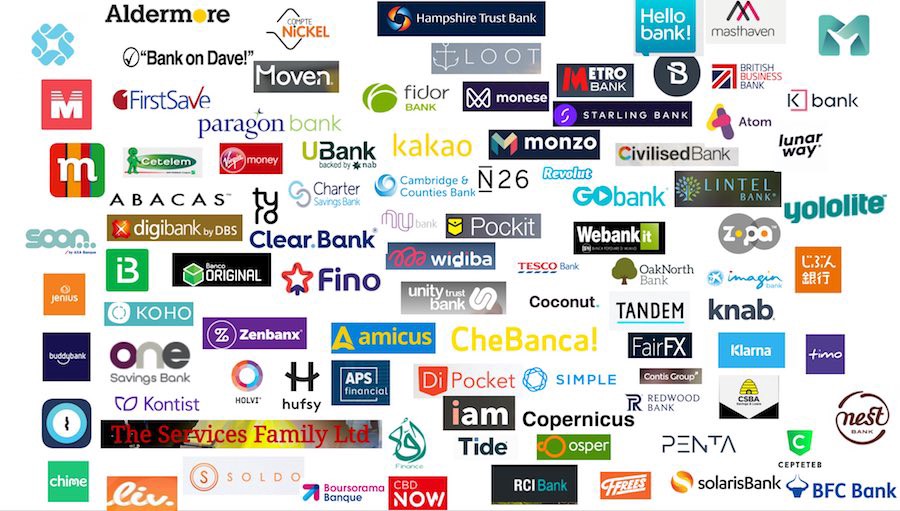
Digital banks and fintech companies.
This will create a threat to growth - banks will not be able to entice customers from each other because of the same functionality. And the conservatism of the majority of contributors will limit the attraction of the audience from the outside. After all, loyalty to a traditional bank is still much higher than to a mobile one. Polls show that less than 10% will pay attention to a mobile bank when they need to open an account.
Also, the threat can arise from financial companies. While neobanks continue to increase the pool of services, fintech companies from the investment and lending sectors decided to go into banking. For example, investment startup Acorn recently offered debit cards to its customers to store funds. In just four days from the moment of the product presentation, Acorn received 100 thousand orders from its users.
Mobile banks should move in the same direction, offering value-added services to the customer. Experts believe that mobile-only financial institutions should develop in the field of analytics and artificial intelligence, collecting information about transactions.
The real value lies in what data you get by analyzing behavior
Mobile bank Simple is now working to add artificial intelligence to its bill payment service. This will allow you to predict the future expenses of the client, and offer him advice on the effectiveness of payments.
The first major risk a bank faces in a smartphone is hacker attacks. For offline banks this is not so critical, because they can say: "Our site is down, please contact the branch." We cannot explain to clients that we have any technical problems and in 20 hours we will restore everything
It is also necessary to protect the mobile bank from internal leaks - often fraudsters turn to employees directly with a proposal to "drain" the database.
How it happens: a customer support employee receives an offer to separately record the phone number and e-mail of clients with large amounts of funds. This information and are ready to buy a third party. Thus, during the analysis of the database, we cannot identify leaks, because there is no such leaks.
Dmitry Kovalevsky
monobank specialist
Monobank solved this problem by using a notification system about unauthorized actions of operators. it is triggered if a bank employee enters the client's card without a request from his side.
The larger the Neobank business, the more seriously it will be necessary to build protection systems against failures and fraudsters.
So far, the question of who will take a large share of innovative mobile banking - independent neobanks or digital divisions of large financial institutions - remains open. The biggest challenge neobanks face is gaining consumer confidence and attracting new users. As they grapple with this challenge, traditional banks have a chance to carve out a niche by leveraging their brand and customer confidence. Independent mobile banks must be mindful of the new threat and plan for new business models.
What problems do mobile banks solve?
“Mobile banks are a real threat to traditional financial institutions,” - this is how FinTech conference speakers often begin their reports. Arguing for it by the growing importance of digital technologies in our lives and the need to be mobile.
Of course, neobanks combine these qualities. However, how long will this last? After all, their traditional competitors are actively introducing innovative services. And regulators around the world ask financial startups as many (and sometimes more) questions than their more experienced counterparts.
In this article, the PaySpace Magazine editors figured out what problems mobile banks face.
Mobile banks and regulatory issues
There is a global trend in the banking industry: it is becoming more regulated. This means that banks need to comply with more and more requirements and comply with regulations in order to remain “reliable” in the eyes of the regulator.The need to comply is directly reflected in mobile banking. After all, their activities involve rather atypical processes for identifying customers, signing contracts, maintaining documentation, etc. If until now such operations were treated loyally and many of these processes followed a simplified procedure, over time they will receive more and more attention.
- Licensing
Neobanks that continue to operate with an EMI e-money license (such as Monese and Anytime) or are an authorized payment institution (such as Holvi) are not yet subject to banking restrictions. But in the future, you can expect new requirements for financial companies of this type.
- Open banking
- Anti money laundering
In addition, mobile banks that work with prepaid payment cards should take into account that the new directive provides for more thorough checks and new restrictions for such payment instruments. So, 5MLD sets a limit of 150 euros on the card balance. And 50 euros - for online transactions.
Also in the field of view of 5MLD were platforms that trade cryptocurrencies and online services of cryptocurrency wallets. And the intention to issue regulations for the crypto industry has already been announced by FATF President Marshall Billingsley. This is true for banks like Revolut, which has been offering its clients a cryptocurrency exchange service since 2021.
FATF will continue to respond to new and emerging threats. Financial innovations such as digital ID or virtual assets require the FATF to track risks in this area.
Since now many neobanks work with a banking license, they will be affected by all these changes in banking regulation. Moreover, there are concerns that neobanks are more vulnerable to criminal activity than traditional financial institutions. And they are not groundless.
In the summer of 2021, representatives of Revolut bank turned to British law enforcement agencies with a message that they suspected dubious transactions through the bank's systems.
In the fall of that year, the bank had to temporarily shut down its transaction monitoring system after it mistakenly recognized 8,000 normal payments as potentially dangerous.
These incidents have raised questions about whether Revolut is paying enough attention to compliance issues. BBC reporters spoke to informants from Revolut and found out that some employees are concerned about the company's methods of combating money laundering. One former employee generally described money laundering control systems as unusable. And he added that the management of Neobank is not ready to listen to employees' ideas for improving compliance policies.
“I’m not going to pretend that we’re perfect, but we are aiming for that.” Nick Stronsky, CEO of Revolut.
Over the past three years, two key risk management officers have left Revolut, as well as two employees who were involved in identifying money laundering cases.
German mobile bank N26 has also faced accusations from banking regulator BaFin (German Federal Financial Supervision Authority). BaFin officials said the fintech startup is not actively fighting money laundering and terrorist financing.
Experts believe that, unlike traditional banks, it is more difficult for mobile financial institutions to achieve AML compliance, to maintain a balance between rapid growth and security.
In addition, large institutions may simply allocate more staff and more money for compliance.
Compliance is not a matter of technology reliability, but a matter of corporate culture.
As you can see, the requirements of the regulators are getting tougher. In such conditions, banks will have to comply with the requirements on the one hand, and, on the other hand, offer their customers convenient functionality. And this task can be even more difficult.
Development problems of mobile banks
When Neobanks first appeared, their service was truly innovative, and their service fees were unexpectedly low. However, with the development of technology and awareness of the trend of movement in digital, serious competitors began to appear for mobile banks. And the service prices had to be raised, because every bank, even without branches, has expenses.- The problem of monetization
- Increased competition in digital banking
Digital banks and fintech companies.
This will create a threat to growth - banks will not be able to entice customers from each other because of the same functionality. And the conservatism of the majority of contributors will limit the attraction of the audience from the outside. After all, loyalty to a traditional bank is still much higher than to a mobile one. Polls show that less than 10% will pay attention to a mobile bank when they need to open an account.
Also, the threat can arise from financial companies. While neobanks continue to increase the pool of services, fintech companies from the investment and lending sectors decided to go into banking. For example, investment startup Acorn recently offered debit cards to its customers to store funds. In just four days from the moment of the product presentation, Acorn received 100 thousand orders from its users.
Mobile banks should move in the same direction, offering value-added services to the customer. Experts believe that mobile-only financial institutions should develop in the field of analytics and artificial intelligence, collecting information about transactions.
The real value lies in what data you get by analyzing behavior
Mobile bank Simple is now working to add artificial intelligence to its bill payment service. This will allow you to predict the future expenses of the client, and offer him advice on the effectiveness of payments.
- Security
The first major risk a bank faces in a smartphone is hacker attacks. For offline banks this is not so critical, because they can say: "Our site is down, please contact the branch." We cannot explain to clients that we have any technical problems and in 20 hours we will restore everything
It is also necessary to protect the mobile bank from internal leaks - often fraudsters turn to employees directly with a proposal to "drain" the database.
How it happens: a customer support employee receives an offer to separately record the phone number and e-mail of clients with large amounts of funds. This information and are ready to buy a third party. Thus, during the analysis of the database, we cannot identify leaks, because there is no such leaks.
Dmitry Kovalevsky
monobank specialist
Monobank solved this problem by using a notification system about unauthorized actions of operators. it is triggered if a bank employee enters the client's card without a request from his side.
The larger the Neobank business, the more seriously it will be necessary to build protection systems against failures and fraudsters.
So far, the question of who will take a large share of innovative mobile banking - independent neobanks or digital divisions of large financial institutions - remains open. The biggest challenge neobanks face is gaining consumer confidence and attracting new users. As they grapple with this challenge, traditional banks have a chance to carve out a niche by leveraging their brand and customer confidence. Independent mobile banks must be mindful of the new threat and plan for new business models.
